Viral load testing is a backbone of the HIV response in countries around the world. When viral load – the amount of HIV in the blood of an individual is suppressed to undetectable levels – it prevents onward transmission of the virus, which is critical to bringing the epidemic under control. For this reason, health systems must aim to make their viral load test procedures as efficient as possible, especially at a time when most countries are grappling with limited resources for addressing HIV.
When ICAP began supporting HIV viral load testing sites in the Philippines in 2023, the laboratory network was already in place. Most facilities were meeting testing demands, but gaps in day-to-day operations were clear. Turnaround times varied widely. Some labs released results on time, while others faced backlogs. Error rates were also higher than expected, often linked to inconsistent practices in sample handling and processing. These were not major system failures, but routine issues—missed steps, unclear workflows, and limited opportunities for staff to refresh their skills.
With support from the US Centers for Disease Control and Prevention (CDC), ICAP took systematic steps to address these gaps.
Quarterly site visits helped clarify the challenges. During these visits, ICAP technical teams observed how samples moved through the lab, how tests were performed, and how staff managed their workloads. Through these observations, the teams found that many personnel had not received formal hands-on training in viral load testing. This contributed to wastage of testing cartridges, particularly from pre-analytical errors such as improper collection, handling, and storage. These issues led to rejection of samples, invalid results, and inefficient use of resources.
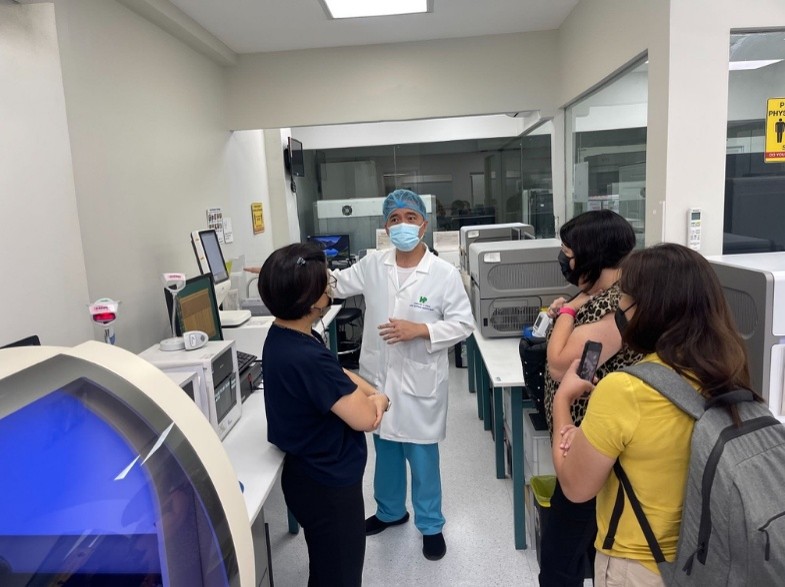
A facility staff member explains the molecular testing workflow to the CDC and ICAP teams during their visit to Manila.
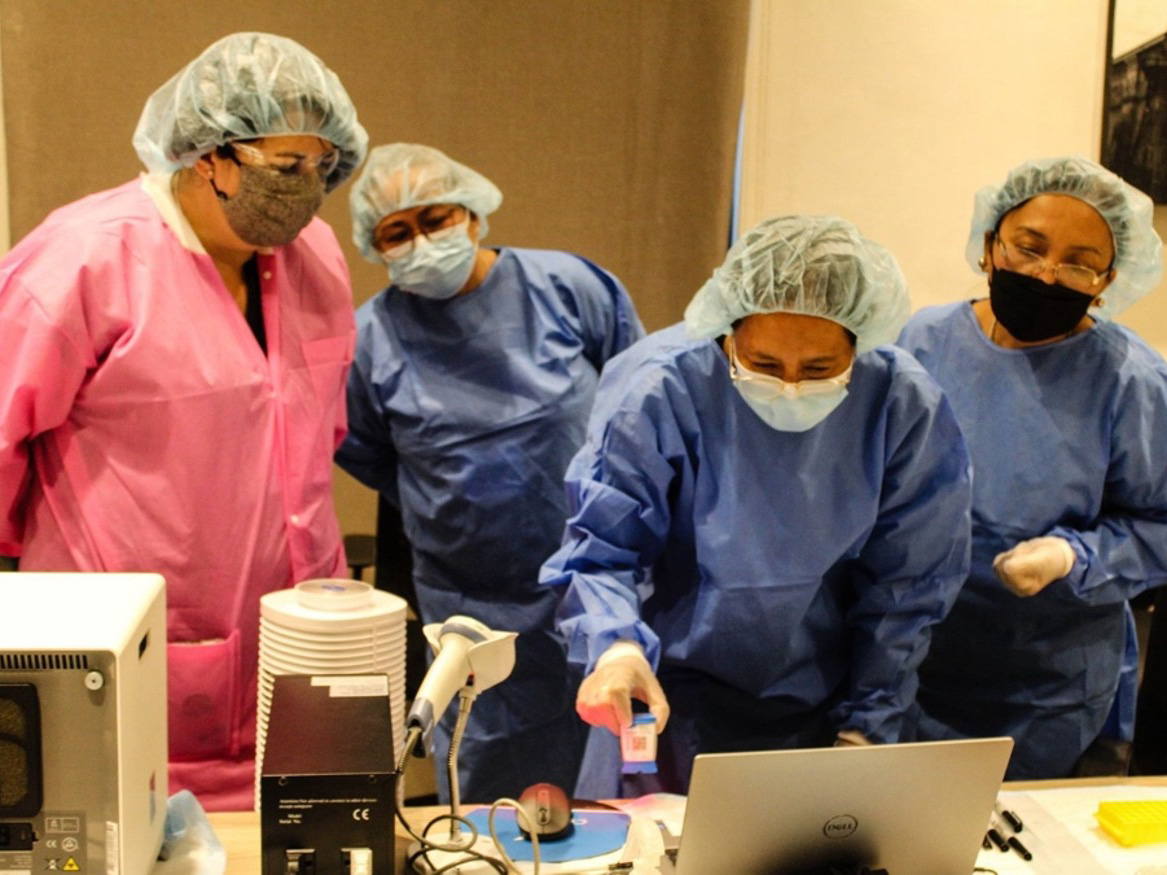
Under ICAP’s guidance, labs adjusted workflows, standardized procedures, clarified staff roles, and improved equipment use, including adopting reliable power backup systems. Just as importantly, the project presented opportunities for open discussion of challenges – something that doesn’t often happen during routine monitoring. Hands-on training followed, focusing on practical applications rather than lectures. Participants worked directly with GeneXpert systems and dried-blood-spot collection for early infant diagnosis, practicing the full process—from sample preparation to troubleshooting errors. This approach encouraged real-world questions about handling invalid runs, repeat testing, and inconsistent controls.
Gradually, confidence among staff members improved as they became more comfortable operating equipment and making decisions during testing. Improvements in sample handling and documentation also helped reduce errors and rejection rates.
The application of an external quality assessment (EQAS) process provided a way to track progress. Early results showed recurring issues such as pipetting errors, calibration gaps, and environmental factors affecting equipment performance. Instead of treating these as isolated problems, labs reviewed results together and made adjustments before the next round. Over time, performance improved with results from the first three EQAS HIV viral load events showing that most facilities demonstrated excellent performance, and labs began identifying issues earlier on their own.
Error tracking also became more routine. Facilities monitored where problems occurred – whether during handling, testing, or reporting, making it easier to spot patterns and respond. Labs adjusted schedules, improved coordination, and strengthened sample management practices. As a result, labs are now more consistent and errors are less frequent. More importantly, quality is becoming part of everyday practice—not just something checked during assessments.
“There was no single turning point. Progress came gradually through regular visits, training, and follow-up,” said Marco Reza Hernando, MSc, laboratory technical advisor for ICAP in the Philippines.
Ultimately, the results speak for themselves. Viral load testing coverage increased from 20% up to 80% in the project regions, and cartridge wastages decreased from 20% to less than 5%.
“ICAP’s global expertise in lab strengthening had equipped it to engage in this spectrum of incremental improvements that led to increased overall efficiency, and ultimately to a more effective HIV response in the country,” noted Loreto Roquero, Jr., MD, MPH, country director for ICAP in the Philippines.
About ICAP
A major global health organization that has been improving public health in countries around the world for two decades, ICAP works to transform the health of populations through innovation, science, and global collaboration. Based at Columbia Mailman School of Public Health, ICAP has projects in more than 40 countries, working side-by-side with ministries of health and local governmental, non-governmental, academic, and community partners to confront some of the world’s greatest health challenges. Through evidence-informed programs, meaningful research, tailored technical assistance, effective training and education programs, and rigorous surveillance to measure and evaluate the impact of public health interventions, ICAP aims to realize a global vision of healthy people, empowered communities, and thriving societies. Online at icap.columbia.edu