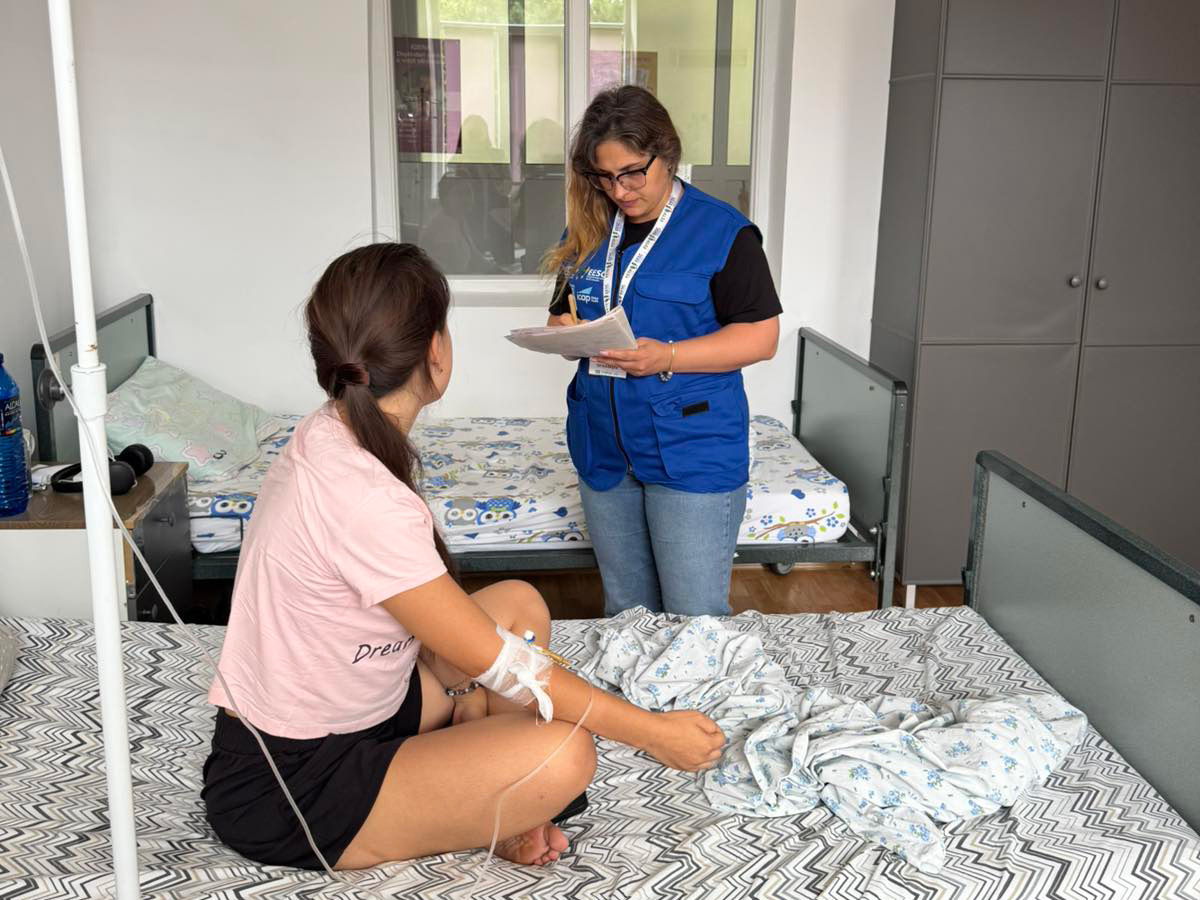
Foodborne disease outbreaks pose significant threats to people around the world, causing illness, death, and economic losses. Outbreaks can be caused by contamination from a wide variety of pathogens – including Salmonella, E. coli, and Listeria – and may occur anywhere in the food production and distribution change.
Determining the source of the contamination is a complex undertaking requiring close coordination between epidemiologists, laboratory scientists, environmental health specialists, and regulatory partners to rapidly identify contaminated food sources and prevent additional illnesses. A critical component of these investigations is traceback analysis, which focuses on determining the origin of implicated food products through supply-chain analysis, record review, and collaboration with industry and regulatory stakeholders.
In February 2026, ICAP at Columbia University, in collaboration with the U.S. Centers for Disease Control and Prevention (CDC) and U.S. Food and Drug Administration (FDA) hosted a regional webinar series titled “Foodborne Diseases Investigation: Using Sequencing and Traceback Investigation in Addition to Conventional Foodborne Outbreak Investigation.”
The virtual training series aimed to strengthen regional capacity to conduct traceback investigations supported by genomic data drawing on the experience and best practices developed in the United States and recent Salmonella outbreak investigation in Moldova. Participants included professionals from the public health, veterinary, food safety, and laboratory sectors across the Eastern Europe and South Caucasus (EESC) region.
Throughout the training, participants explored the core principles of applying whole genome sequencing (WGS) in foodborne outbreak investigations, including how genomic sequencing data can be integrated with epidemiological and traceback evidence to identify the source of contamination. Sessions also focused on practical approaches to interviewing industry partners, reviewing shipping and distribution records, and mapping supply chains to trace food products back to their origin.
In addition to technical skills, the training emphasized the importance of interagency collaboration between public health authorities, laboratories, regulatory agencies, and food industry partners. Participants learned how combining multiple lines of evidence from epidemiological findings and genomic data to supply-chain documentation can improve the detection of shared contamination sources and strengthen outbreak response.
“Building the knowledge and skills of health care workers on the front lines of potentially severe disease outbreaks can make a real difference in protecting the public from illness,” said Anna Deryabina, MD, DrPH, MScIH, ICAP’s regional director for Eurasia. “With training series like this one, ICAP is helping put another powerful tool in the hands of the region’s public health professionals.”
By the end of the training, participants had gained practical knowledge and tools to enhance foodborne outbreak investigations in their countries. The initiative represents an important step toward accelerating the adoption of genomic technologies within national food safety systems and strengthening regional collaboration to detect, investigate, and prevent foodborne disease outbreaks.
About ICAP
A major global health organization that has been improving public health in countries around the world for two decades, ICAP works to transform the health of populations through innovation, science, and global collaboration. Based at Columbia Mailman School of Public Health, ICAP has projects in more than 40 countries, working side-by-side with ministries of health and local governmental, non-governmental, academic, and community partners to confront some of the world’s greatest health challenges. Through evidence-informed programs, meaningful research, tailored technical assistance, effective training and education programs, and rigorous surveillance to measure and evaluate the impact of public health interventions, ICAP aims to realize a global vision of healthy people, empowered communities, and thriving societies. Online at icap.columbia.edu