In 2023 and 2024, Moldova observed a notable rise in salmonella cases, underscoring the urgent need for advanced tools to detect and investigate outbreaks.
Salmonella is the leading cause of hospitalizations and deaths linked to foodborne illness. Resistance to antibiotics is increasing in Salmonella, which can limit treatment options for people with severe infections.
With support from the Eastern European and Central Asia (EECA) Centers for Disease Control and Prevention (CDC) regional office, ICAP in Eurasia conducted a study to surveil the spread of salmonella infections, a crucial step toward improving and informing food safety protocols across Moldova.
The study, launched in July 2025, was conducted in close collaboration with Moldova’s National Agency of Public Health (NAPH) and the Field Epidemiology Training Program (FETP), an ICAP-led learning-by-doing applied training program that prepares the EECA public health workforce to investigate and respond to major disease outbreaks more effectively.
Between July and September 2025, FETP residents collected samples from suspected salmonella cases across six Moldovan hospitals. In total, 113 human bacterial samples and three non-human bacterial samples from eggs and chicken were collected and submitted to NAPH’s Reference Laboratory for sequencing. After sequencing, FETP residents were able to identify infections originating from two major locations, one linked to a restaurant and one linked to a funeral dinner.
With such information, NAPH can continue to investigate the source of these outbreaks, working with Moldova’s National Agency for Food Safety (ANSA) to develop informed food safety protocols. In the case of the restaurant outbreak, for example, the restaurant temporarily closed and employees were tested for salmonella before reopening.

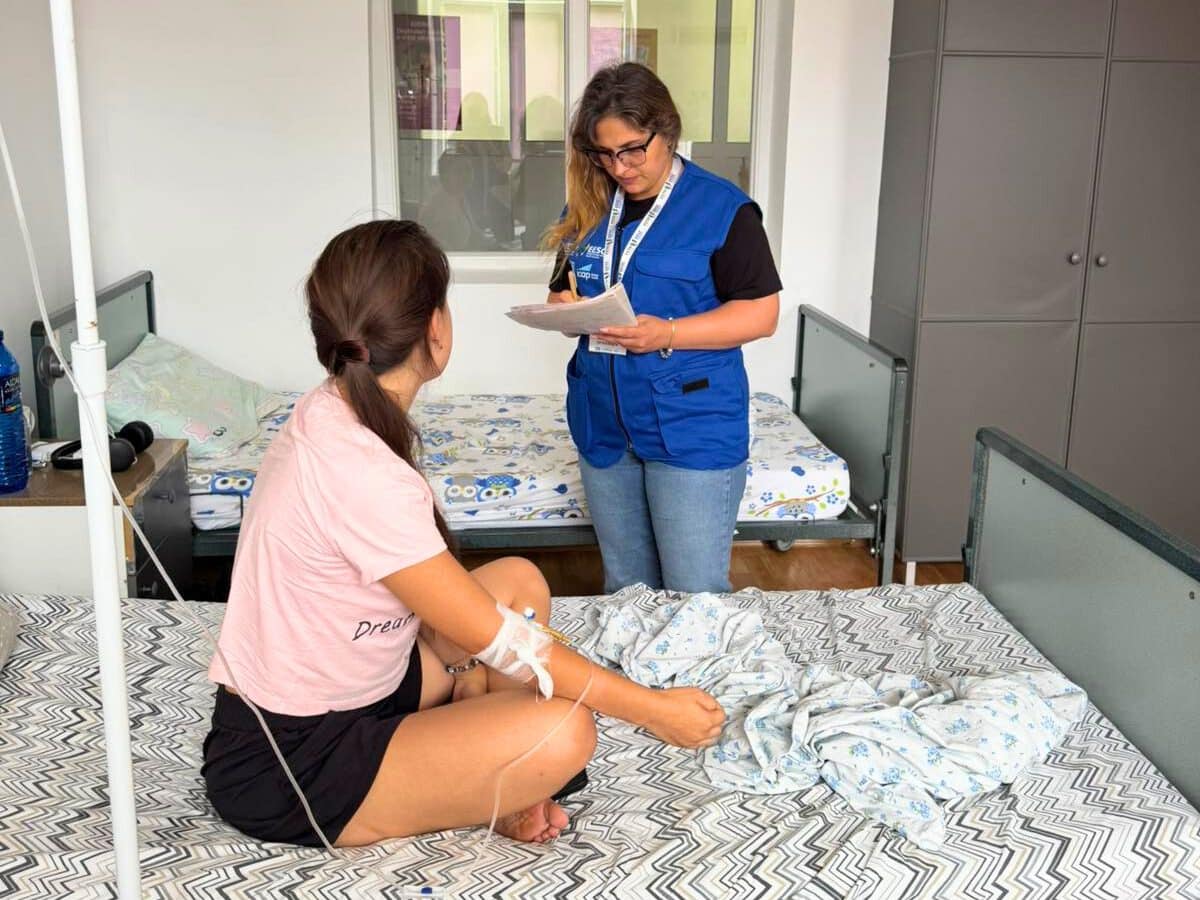
An FETP resident conducts an interview with a patient who contracted salmonella to better understand where she may have acquired the infection.
“The successful collaboration between ICAP, CDC, Moldova’s NAPH, and FETP demonstrates the power of partnership in strengthening science-driven outbreak response,” said Irina Iaroslavtsev, FETP resident from Moldova. “These efforts not only protect Moldovan communities but also contribute to global health security by preventing cross-border spread of infectious diseases.”
FETP residents used the study’s findings to conduct trainings for medical personnel across the six hospitals, providing up-to-date information on salmonella infection and guidance on disease standard operating procedures.
This investigation marks the first time Moldova has deployed whole genome sequencing (WGS) – a gold standard for tracking foodborne illness that determines the full DNA sequence of an organism – during a field investigation. Facilitation of WGS is an important milestone in modernizing Moldova’s public health surveillance and aligning food safety practices with European Union standards.

Medical personnel received training on addressing salmonella infection at a hospital in Chisinau.
Ion Bîrcă, head of NAPH’s Department for Epidemiological Surveillance of Foodborne and Waterborne Diseases, emphasized, “enhancing laboratory capacity for Whole Genome Sequencing is critically important. Strengthening this capacity will significantly improve the ability to detect, characterize, and monitor pathogens with precision. Such capabilities are essential not only for the early detection of outbreaks and emerging threats but also for supporting evidence-based decision-making in public health interventions.”
About ICAP
A major global health organization that has been improving public health in countries around the world for two decades, ICAP works to transform the health of populations through innovation, science, and global collaboration. Based at Columbia Mailman School of Public Health, ICAP has projects in more than 40 countries, working side-by-side with ministries of health and local governmental, non-governmental, academic, and community partners to confront some of the world’s greatest health challenges. Through evidence-informed programs, meaningful research, tailored technical assistance, effective training and education programs, and rigorous surveillance to measure and evaluate the impact of public health interventions, ICAP aims to realize a global vision of healthy people, empowered communities, and thriving societies. Online at icap.columbia.edu