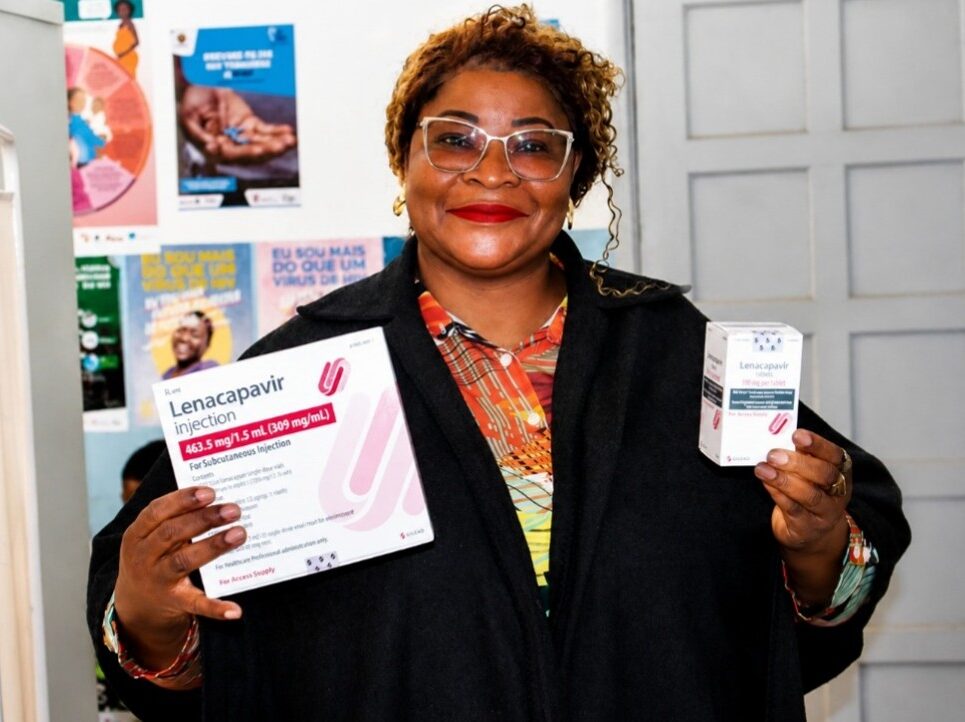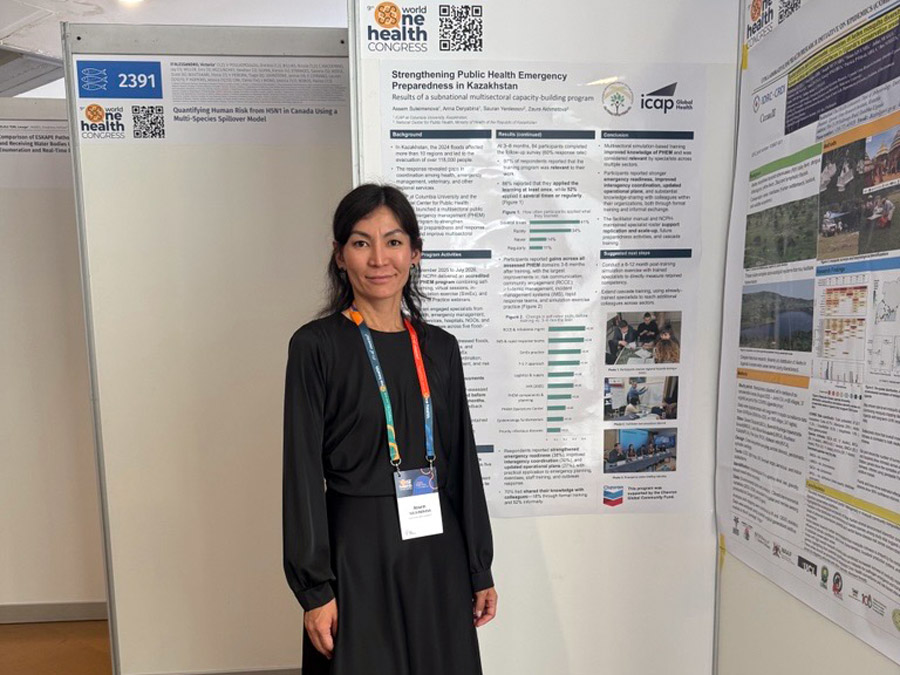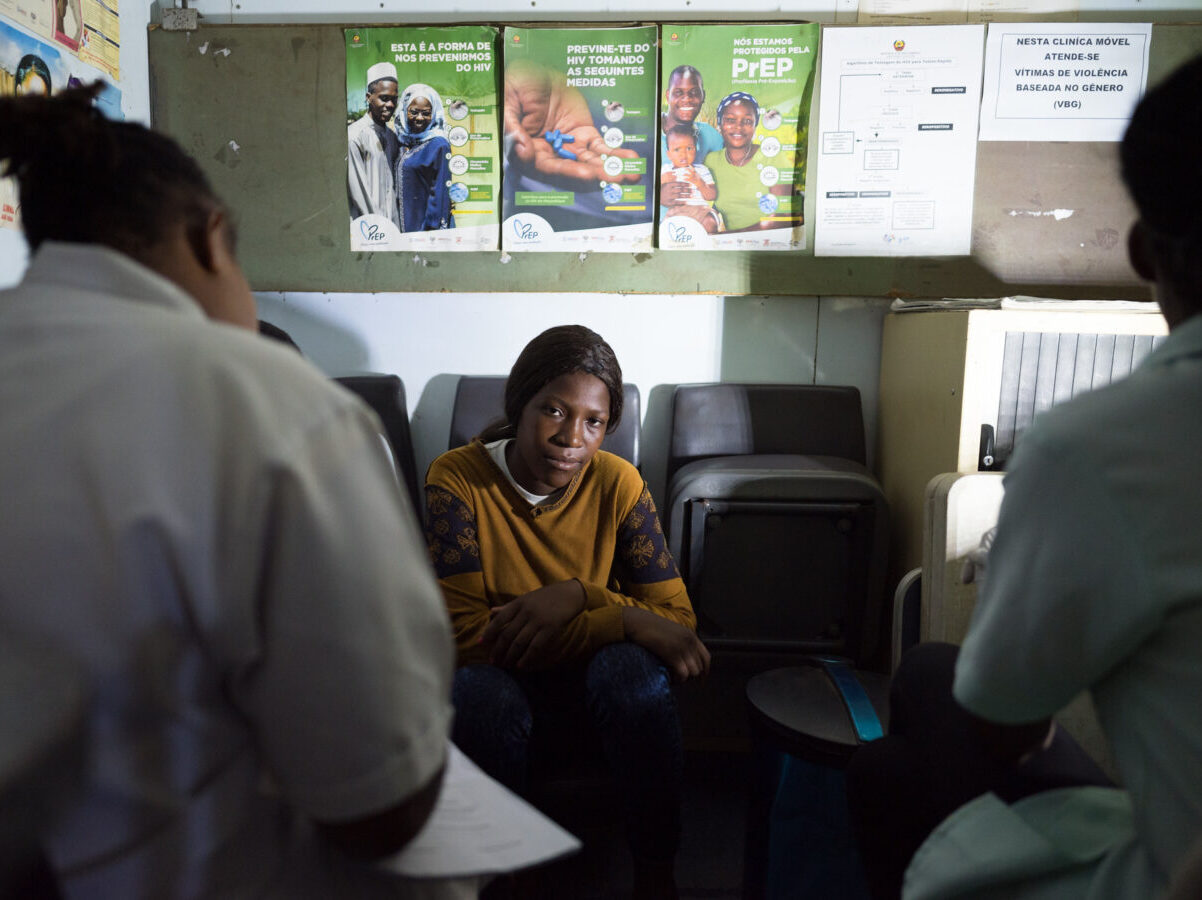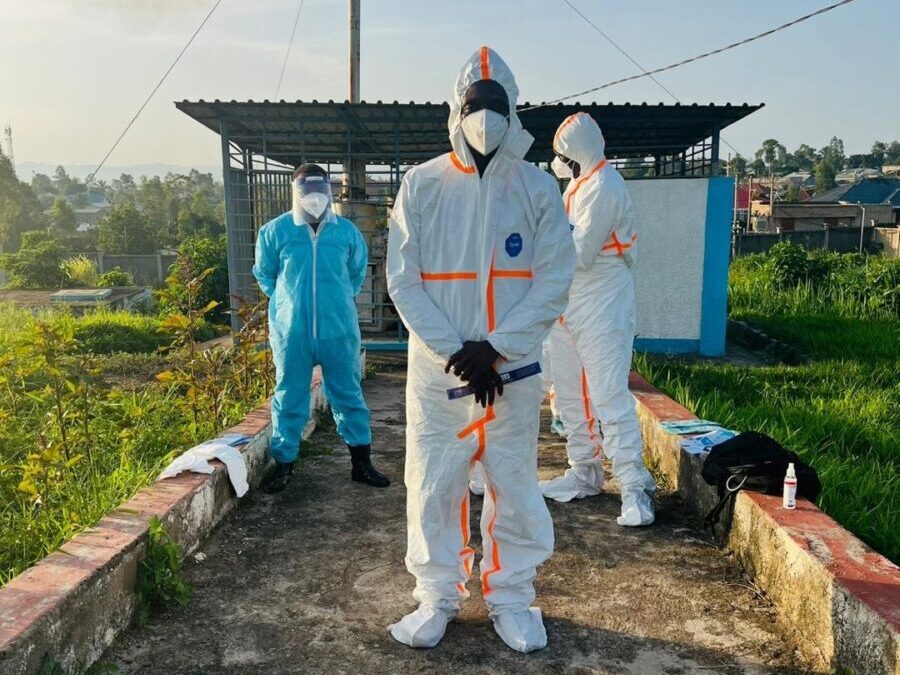
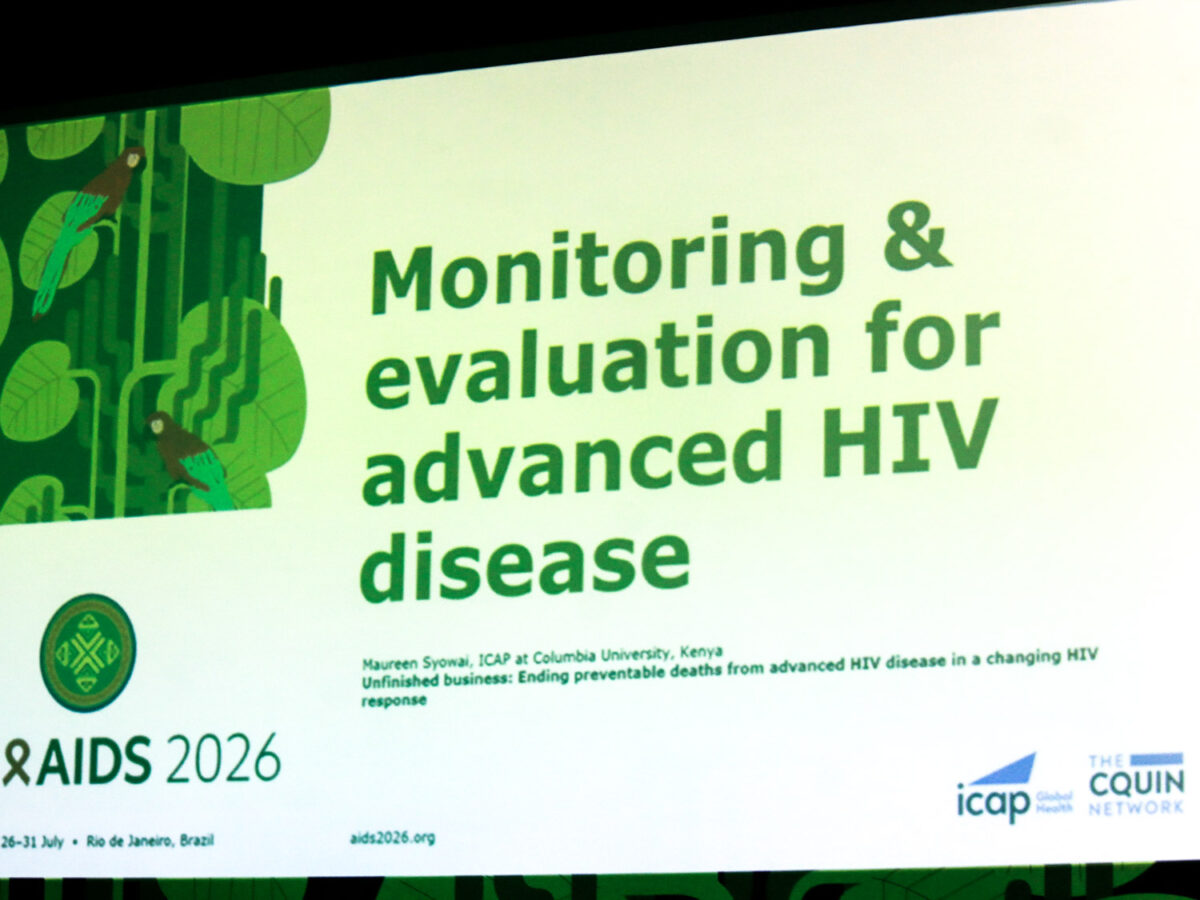
During a special conference session, ICAP’s Maureen Syowai presents on the importance of monitoring and evaluation to address this persistent global health issue
Reported by Theo Smart, ICAP Sr. Technical Writer and Editor
Advanced HIV disease (AHD) was one of the most discussed issues at AIDS 2026 in Rio de Janeiro. “Our subject this afternoon is a stubborn one,” said Teresa Kasaeva, director of WHO’s Department of HIV, Tuberculosis, Hepatitis and Sexually Transmitted Infections , during one of several sessions devoted to AHD. “In an era of remarkable progress … people still die of AIDS.”
Despite marked gains in HIV diagnosis and treatment—and many countries approaching or reaching the global 95-95-95 treatment targets—mortality has not fallen at the same pace. More than half a million people still die from AIDS-related causes each year. Speakers at several sessions warned that progress has slowed substantially, with annual mortality remaining at roughly 600,000 since around 2020, most of it associated with complications of advanced HIV disease.
Some of those deaths occur among people who are diagnosed with HIV only after their immune systems have become severely compromised. Others occur among people who were previously diagnosed and received antiretroviral therapy (ART) but later disengaged from care and return with advanced disease—sometimes only after developing a serious opportunistic infection. Graeme Meintjes of the University of Cape Town presented Western Cape data in which about two-thirds of people entering or returning to care with CD4 counts below 200 cells/µL were re-engaging after an interruption in ART, while only one-third were newly entering care. CD4 counts can fall rapidly after treatment interruption, placing some people back at risk of AHD within months.
And severe immunosuppression is not always clinically obvious: a person can have a dangerously low CD4 count without appearing acutely ill.
Despite the scale-up of treatment, an estimated 25% to 40% of people living with HIV still present or return to care with CD4 cell counts below 200 cells/µL, the threshold WHO uses to identify AHD in adults, adolescents and children aged five years and older. At that level of immune suppression, people become much more vulnerable to life-threatening opportunistic infections, including tuberculosis, cryptococcal disease and severe bacterial infections and, in some regions, disseminated histoplasmosis. WHO’s AHD package therefore couples CD4 testing with screening, prophylaxis and treatment for major opportunistic infections rather than treating HIV alone.
Managing these patients can also become considerably more complicated once severe disease has developed. Late diagnosis is associated with poorer treatment responses, more adverse events and a greater risk of immune reconstitution inflammatory syndrome (IRIS) after ART is started, when recovery of the immune response can reveal or exacerbate inflammatory responses to underlying infections. Some of those infections are themselves difficult to diagnose, and patients may require diagnostic procedures or treatment beyond what is readily available in primary care, making reliable referral pathways an important part of AHD care.
“Advanced HIV disease is therefore not a problem of the past,” said Marco Vitoria, a medical officer in WHO’s Department of HIV, Tuberculosis, Hepatitis and Sexually Transmitted Infections, during an oral abstract session. “It remains a persistent challenge today.” Among people hospitalized with AHD, he noted, roughly one in six die, with little evidence that this mortality risk has improved over the past two decades.
Knowing who is at that level of risk, however, increasingly depends on a test that has become much less available. CD4 testing was once routine in HIV care, but its use declined sharply after one of the major successes of the HIV response: the move to universal treatment.
As evidence accumulated that everyone diagnosed with HIV should start ART regardless of immune status, CD4 was no longer needed to determine treatment eligibility. In opening remarks for the special session, “Unfinished Business: Ending Preventable Deaths From Advanced HIV Disease in a Changing HIV Response,” Nathan Ford, team lead for HIV treatment and care at WHO headquarters in Geneva, recalled that programs were already asking more than a decade ago whether they could simply “get rid of CD4 count” as universal treatment approached. WHO’s answer, he said, was that CD4 would no longer be needed to decide who started ART and could be reduced for routine treatment monitoring where viral load testing was available. “But it nevertheless is absolutely important for assessing baseline risk and for assessing risk at return to care.”
That distinction was often lost in practice. CD4 testing declined, the market for testing platforms contracted, and access has continued to fall. Meintjes cited a recent Clinton Health Access Initiative assessment showing a 35% decline in CD4 testing between 2024 and 2025, with testing reaching only 16% of eligible people in one southern African country. WHO has now strongly recommended CD4 testing as the preferred method for identifying AHD; clinical staging remains an alternative where CD4 testing is unavailable but can miss people with severe immunosuppression who do not yet appear seriously ill.
That concern extended beyond the scientific sessions. During a protest at AIDS 2026, activists with the Fight AIDS Coalition called for a $2 CD4 test, arguing that a substantially lower price was needed as CD4 testing coverage declines and HIV program budgets tighten.
The consequences of identifying—or failing to identify—AHD were also apparent in research presented from the Philippines. In an oral abstract, Ruella Haynes of the Epidemiology Bureau of the Department of Health of the Republic of the Philippines presented an analysis conducted by the Department of Health with the U.S. Centers for Disease Control and Prevention and ICAP in the Philippines. Among people with documented CD4 results, AHD was common and associated with substantially poorer survival; by five years, cumulative mortality remained more than tenfold higher among people with AHD than among those without it. Most AHD in the dataset was identified around ART initiation, however, with relatively little CD4 testing among treatment-experienced people—including those returning to care—pointing to another opportunity for AHD to go undetected.
Identifying AHD is only the first step. Once it is identified, the diagnostic and treatment challenge is not the same everywhere. Tuberculosis, cryptococcal disease, and severe bacterial infections account for much of the burden, while other opportunistic infections vary with local epidemiology. Histoplasmosis, for example, is an important cause of severe disease in Latin America and the Caribbean and in some parts of Africa, but its burden may be underestimated where appropriate testing is unavailable. Presenters emphasized that the evidence and diagnostic package need to be adapted to local epidemiology rather than assuming the same distribution of opportunistic infections everywhere.
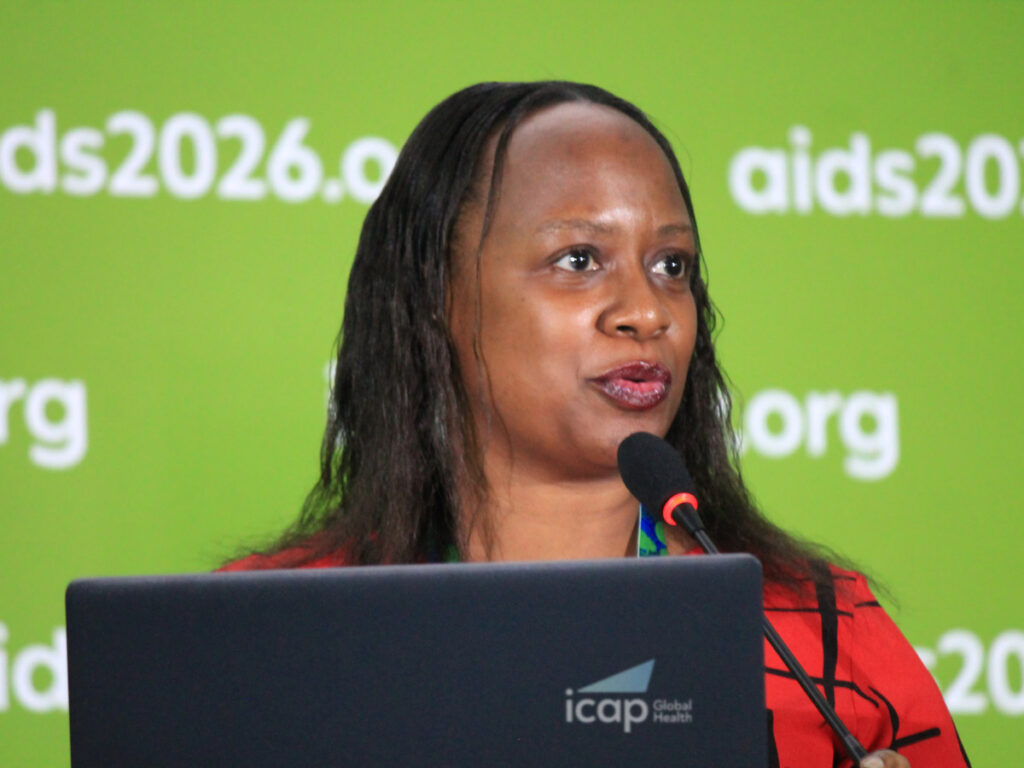
Maureen Syowai, MBChB, MSc, program director for the CQUIN and HIVE networks, discussed monitoring and evaluation of Advanced HIV Disease during a presentation on July 29 at AIDS 2026 in Rio de Janeiro, Brazil.
And even among patients sick enough to reach hospital care, the cause of illness is often uncertain. In surveillance from Johannesburg presented by Meintjes, about one-third of people with AHD admitted with an infectious diagnosis had no pathogen identified; about another third had TB, while approximately 15% had a confirmed bacterial infection. The findings illustrated both the continuing burden of TB and bacterial disease and the difficulty of determining what is making severely immunocompromised patients ill.
That diagnostic complexity also argues for service models that do not expect every facility to provide every test or manage every complication. In the Democratic Republic of Congo, Nkoso Aimé Mboyo of the country’s national HIV program, Programme National de Lutte contre le SIDA/IST (PNLS), described a hub-and-spoke approach in which screening and basic AHD management are decentralized closer to patients, while more complex diagnostic and treatment needs are referred to higher-level hubs. The same service architecture was adapted during the mpox outbreak, allowing people entering either HIV/AHD or mpox services to be assessed for the other condition.
There is also a strong economic case for identifying and managing AHD before patients require referral-level or inpatient care. Ana Moore of the Clinton Health Access Initiative told the session that “the later a client presents to care, the more costly the intervention; more importantly, the lower the chance of survival.” The basic screening components of the WHO package cost relatively little, she noted, while hospitalization and treatment for severe opportunistic disease can cost hundreds or thousands of dollars per episode. For cryptococcal disease, her estimates ranged from $8–$21 for outpatient screening of someone testing negative for cryptococcal antigen to about $2,000 once hospital-level treatment for cryptococcal meningitis was required.
Those challenges are becoming harder to address as HIV programs operate with fewer resources. Speakers warned that funding reductions are affecting not only CD4 and opportunistic-infection diagnostics, but also the community-based tracing and re-engagement services that can bring people back into care before severe immunosuppression develops.
But establishing AHD services is only part of the challenge. Programs also need to know who is developing advanced disease, whether they receive the recommended package of care, and what happens to them afterward.
In her presentation at the “Unfinished Business” session, Maureen Syowai, program director for the HIV Coverage, Quality and Impact Network (CQUIN) – a 21-country African learning network convened by ICAP at Columbia University of ICAP at Columbia University – warned that this visibility may actually be getting worse as countries move from externally supported HIV monitoring systems toward government-led, integrated systems. “As countries shift towards government-led integrated M&E systems, the risk of losing visibility on advanced HIV disease is actually increasing,” Syowai said.
Data she presented from CQUIN member countries illustrated how incomplete that picture can be. Of the 21 countries, 12 had up-to-date national health management information system submissions, six had AHD identification data, and only three had complete data for the periods examined. In those three countries, between 35% and 49% of people initiating ART had a CD4 test; among those tested, 23%–29% had CD4 counts below 200 cells/µL.
The gaps extend beyond identifying AHD. Syowai described inpatient AHD care as a major blind spot in national HIV monitoring systems, even though hospitals care for many of the sickest patients. Deaths are also frequently recorded only after tracking and tracing establishes that a patient has died, while inpatient mortality and civil-registration data are inconsistently linked to HIV program data. “These mortality trends must be interpreted cautiously,” she said, because the data reflect how deaths are reported, “not necessarily true improvements.”
CQUIN is working with countries to preserve a lean set of high-value AHD indicators as monitoring systems transition, including identification of AHD among people newly starting ART, returning after disengagement, experiencing virologic failure, or presenting seriously ill; whether they receive appropriate TB and cryptococcal screening and care; and whether they survive. The aim is to maintain AHD visibility within nationally owned systems rather than allowing it to disappear as externally supported reporting structures are dismantled or integrated.
“Funding AHD M&E is therefore not just a technical choice,” Syowai said. “It’s a strategic investment in saving lives.”
References
- World Health Organization. WHO guidelines on the management of advanced HIV disease. World Health Organization; 2025.
Clinton Health Access Initiative. HIV Market Impact Memo. June 2026. - Kasaeva T. Addressing the drivers of advanced HIV disease: priority actions to reduce HIV-related mortality. Presented at: The Last Mile Toward Elimination: Reducing Mortality by Advanced HIV Disease; AIDS 2026; July 27, 2026; Rio de Janeiro, Brazil.
- Vitoria M. Opening remarks. Presented at: Still Running Late: Advanced HIV Disease; AIDS 2026; July 29, 2026; Rio de Janeiro, Brazil.
Ford N. Introductory remarks. Presented at: Unfinished Business: Ending Preventable Deaths From Advanced HIV Disease in a Changing HIV Response; AIDS 2026; July 29, 2026; Rio de Janeiro, Brazil. - Meintjes G. What we know vs what is happening. Presented at: Unfinished Business: Ending Preventable Deaths From Advanced HIV Disease in a Changing HIV Response; AIDS 2026; July 29, 2026; Rio de Janeiro, Brazil.
- Moore A. The true cost of delivering effective AHD screening and prevention packages. Presented at: Unfinished Business: Ending Preventable Deaths From Advanced HIV Disease in a Changing HIV Response; AIDS 2026; July 29, 2026; Rio de Janeiro, Brazil.
- Bacha J, Smith F, Zamora A, et al. Prevalence and risk factors associated with advanced HIV disease among people living with HIV in the Philippines, 2019-2024. J Int AIDS Soc. 2026;29(suppl 4):e70125. Abstract OAB2003.
- Mboyo NA. Integration of Mpox and AHD: perspective from DRC. Presented at: AIDS 2026; July 28, 2026; Rio de Janeiro, Brazil.
- Syowai M. Monitoring and evaluation for advanced HIV disease. Presented at: Unfinished Business: Ending Preventable Deaths From Advanced HIV Disease in a Changing HIV Response; AIDS 2026; July 29, 2026; Rio de Janeiro, Brazil.
(Photos: Lance Brandon Sherriff for ICAP)
About ICAP
A major global health organization that has been improving public health in countries around the world for two decades, ICAP works to transform the health of populations through innovation, science, and global collaboration. Based at Columbia Mailman School of Public Health, ICAP has projects in more than 40 countries, working side-by-side with ministries of health and local governmental, non-governmental, academic, and community partners to confront some of the world’s greatest health challenges. Through evidence-informed programs, meaningful research, tailored technical assistance, effective training and education programs, and rigorous surveillance to measure and evaluate the impact of public health interventions, ICAP aims to realize a global vision of healthy people, empowered communities, and thriving societies. Online at icap.columbia.edu