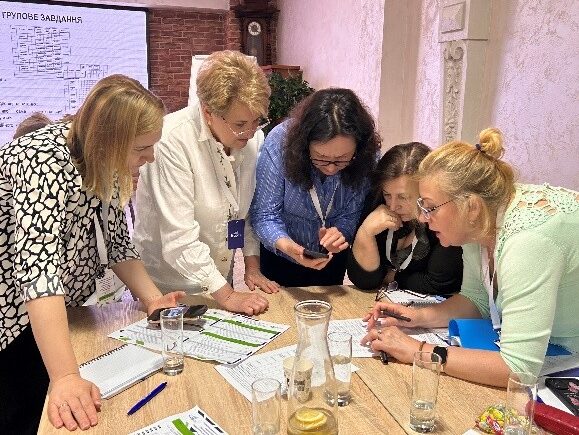
On December 11, 2025, ICAP conducted a formal handover of the Sheep Blood Collection Center and renovated laboratory at the University of Eswatini (UNESWA), Luyengo Campus, Faculty of Agriculture. The handover ceremony brought together key participants including the Pro-Vice Chancellor (Academic) of UNESWA, the ICAP Eswatini Fleming Fund Country Grant Team, and members of the Antimicrobial Resistance Containment Committee representing the different ministries, alongside academic staff and students from Luyengo Campus demonstrating Eswatini’s commitment to a multisectoral One Health approach to antimicrobial resistance (AMR) containment.
Sheep blood agar is used in clinical laboratories to grow bacteria such as streptococci in order to diagnose infections such as strep throat, pneumonia, and meningitis.To strengthen bacteriological testing process in sentinel sites in the country the Fleming Fund Country Grant, in collaboration with UNESWA and the support of ICAP, enabled the establishment and expansion of a shed for the Sheep Blood Collection Center to ensure sustainable supply of sheep blood for production of blood culture plates. This initiative curbs the dependence of Eswatini on importation of sheep blood where the supply chain challenges have been an obstacle to scaling up bacteriological testing services.
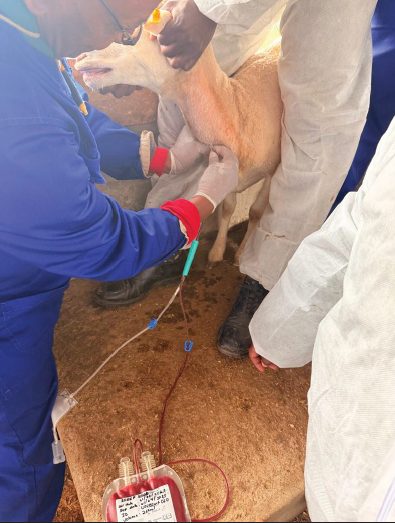
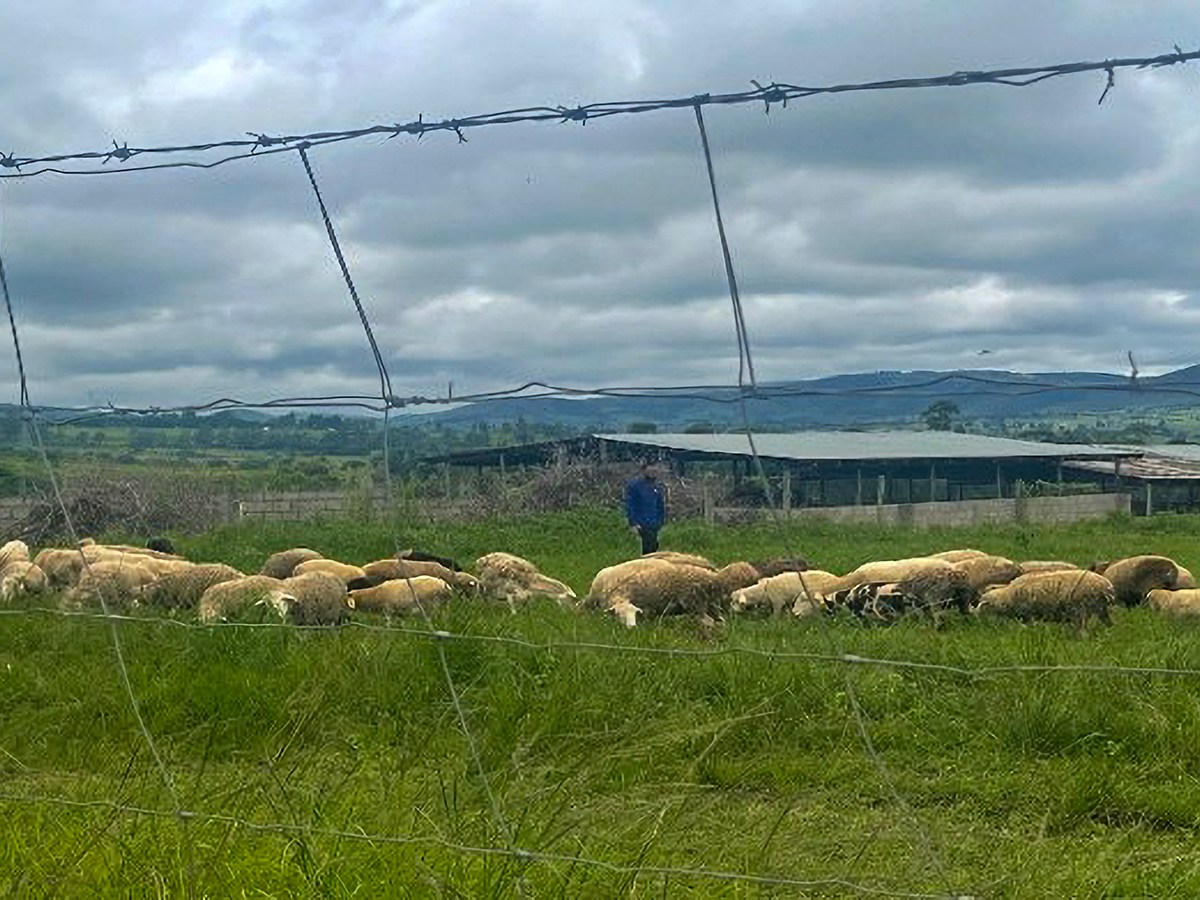
Sheep blood collection at UNESWA
At the handover ceremony, Dr. Thulile Singwane, head of Department for Animal Science, delivering welcome remarks on behalf of the dean of the Faculty of Agriculture, Professor Absalom Manyatsi, emphasized that the Sheep Blood Collection Center is a strategic national asset central to Eswatini’s AMR containment agenda under the One Health framework. Dr. Singwane highlighted the importance of reliable access to quality-assured sheep blood for bacteriological testing in the sentinel surveillance sites of the different ministries to strengthen bacterial culture, identification and susceptibility testing to support effective antimicrobial stewardship, and advancing integrated public, animal, and environmental health outcomes.
Ruben Sahabo, MD, ICAP’s country director in Eswatini, underscored that the center addresses a long-standing national gap by providing a standardized, sustainable supply of sheep blood for routine diagnostics, surveillance, research, and practical training across sectors. Acknowledging the UNESWA’s leadership, the sustained engagement of the relevant ministries, and the strategic vision and investment of the Fleming Fund, Dr. Sahabo noted that the renovated laboratory represents a complementary investment that enhances capacity for research and teaching.
Representing the vice chancellor of UNESWA, the pro-vice Chancellor (Academic), Professor Tendekayi Henry Gadaga, reaffirmed the University’s commitment to custodianship of the Sheep Blood Collection Center as a national responsibility, emphasizing the contribution of the center to strengthening public and animal health systems while advancing the university’s mandate in education, research, and community service. He further confirmed UNESWA’s commitment to sustainable management, adherence to international quality standards, and continued collaboration with government and national laboratories to support AMR surveillance and evidence-based decision-making.
Dr. Bavukile Kunene, chairperson of the Antimicrobial Resistance Containment Committee and Veterinary Officer under the Ministry of Agriculture, emphasized the centrality of multisectoral collaboration in AMR containment, reflecting on the shared responsibility across sectors. He also acknowledged earlier contributors to the development of the National Action Plan on AMR and recognized the role of development partners in advancing the NAP implementation.
Professor A. M. Dlamini, former dean of the department of Animal Husbandry at UNESWA, highlighted key Phase II achievements under the Fleming Fund AMR project, including expansion of the sheep herd from five to over 70 animals to date, progress toward integrating AMR into academic curricula, infrastructure expansion, and strengthened laboratory capacity, demonstrating increasing operational sustainability.
The ceremony concluded with a visit to observe the renovated biology laboratory and completed sheep shed extension and the sheep in their grazing field. Due to the ongoing foot-and-mouth disease outbreak, the Sheep Blood Collection Centre was toured at a distance in line with national biosecurity protocols.
Overall, the handover highlighted the strategic significance of the Sheep Blood Collection Center, the integration of AMR into the curriculum, and the renovated laboratory as key national assets for antimicrobial resistance containment and One Health implementation in Eswatini. The event emphasized the importance of sustained multisectoral collaboration, targeted investment in diagnostics, and robust institutional partnerships in strengthening laboratory capacity, supporting surveillance, and ensuring the long-term effectiveness of antimicrobials.
“Today’s handover is both a celebration of what we have achieved together and a call to continue the journey,” said Dr. Sahabo. “Sustaining the work we have begun here, strengthening diagnostics, improving surveillance, and safeguarding antibiotics will require continued collaboration, leadership, and accountability. But standing here today, seeing the strength of partnership across sectors, I am confident that Eswatini is well positioned to sustain and advance this essential work.”
About ICAP
A major global health organization that has been improving public health in countries around the world for two decades, ICAP works to transform the health of populations through innovation, science, and global collaboration. Based at Columbia Mailman School of Public Health, ICAP has projects in more than 40 countries, working side-by-side with ministries of health and local governmental, non-governmental, academic, and community partners to confront some of the world’s greatest health challenges. Through evidence-informed programs, meaningful research, tailored technical assistance, effective training and education programs, and rigorous surveillance to measure and evaluate the impact of public health interventions, ICAP aims to realize a global vision of healthy people, empowered communities, and thriving societies. Online at icap.columbia.edu