A unique model for integrating wraparound health services into early childhood development settings in Sierra Leone has received a promising boost thanks to an investment from UNICEF.
The Early Childhood Development (ECD) Unit under Sierra Leone’s Ministry of Basic and Senior Secondary Education (MBSSE) has received seed funding from UNICEF to support the integration of health services into ECD centers across three districts in the country.
This investment builds on the Supporting Healthy Interaction, Nurturing, and Enrichment for Preschool Children in Sierra Leone (SHINE) project, an ICAP-led initiative funded by Columbia World Projects at Columbia University. In 2023-24, this influential pilot program united interdisciplinary teams at Columbia with the government of Sierra Leone and key community stakeholders to address the significant health deficits and developmental challenges facing the children of Sierra Leone.
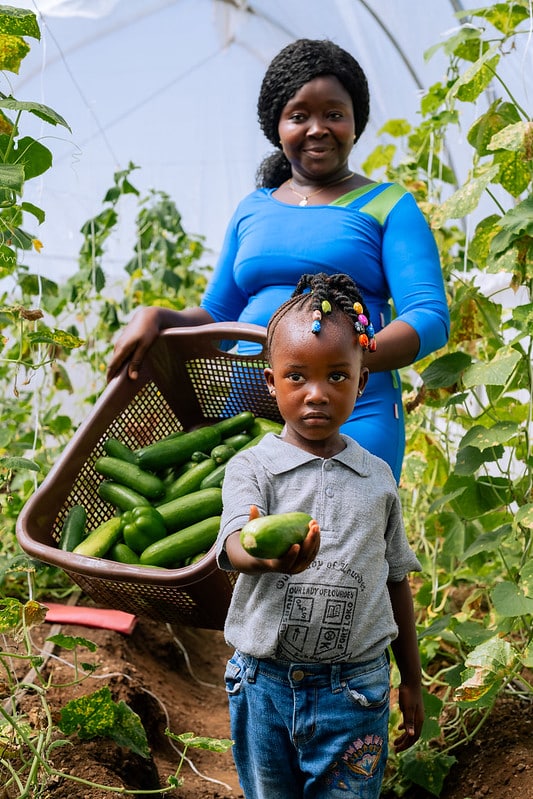
A teacher and pupil display harvest cucumbers from their school’s greenhouse
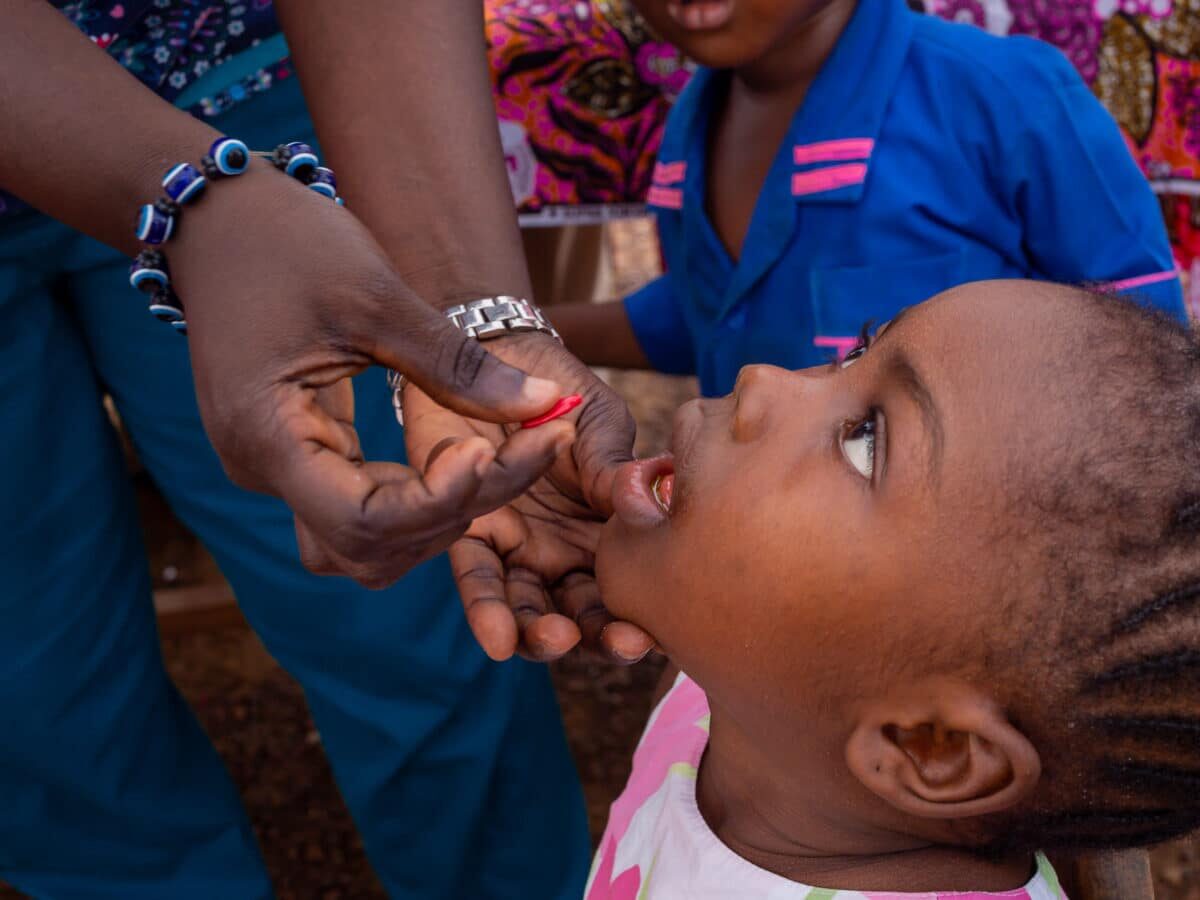
Working at Our Lady of Lourdes Preschool in the city of Port Loko, the SHINE project set out to demonstrate the acceptability and feasibility of incorporating a suite of high-impact health services for children and their families directly into the preschool setting and to develop a blueprint for implementing this solution at scale. The services included preschool-based health services, household health visits, a nutritional teaching garden, and community health days, all integrated with referrals to local health facilities. The pilot reached more than 200 children, ages 2 – 6 years, identifying health conditions ranging from malaria to anemia and referring those children for appropriate treatment and follow-up care.
In July of 2024, upon completion of the pilot project, Sierra Leone launched newly developed policy guidelines for integrating health, nutrition, and water, sanitation, and hygiene services into preschool centers in the country.
Now, with the infusion of funding from UNICEF, the approach pioneered by SHINE is expanding to 18 ECD centers in three districts – Moyamba (9 centers), Kambia (3 centers) and Bombali (6 centers) – reaching a total of 1,440 children with wraparound health services.
In addition, as part of the initiative, the Ministry of Agriculture and Food Security in both Kambia and Moyamba districts has built upon the SHINE project’s teaching garden component to establish local greenhouse initiatives through trainings of teachers and agricultural extension workers on such topics as climate-controlled cultivation, ventilation, seedbed preparation, watering techniques, and seasonal crop selection.
“The SHINE model is proving to have had an outsized impact on both the health and education of young children at a critical time in their growth,” said Melody Martin, assistant director of MBSSE. “This new support from UNICEF continues to validate the efficacy of integrating health services into early childhood education, and we look forward to further extending this program and amplifying its remarkable potential to forge a brighter future for the children of Sierra Leone.”
About ICAP
A major global health organization that has been improving public health in countries around the world for two decades, ICAP works to transform the health of populations through innovation, science, and global collaboration. Based at Columbia Mailman School of Public Health, ICAP has projects in more than 40 countries, working side-by-side with ministries of health and local governmental, non-governmental, academic, and community partners to confront some of the world’s greatest health challenges. Through evidence-informed programs, meaningful research, tailored technical assistance, effective training and education programs, and rigorous surveillance to measure and evaluate the impact of public health interventions, ICAP aims to realize a global vision of healthy people, empowered communities, and thriving societies. Online at icap.columbia.edu