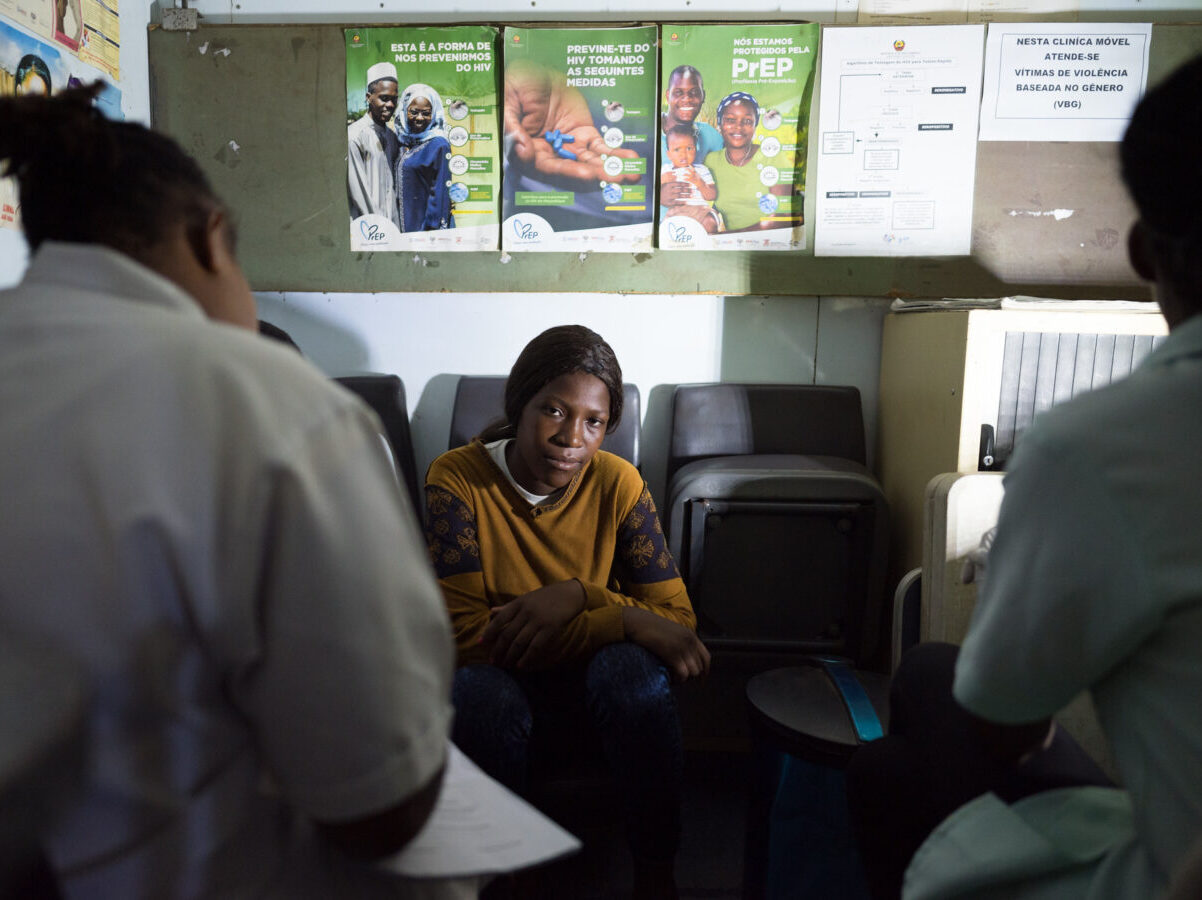
In Zambia’s Northwestern Province, nearly 7% of the region’s 1.2 million people are living with HIV. More than half of those people – about 44,000 people – currently receive lifesaving antiretroviral therapy for HIV at 213 health facilities. As in other parts of the country, however, late presentation to care by those with HIV remains a major challenge.
Nearly one in five people newly diagnosed with HIV in the province have dangerously low CD4 counts – a key indicator of immune function and the best predictor of the severity of the infection. Low CD4 counts, which can indicate Advanced HIV Disease (AHD), leave people living with HIV vulnerable to severe infections such as tuberculosis (TB) and cryptococcal meningitis.
With support from the US President’s Emergency Plan for AIDS Relief (PEPFAR) through the Centers for Disease Control and Prevention (CDC) and led by the Zambian Ministry of Health, ICAP has been working to strengthen AHD services in the province.
In October 2024, ICAP partnered with the Northwestern Provincial Health Office to begin addressing these challenges beginning with a baseline assessment that revealed wide gaps in AHD service delivery. The evaluation revealed that most providers had never received formal training on the AHD package of care and none of the facilities had systems to identify patients at risk, nor tools to document screening. The analysis also showed that only nine out of the 213 health facilities had CD4 machines and just four sites had testing reagents available, demonstrating the urgent need for introduction of rapid CD4 testing capabilities. Additionally, the assessment found that access to diagnostics for TB and cryptococcal disease was extremely limited, commodities such as antiretroviral drugs were inconsistently available, and data collection systems for monitoring AHD services were either weak or absent.
To bridge these gaps, ICAP launched a comprehensive program of training, system strengthening, and technical support. Between October 2024 and June 2025, ICAP undertook a rapid needs assessment to guide the response, focusing on building health care worker capacity, improving logistics and commodity management, and introducing monitoring tools.
In November 2024, ICAP supported five integrated on-site orientations in Solwezi, Kasempa, Zambezi, and Mwinilunga, training 142 staff, including 33 clinicians, 42 nurses, and 37 community-based volunteers. ICAP followed this up in January 2025 with a central training that prepared 22 Ministry of Health clinical mentors and district hospital staff to provide technical support within their districts. To sustain improvements, ICAP worked with health facilities to appoint AHD “champions” and trained 33 health care workers and 11 district focal point persons in quality improvement methods, establishing a province-wide collaborative.
Improving availability of tools and commodities marked another key step in meeting the AHD gaps. In December 2024, ICAP supported the procurement and distribution of 320 integrated AHD/Non-Communicable Disease (NCD) registers to all public facilities and helped orient staff on how to document screening and management in these registers. ICAP also worked with the provincial supply-chain team to quantify and order rapid CD4 test kits, TB urine LF-LAM tests – which are especially useful for detecting TB in people with HIV – and cryptococcal antigen (CrAg) kits, which are recommended by the World Health Organization (WHO) for managing AHD. To ensure these commodities reached patients, ICAP provided transport from Zambia’s capital, Lusaka, and supported last-mile distribution, while also monitoring stock levels on a weekly basis to prevent expiries and shortages.
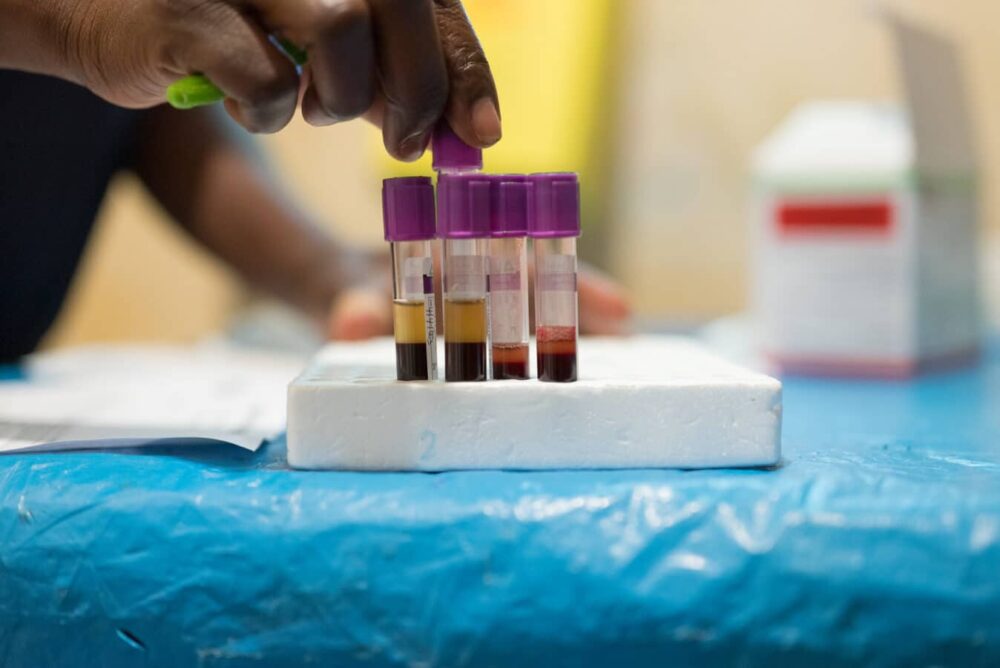
These interventions have already shown impact. Facilities that initially had no systems for identifying patients with AHD began reporting screening data by January 2025. Screening for TB using the urine LF-LAM test among AHD patients improved steadily, rising from just 16% in January to 41% by July 2025. Cryptococcal meningitis screening averaged around 50% of eligible patients, with ICAP introducing an important innovation: reflex CrAg testing. This approach used the same blood sample for both CD4 and CrAg testing if results showed CD4 counts below the critical level of 200 cells/mm³, reducing delays between diagnosis and treatment.
Despite these gains, however, challenges remain. Inconsistent availability of CD4 reagents and rapid test kits, low stocks of urine LF-LAM and CrAg tests, and uneven health care worker capacity continue to affect service delivery.
Still, the improvements in screening coverage and quality of care mark significant progress. As ICAP looks ahead, priorities include expanding mentorship through central and on-site trainings, adopting TeleECHO virtual learning and mentoring support, decentralizing urine LF-LAM testing away from laboratories to service points for increased speed and efficiency, and scaling up reflex CrAg testing across the province to improve access to this vital diagnostic tool.
“The progress we’ve seen in Northwestern Province demonstrates how strategic investments in training, tools, and systems can save lives,” said Tafadzwa Dzinamarira, ICAP’s country director in Zambia. “Advanced HIV disease remains one of the most pressing obstacles to ending HIV-related deaths. With the continued support of the US Government and the Zambian Ministry of Health, we are committed to building on these gains so that every person in need can access lifesaving care.”
About ICAP
A major global health organization that has been improving public health in countries around the world for two decades, ICAP works to transform the health of populations through innovation, science, and global collaboration. Based at Columbia Mailman School of Public Health, ICAP has projects in more than 40 countries, working side-by-side with ministries of health and local governmental, non-governmental, academic, and community partners to confront some of the world’s greatest health challenges. Through evidence-informed programs, meaningful research, tailored technical assistance, effective training and education programs, and rigorous surveillance to measure and evaluate the impact of public health interventions, ICAP aims to realize a global vision of healthy people, empowered communities, and thriving societies. Online at icap.columbia.edu