Early detection can make all the difference in mitigating the impact of an infectious disease outbreak. A highly effective approach known as the 7-1-7 framework promotes early and effective action to contain infectious disease outbreaks, improving the speed and efficiency of public health emergency response. Under this approach, health workers aim to detect a suspected infectious disease outbreak within seven days, notify public health authorities within one day, and support outbreak response within seven days of detection.
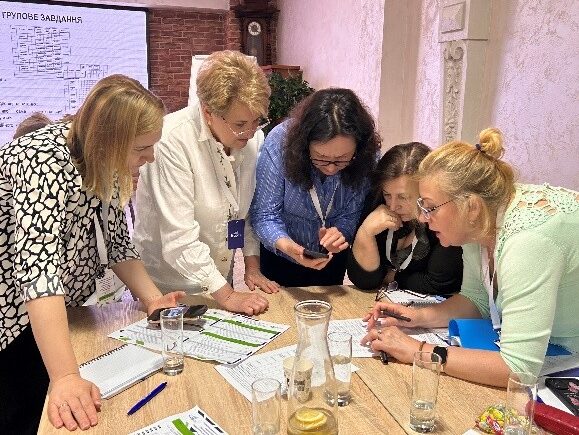
With support from the U.S. Centers for Disease Control and Prevention (CDC), ICAP at Columbia University recently hosted a regional webinar series – “Applying the 7-1-7 Framework: Strengthening Timeliness in Outbreak Detection and Response” – bringing together more than 100 health professionals across veterinary, public health, and hospital sectors from across Eastern European and Central Asian (EECA) countries.
Held in July 2025, the three-part webinar series featured presentations, interactive discussions, and regional case reviews by 7-1-7 experts. Such teams as Georgia’s National Center for Disease Control and Public Health, Armenia’s National Center of Infectious Diseases, the State Medical University of Ukraine, and the Ministry of Health of the Republic of Kazakhstan participated in the training.
Richard Garfield, a registered nurse and doctor of public health at CDC’s Division of Global Health Protection, led the primary training sessions, which emphasized the critical role of rapid detection and coordinated response in safeguarding public health. The webinar series also fostered cross-country learning and collaboration, reinforcing the importance of sharing experiences to strengthen regional outbreak preparedness.
Across EECA, ICAP supports the Field Epidemiology Training Program (FETP), a learning-by-doing applied training program that prepares the public health workforce to investigate and respond to major disease outbreaks more effectively. As part of the July webinar series, FETP graduates from Moldova and Armenia presented real-world field investigations on brucellosis, salmonellosis, and West Nile Virus, which were the focus areas of their FETP training. These cases were analyzed using the 7-1-7 framework, offering the training participants a grounded understanding of how timeliness can be assessed and improved in actual outbreak settings.
“The 7-1-7 training series is an important step in ICAP’s broader efforts to strengthen outbreak preparedness and response across the Eastern Europe and Central Asia region,” said Naile Malakmadze, senior technical advisor for ICAP’s FETP program. “It is closely linked to our One Health approach, which recognizes the interconnectedness of human, animal, and environmental health. By bringing together professionals from diverse sectors, we aim to create a shared understanding and a practical framework for rapid detection and coordinated response.”
“My hope is that participants will take these tools back to their daily work – whether in public health, veterinary services, or clinical care – and actively apply them to detect outbreaks faster, communicate more effectively, and ultimately protect the health of their communities,” added Malakmadze.
“The 7-1-7 training gave our public health professionals a clear, practical framework to assess and improve timeliness in outbreak detection and response,” said Olga Onishchuk, an epidemiologist from Ukraine’s Ministry of Health, who participated in the training. “Participants learned how to break down real cases, identify where delays occurred, and find ways to respond faster. I think the most valuable takeaway is the understanding that timely action is not just a target, it is a lifesaving necessity.”
About ICAP
A major global health organization that has been improving public health in countries around the world for two decades, ICAP works to transform the health of populations through innovation, science, and global collaboration. Based at Columbia Mailman School of Public Health, ICAP has projects in more than 40 countries, working side-by-side with ministries of health and local governmental, non-governmental, academic, and community partners to confront some of the world’s greatest health challenges. Through evidence-informed programs, meaningful research, tailored technical assistance, effective training and education programs, and rigorous surveillance to measure and evaluate the impact of public health interventions, ICAP aims to realize a global vision of healthy people, empowered communities, and thriving societies. Online at icap.columbia.edu