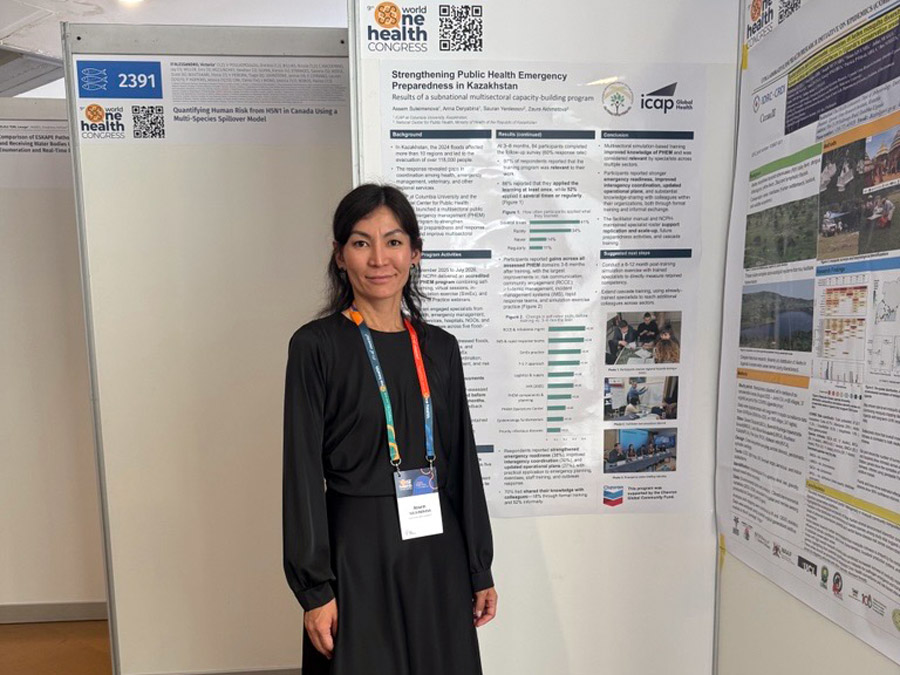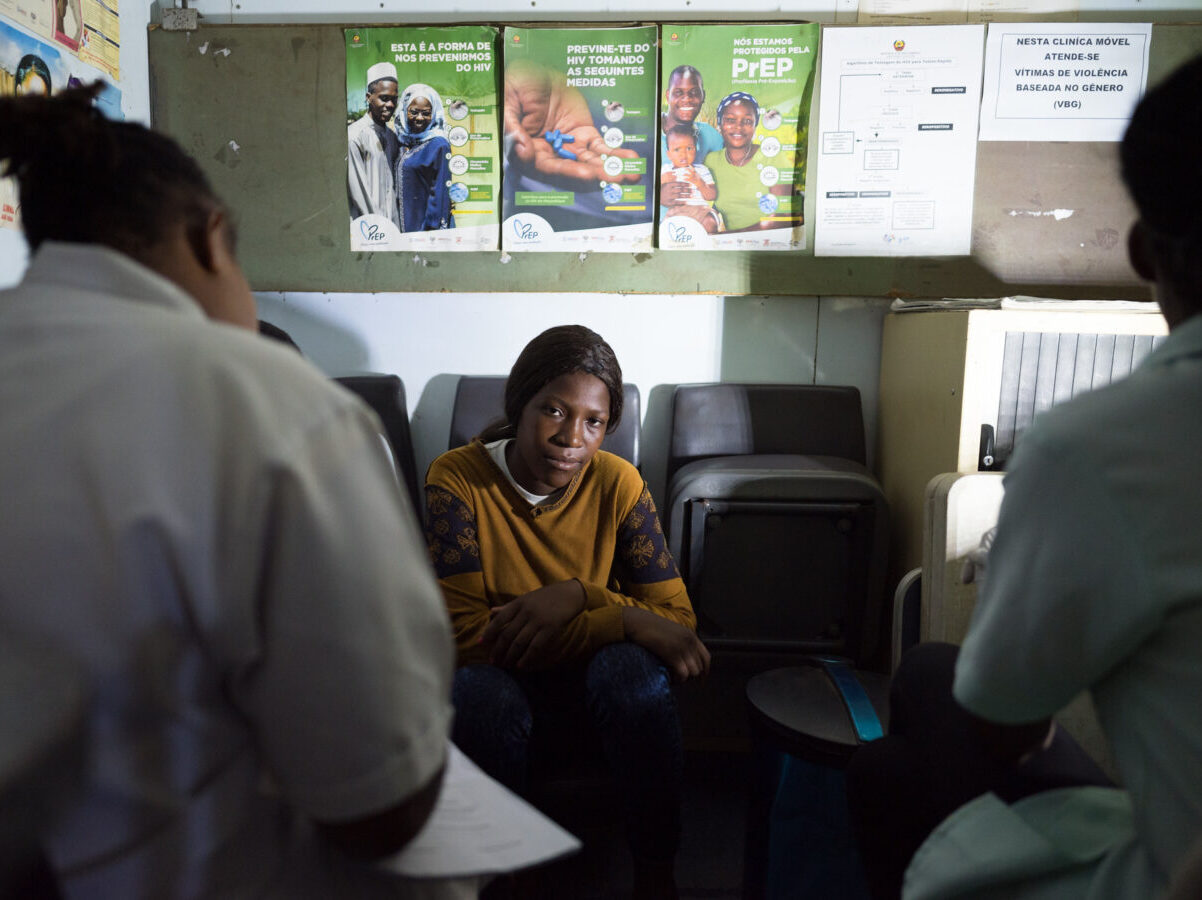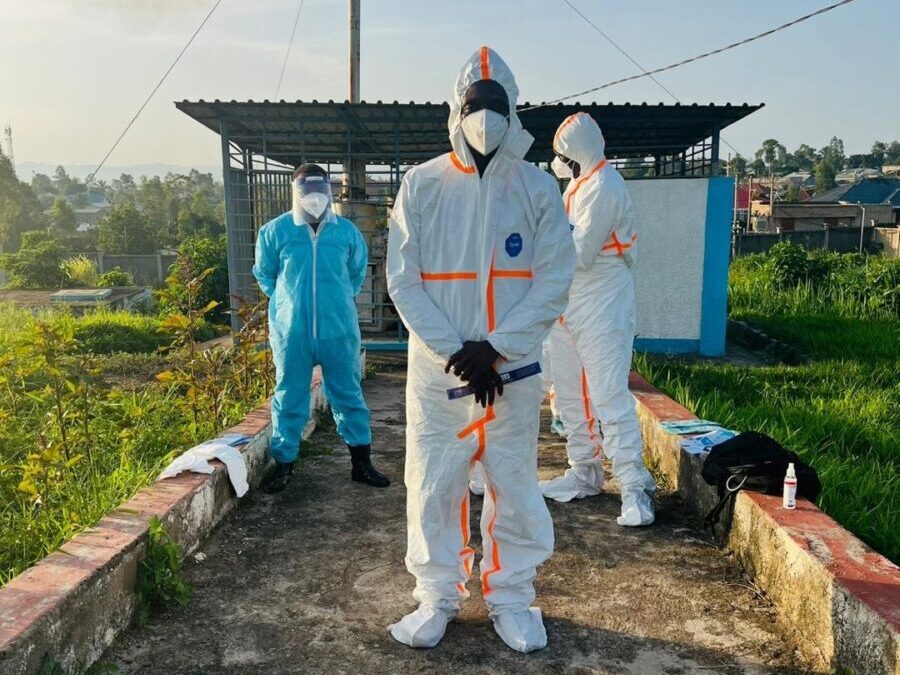

Countries throughout Africa face dual threats of infectious disease outbreaks, such as cholera, measles, and Ebola, alongside such climate-related shocks as floods and cyclones. These interrelated dangers repeatedly test the limits of national health systems and challenge health system resilience.
Past emergencies on the continent have revealed a critical shortage of trained and practiced public health workers as perhaps the key impediment to effective response. To help these countries overcome this gap, ICAP has been implementing a unique training program across West and Southern Africa designed to assist countries in developing a workforce with core competencies to respond effectively.
Launched in late 2024, with support from the US Centers for Disease Control and Prevention (CDC), the Public Health Emergency Preparedness, Response and Recovery (PHEPRR) Fellowship is a regional competency-based training that aims to develop surge capacity across all health sectors in line with the One Health approach – a collaborative, transdisciplinary model that recognizes the interconnectedness of people, animals, and ecosystems.
Divided into training cohorts in West Africa and Southern Africa, the program has trained or is in the process of training more than 60 public health professionals from across 18 countries – South Africa, Namibia, Zimbabwe, Zambia, Botswana, Eswatini, Malawi, Mozambique, Nigeria, Ghana, Liberia, Benin, Guinea, Sierra Leone, Mali, Burkina Faso, Togo, and The Gambia.
The PHEPRR fellows reflect the multidisciplinary approach needed to address public health emergencies and include epidemiologists, doctors, nurses, veterinarians, water, sanitation and hygiene (WASH) specialists, pharmacists, and laboratorians. During the six-month trainings, fellows learn about incident management systems, assessing threats and hazards, and tactical planning. Each participant also completes a Capstone Project to address an emergency response gap in their country.
“Beyond strengthening my leadership and technical skills, the fellowship inspired my capstone project, OneHealth-AI, through which I aim to help transform our surveillance systems from reactive response mechanisms to proactive, predictive systems for early detection and action,” said Dr. Ibrahima Kalil Kourouma, a fellow from Guinea.
The PHEPRR program engages participants in a practice-based learning experience with four principal components:

West Africa Cohort 3 participants and fellows engaging in a tower building activity to practice implementing a project in an emergency situation.
- Through a blended learning and applied practice model with two in-person learning sessions, participants engage in interactive group exercises and functional simulations using localized case studies and real-world scenarios to ensure practical application.
- Continuous learning and engagement through a webinar series and mentorship serves to reinforce core concepts between sessions and provides for targeted deep dives on priority topics.
- Applied learning through a Capstone Project – a real-world initiative to strengthen systems – lets each fellow develop a practical, country-relevant project.
- Cross-Country collaboration through an online, interactive educational platform facilitates structured peer-to-peer exchange and shared learning among fellows.
“The PHEPRR Fellowship focuses on supporting trainees to gain immediately applicable skills so they can quickly integrate into PHEM structures at their level. Through its focus on active learning, the Fellowship
allows them to practice new skills and apply new knowledge with support from ICAP experts, highly experienced mentors, and peer guidance,” said Claire Raether, ICAP’s Senior Training and Education Specialist. “This PHEPRR Fellowship is unique in the region for its highly interactive design that allows trainees to not only learn but also share their knowledge to build regional resilience and cohesion.”
“The PHEPRR fellowship provided vital tools for my daily work,” said Housseynatou Diallo, Risk Communication and Community Engagement lead and public health researcher at the National Institute of Public Health in Guinea “The modules on risk assessment gave me clear frameworks for crisis preparation, while the focus on preventing burnout highlighted the essential need to protect our frontline workers during emergencies.”
PHEPRR trained staff return to their institutions able to drive system-wide improvements that extend beyond improved prediction, preparation and responsiveness when an emergency strikes. For example, the skills required to manage a Public Health Emergency are directly applicable to improving the logistical supply chain, communication for broader health initiatives, such as coordinating a national vaccination campaign, or managing a complex chronic disease surveillance program.
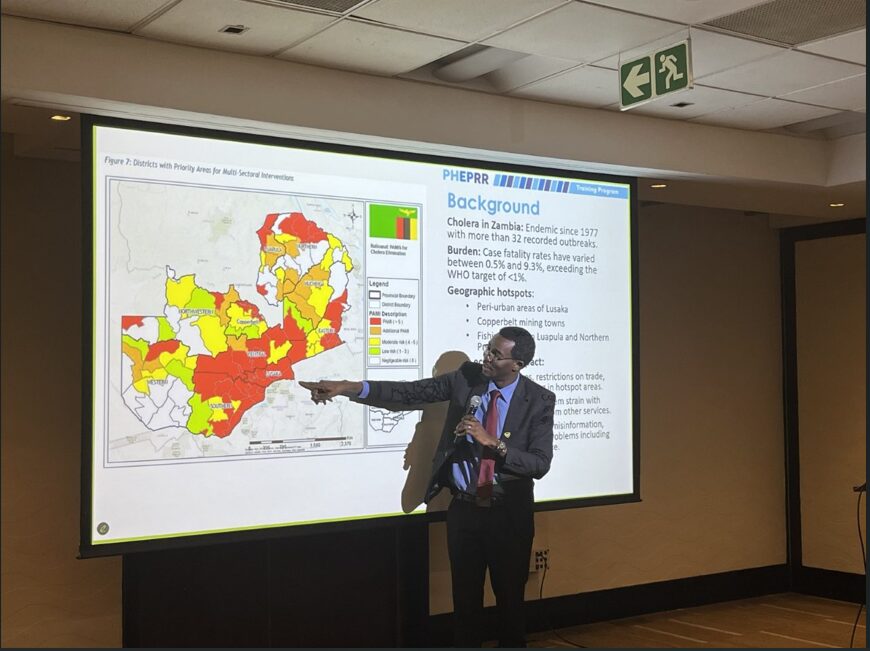
PHEPRR fellow Annel Sinkala from Zambia presents his Capstone on addressing a cholera outbreak in his country.
Part of the portfolio of public health training programs developed and implemented by ICAP, the PHEPRR Training Program acts as a critical force-multiplier for broader public health emergency management capacity-building initiatives, such as Public Health Emergency Management (PHEM) Fellowships and Field Epidemiology Training Programs (FETP). While higher-level programs like the PHEM Fellowship target mid-career leadership to design and direct national emergency functions, PHEPRR builds the operational depth required to execute these strategies.
“One of the most impactful moments was participating in a 10-day intensive Training of National Trainers in Public Health Emergency Management (PHEM) in Guinea, organized by CDC Guinea as part of the fellowship experience,” said Kourouma. “This opportunity helped me grow from being a frontline contributor into a certified national PHEM trainer.”
“Participating in the PHEPRR fellowship has deepened my understanding of the critical link between robust surveillance and national health security,” said Mary Magdalene, a fellow from Sierra Leone.
“By grounding regional professionals in the same aligned emergency management principles, PHEPRR creates a ‘common language’ between national leadership and the broader workforce,” said Susan Michaels-Strasser, PhD, MPH, RN, FAAN, ICAP’s senior director for Human Resources for Health Development. “This alignment ensures that when PHEM Fellows return to their Ministries of Health to lead, they are supported by a cohort of PHEPRR-trained professionals capable of implementing their vision.”
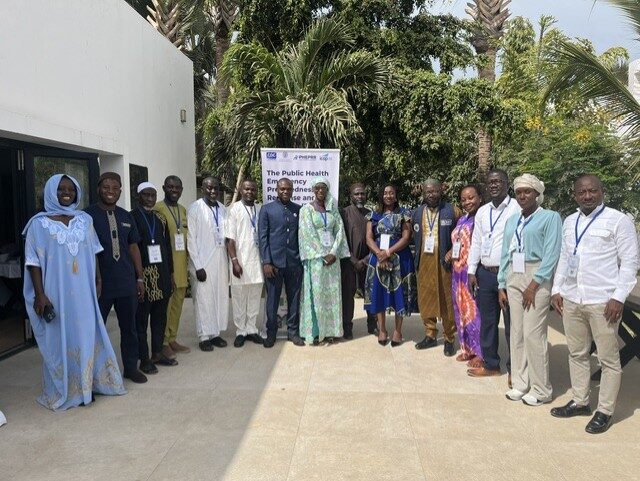
West Africa Cohort 2 participants in Banjul, The Gambia.
The first cohort from Southern African regions completed its training in late 2025. Currently, three more cohorts receiving training in Banjul, The Gambia, Lagos, Nigeria, and Johannesburg, South Africa are expected to complete their training by the end of this summer.
“By investing in this advanced emergency preparedness training, a cohort of public health leaders has been created who are not only able to respond to a crisis but are also better equipped to improve the efficiency, resilience, and overall performance of clinical and public health services in non-emergency settings,” said Michaels-Strasser. “For this reason, the PHEPRR program represents a dual-impact investment – building the critical capacity needed for acute emergencies while simultaneously elevating the standard of management and operations for all public health programs.”
“The PHEPRR fellowship has been a truly transformative experience for me,” said Kourouma. “Through it, I gained a deeper understanding of the entire public health emergency preparedness, response, and recovery cycle.”
“The skills I’ve gained are already being integrated into our daily operations in Sierra Leone, helping us build a more resilient public health infrastructure that is better prepared to safeguard our communities against future emergencies,” said Magdalene.
About ICAP
A major global health organization that has been improving public health in countries around the world for two decades, ICAP works to transform the health of populations through innovation, science, and global collaboration. Based at Columbia Mailman School of Public Health, ICAP has projects in more than 40 countries, working side-by-side with ministries of health and local governmental, non-governmental, academic, and community partners to confront some of the world’s greatest health challenges. Through evidence-informed programs, meaningful research, tailored technical assistance, effective training and education programs, and rigorous surveillance to measure and evaluate the impact of public health interventions, ICAP aims to realize a global vision of healthy people, empowered communities, and thriving societies. Online at icap.columbia.edu