In early September 2025, the Democratic Republic of the Congo (DRC) confirmed its 16th Ebola virus disease outbreak since the disease was first identified in 1976. The epicenter was Bulape Health Zone in Kasai Province, which lies in the south-central part of the country, sharing a border with Angola, and which is home to about 3.5 million people.
Uncommon, but extremely serious, Ebola virus disease is contagious and often fatal to humans. Transmission of the virus takes place through close contact with blood, secretions, organs, or other bodily fluids of infected humans or those who have died from the virus, infected animals such as fruit bats, or contaminated objects.
Since 2021, with funding from the US Centers for Disease Control and Prevention (CDC), ICAP has been working to support the DRC to strengthen global health security surveillance and public health emergency preparedness, response, and recovery capacity. As part of this work, ICAP supports the strengthening of infection prevention and control (IPC) and water, sanitation, and hygiene (WASH) systems in front-line health facilities as a cross-cutting foundation for outbreak containment and health system resilience.
With the September 2025 outbreak, it was clear that many of the facilities responsible for detecting and isolating cases were operating with weak IPC and WASH systems, in a remote region with an unreliable water supply and constrained health workforce availability. With CDC support, and in close coordination with the DRC public health system, ICAP launched an IPC/WASH initiative centered on Bulape, with additional support to neighboring Mweka, covering a group of 10 health facilities on the front lines of the health emergency.
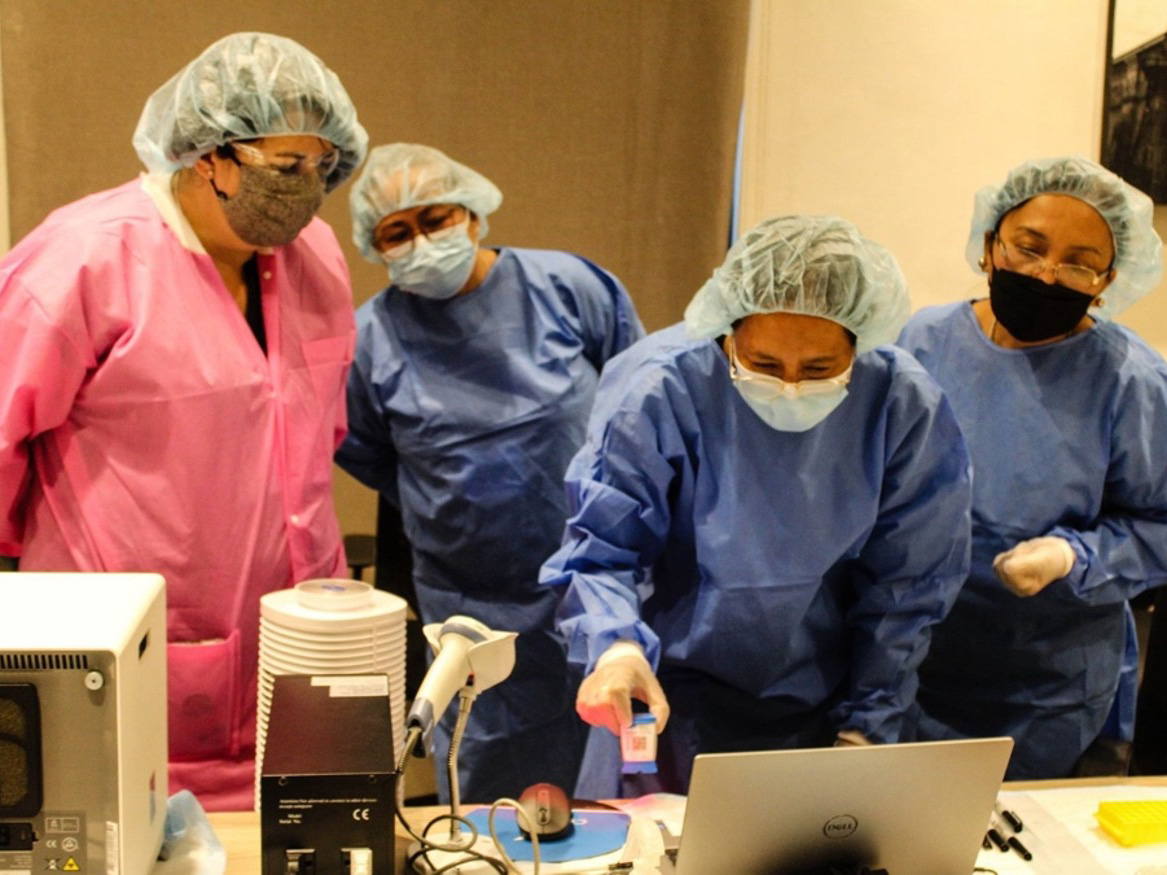
ICAP began by conducting comprehensive assessments of IPC and WASH readiness for Ebola preparedness and response across supported facilities. Working with the national public health emergency operations center (COUSP), the Provincial Health Division, and health zone management teams, ICAP employed the DRC Ebola Rapid Assessment Tool – jointly developed by the DRC Ministry of Health and the World Health Organization – to identify critical gaps in infrastructure, supplies, systems, and practices; compare performance across facilities; and prioritize corrective actions and resource mobilization.
Baseline assessments were conducted at the facilities in December 2025, followed by reassessments between January and March 2026. The reassessment found a mean facility readiness score of 62.9 percent (ranging from 33 to 84 percent), with three factors below the 50-percent readiness threshold: water supply and storage (14.8 percent), safe care and isolation capacity (42.8 percent), and sanitation (44.4 percent). Future track progress on these scores.
Based on these findings, ICAP developed facility-specific improvement plans for each of the 10 supported facilities, covering IPC supply kits, sterilization equipment, waste-management areas, latrine and handwashing stations, and rainwater-harvesting impluviums where drilling is unavailable.
ICAP also transitioned short-term outbreak staffing into longer-term positions, onboarding a national IPC specialist advisor and two IPC officers in March 2026 and contracting five facility supervisors to provide supportive supervision and mentorship. Additionally, in June 2026, ICAP supported IPC and WASH training for 215 nurses, doctors, hygienists, and other health care workers in Bulape and Mweka Health Zones, with the aim to support a sustained resilience strategy beyond the immediate outbreak response.
In May 2026, not long after the containment of the September 2025 epidemic, a new, more dangerous outbreak of Ebola virus disease – the country’s 17th— was declared. Caused by the extremely rare Bundibugyo strain of the virus, for which there are no currently approved vaccines or treatments, it is one of the fastest-spreading outbreaks on record. By the start of July 2026, thousands of confirmed cases and hundreds of deaths had been recorded in the Ituri, North Kivu, and South Kivu provinces.
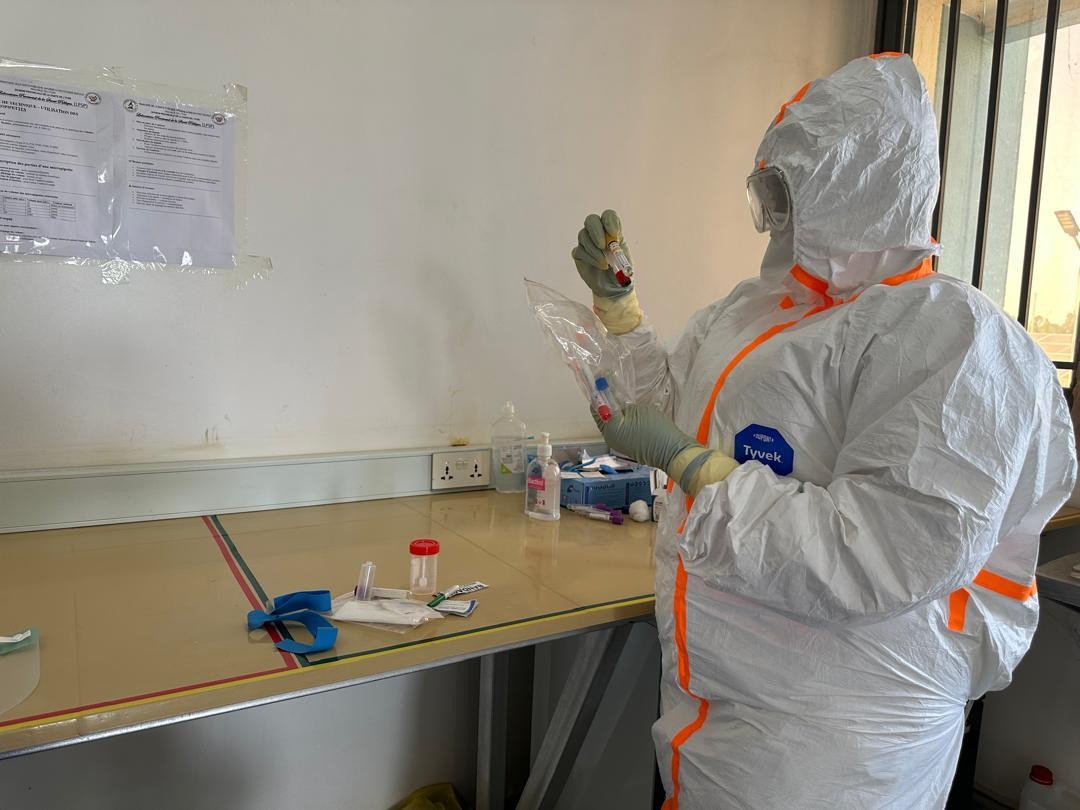
Building on its strong presence in the country and years of experience improving health systems – including its work with the September 2025 Ebola emergency – ICAP has been providing infection prevention control and biosafety training and mentorship at the Bunia lab in Itiuri province, one of the few laboratories that are screening samples from suspected cases identified in health facilities from the affected health zones. Meanwhile, ICAP is formulating plans for a package of activities designed to reduce healthcare-associated and community transmission of Bundibugyo Ebola virus in eastern DRC through strengthened IPC and WASH systems, healthcare worker protection, and community-based prevention.
While the situation remains precarious and control of the outbreak elusive, it is hoped that these measures will help mitigate the spread of infection during this and future infectious disease emergencies.
“Strong infection prevention and control systems are essential during an Ebola outbreak, but their value extends far beyond a single emergency,” said Jacques Bikaula Ngwidiwo, GHS project director for ICAP in DRC. “Drawing on ICAP’s experience supporting health systems and outbreak preparedness across Africa, we are helping facilities identify critical gaps, strengthen infrastructure and workforce capacity, and build sustainable systems that protect health workers, patients, and communities from current and future infectious disease threats.”
“Infectious diseases do not recognize borders,” said Suzue Saito, PhD, MIA, MA, principal investigator for ICAP’s global health security work in the DRC. “By their very nature, the recent outbreaks of Ebola virus disease we have seen in recent months threaten not only local populations, but people everywhere. The efforts we are making to help the DRC – and many other countries – prepare for, detect, and quickly respond to outbreaks can make all the difference in containing threats before they spread out of control.”
About ICAP
A major global health organization that has been improving public health in countries around the world for two decades, ICAP works to transform the health of populations through innovation, science, and global collaboration. Based at Columbia Mailman School of Public Health, ICAP has projects in more than 40 countries, working side-by-side with ministries of health and local governmental, non-governmental, academic, and community partners to confront some of the world’s greatest health challenges. Through evidence-informed programs, meaningful research, tailored technical assistance, effective training and education programs, and rigorous surveillance to measure and evaluate the impact of public health interventions, ICAP aims to realize a global vision of healthy people, empowered communities, and thriving societies. Online at icap.columbia.edu