When a mother arrived at Embakasi Health Centre in Nairobi with her three children, all running high fevers and covered in spreading skin lesions, she was searching for answers. Her two 11-year-old twins and their 20-year-old sibling had been worsening for days. The eldest had even tested negative for mpox just four days earlier, deepening the family’s confusion. But when a trained clinician saw all three siblings together, feverish, with the same characteristic widespread rash, the pattern was unmistakable. Samples were taken without delay.
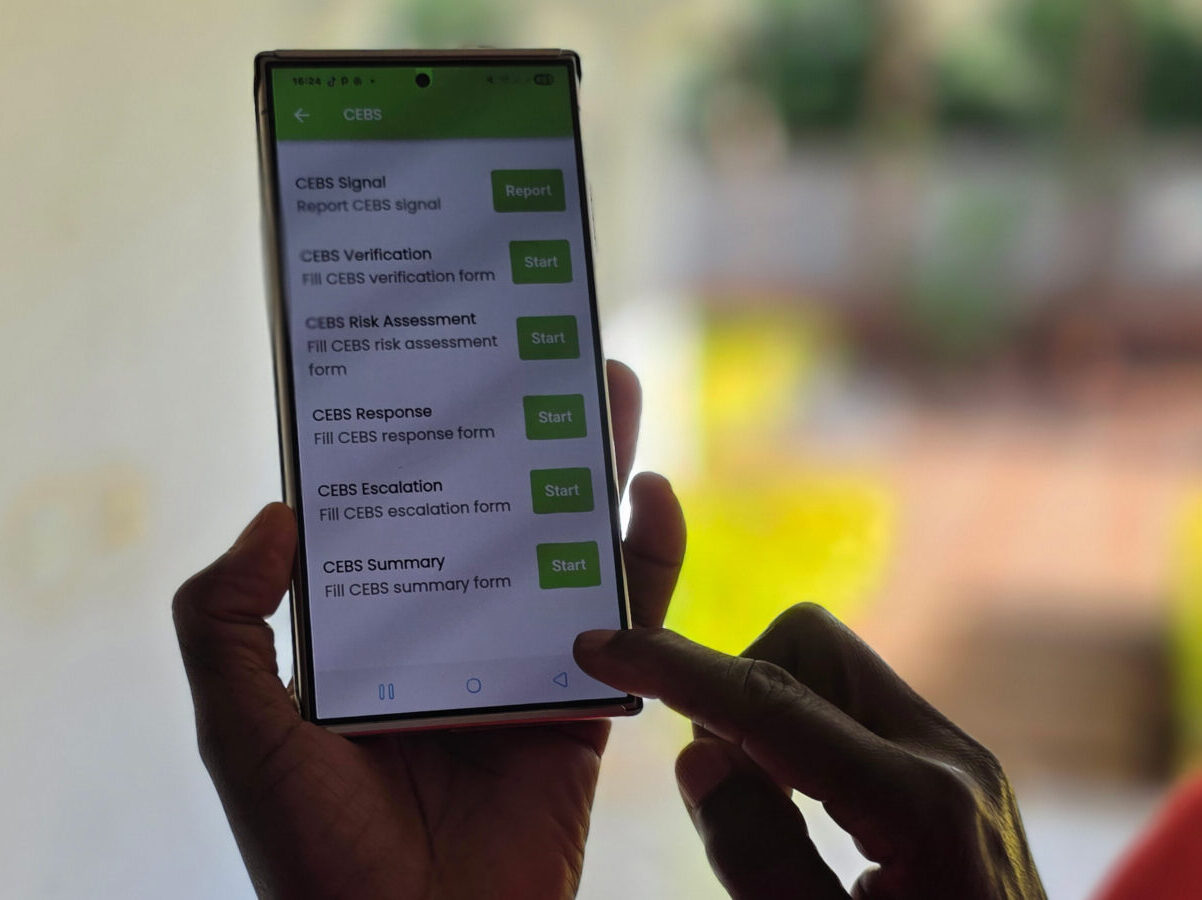
On March 26, 2026, the clinician filed an alert through m-Dharura, Kenya’s national, paperless digital disease-reporting platform, which enables trained health workers to flag unusual health events directly from their phones in real time. The alert was promptly verified and risk-assessed by the Embakasi East Disease Surveillance Coordinator, triggering a coordinated multi-agency response. Event-Based Surveillance (EBS), implemented by ICAP Kenya in collaboration with the Ministry of Health, and funded by the US Centers for Disease Control and Prevention (CDC), is designed to do precisely this: identify potential public health threats at the point of care, before they have the chance to spread.
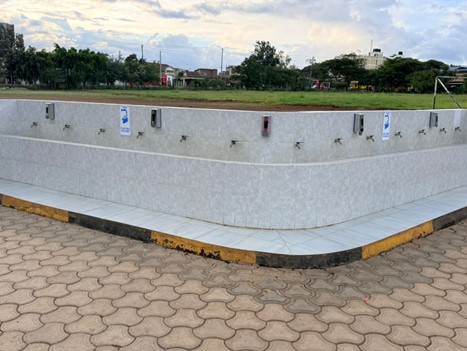
A new hand-washing facility constructed to improve infection prevention and control at a school in Embakasi East
How the siblings were exposed remained unclear. Their mother, a civil servant who travelled frequently for work, reported no symptoms herself, leaving the source of infection an open question. Members of the family had also sought care at two other facilities in the area, but symptoms persisted and worsened despite treatment. Without a structured surveillance system to connect those signals, three family members presenting separately at different clinics might never have been recognised as a single cluster. In Embakasi East, a densely populated residential and commercial neighbourhood in Nairobi with close to one million residents, such gaps in visibility can allow an outbreak to grow quietly before anyone notices.
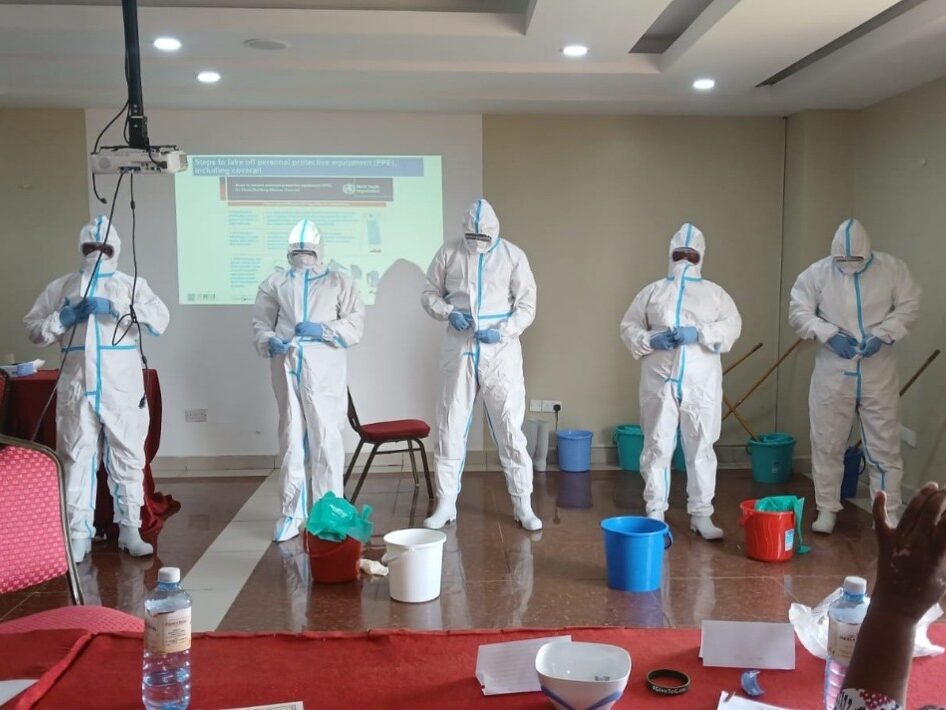
The response was swift and far-reaching. Health care worker training sessions were held across five public health facilities, reaching 127 staff. At the affected school, 132 pupils and two teachers received health education on mpox recognition and prevention. Assessments of the school revealed inadequate handwashing infrastructure, promptly addressed with new hand-washing facilities, the disinfection of 30 classrooms and 40 washrooms, and reinforced hygiene practices with water and sanitation (WASH) officer support. Active case follow-up and community outreach were extended to the neighbouring Kayole Soweto community. No additional mpox cases were identified,confirming that the response had successfully contained the cluster.
“It is amazing how reporting a single mpox signal triggered us to mount such an effective response curbing further spread of mpox in the community and cushioning the school from spread of mpox and other potential infectious diseases,” said Jesicah Oyoo, Embakasi East WASH officer
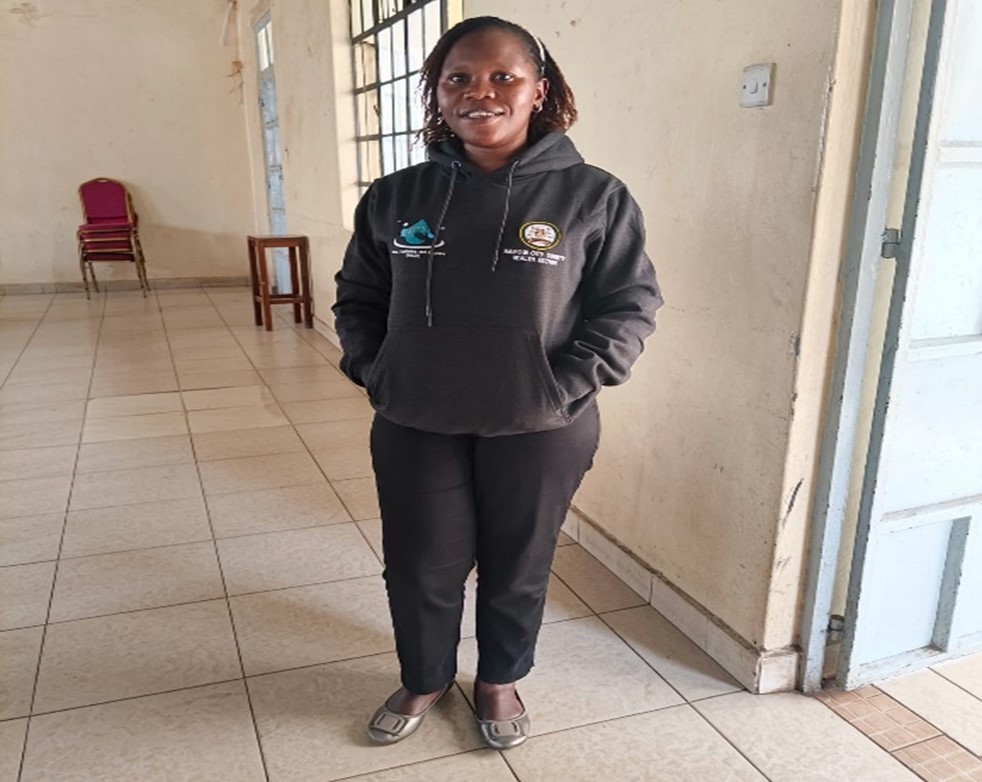
Jesicah Oyoo, Subcounty WASH Officer
“EBS is important for detecting and preventing disease outbreaks. If the cases had not been reported, all these prevention interventions would not have been put in place and the infection would have spread immensely,” said Daisy Tuitoek, Embakasi East Disease surveillance coordinator. “Following sensitization and vigilance in the community and school, no additional mpox cases have been identified, indicating control of the situation.”
The Embakasi East response illustrates what ICAP’s EBS program is built to do: not merely detect unusual health events but immediately structure the public health response around them. Embedded in the system is the institutional architecture for action, trained focal persons, verified reporting channels, and coordinated multi-agency protocols that transform a clinician’s suspicion into a decisive public health intervention within hours of a single alert.
This capacity to investigate, respond, and document potential outbreaks in a structured and replicable way is what allows outbreaks to be contained early, rather than addressed late.
The value of this infrastructure reaches beyond Kenya’s borders. In a world of accelerating cross-border health threats, from mpox to Ebola to novel respiratory pathogens, the ability of a trained health worker in a Nairobi neighbourhood to detect, report, and trigger a structured response represents exactly the kind of community-level early-warning capacity that global health security depends on. Every signal caught early is a potential outbreak stopped before it starts.
About ICAP
A major global health organization that has been improving public health in countries around the world for two decades, ICAP works to transform the health of populations through innovation, science, and global collaboration. Based at Columbia Mailman School of Public Health, ICAP has projects in more than 40 countries, working side-by-side with ministries of health and local governmental, non-governmental, academic, and community partners to confront some of the world’s greatest health challenges. Through evidence-informed programs, meaningful research, tailored technical assistance, effective training and education programs, and rigorous surveillance to measure and evaluate the impact of public health interventions, ICAP aims to realize a global vision of healthy people, empowered communities, and thriving societies. Online at icap.columbia.edu