In Angola, adherence to pediatric antiretroviral therapy (ART) has historically posed a significant challenge due to limited child-friendly formulations, complex dosing requirements, and caregiver administration errors. These barriers have contributed to suboptimal treatment outcomes among children living with HIV.
In 2024, only 27% of children living with HIV in Angola were on ART, with mother-to-child transmission still at only 13%. And the pediatric care cascade has continued to deteriorate. From April to June 2025 alone, 367 children were lost from treatment, a 131% year-over-year increase, with 90.2% attributable to treatment interruption rather than mortality.
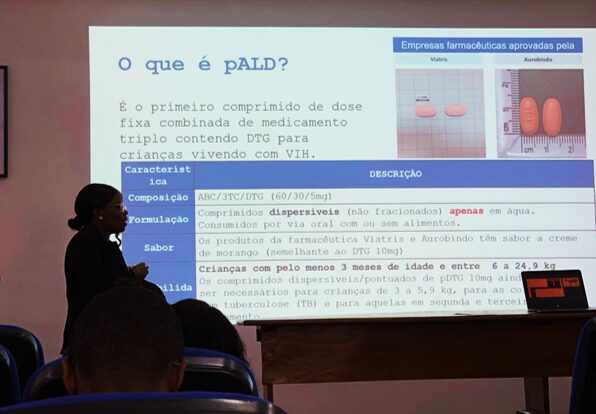
In late 2025 and early 2026, with support from the President’s Emergency Plan for AIDS Relief (PEPFAR) through the US Centers for Disease Control and Prevention (CDC), and in close partnership with the National Institute for the Fight Against AIDS (INLS), a coordinated, multi-sectoral effort supported by ICAP successfully introduced Angola’s first fixed-dose combination pediatric regimen—abacavir/lamivudine/dolutegravir (60/30/5mg). Known as pALD, this new treatment options marks a major advancement in pediatric HIV care in Angola.
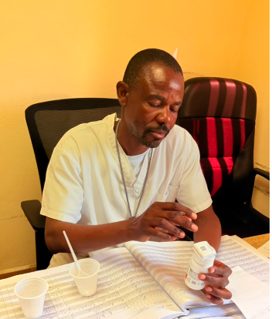
Emanuel Ndisiivike, HIV focal point at Cunene Provincial Hospital, finds the pALD regimen to be a significant improvement over previous pediatric HIV treatment approaches.
This milestone was achieved through a comprehensive package of interventions, including, advocacy that led to the inclusion and procurement of pALD in the national essential medicines list; development and rollout of a standardized national training package; strong coordination across key partners, including Procurement and Supply Management (PSM), the Angola Field Epidemiological Network (AFENET); and the Reaching Impact, Saturation, and Epidemic Control (RISE) project; targeted training and mentorship of health care workers in high-priority facilities; and active identification of eligible children and caregiver education to support uptake and correct use
The pALD regimen, which was first introduced in 13 health facilities supported by PEPFAR, during the periods of March 2–20 (Huambo and Lunda Sul) and May 11–13 (Cunene).
As a result of this initiative, 23 health facilities nationwide benefitted from training on pALD (13 PEPFAR-supported, 10 non-PEPFAR); 103 health care workers were trained, strengthening national capacity for pediatric HIV care; over a period of approximately two months, 307 children were initiated on the optimized pALD regimen, and caregivers showed high acceptance, reflecting improved ease of use and confidence in treatment.
The introduction of pALD is already reducing key adherence barriers by simplifying dosing, minimizing administration errors, and improving tolerability. In mid-2025, pediatric viral load coverage stood at only 45.1%, with 77.0% of those tested virally suppressed. Early uptake and positive caregiver response underscore the new regimen’s potential for improving those numbers by promoting sustained adherence and improved viral suppression among children.
Thirty days after implementation in Cunene Province, nurse Emanuel Ndisiivike, the HIV focal point at Cunene Provincial Hospital, observed a notable improvement.
“The pALD has made it easier to monitor the children. It combines three medications into a single tablet. Instead of multiple bottles, today we can take the tablets needed for daily treatment from a single bottle,” he said. “There is no longer a risk of medication errors, and the children are responding well to the new formulation—they are not rejecting the medication.”
With support from the US Bureau of Global Health Security and Diplomacy, and under the leadership of INLS, Angola moved from national guidance to facility-level implementation of pALD in a matter of months. The rollout shows how coordinated partnerships can accelerate access to optimized pediatric ART and strengthen the response for children living with HIV. The early identification and screening of children eligible for switching from abacavir/lamivudine (120/60mg and dolutegravir [10mg]) to pALD allowed for advance preparation of caregivers and subsequent acceptance of the service. As an added advantage, health technicians noted that the fixed-dose pALD regimen will reduce the risk of over- and under-dosing due to need for splitting tablets and potential errors in ART dispensing at the pharmacy.
About ICAP
A major global health organization that has been improving public health in countries around the world for two decades, ICAP works to transform the health of populations through innovation, science, and global collaboration. Based at Columbia Mailman School of Public Health, ICAP has projects in more than 40 countries, working side-by-side with ministries of health and local governmental, non-governmental, academic, and community partners to confront some of the world’s greatest health challenges. Through evidence-informed programs, meaningful research, tailored technical assistance, effective training and education programs, and rigorous surveillance to measure and evaluate the impact of public health interventions, ICAP aims to realize a global vision of healthy people, empowered communities, and thriving societies. Online at icap.columbia.edu