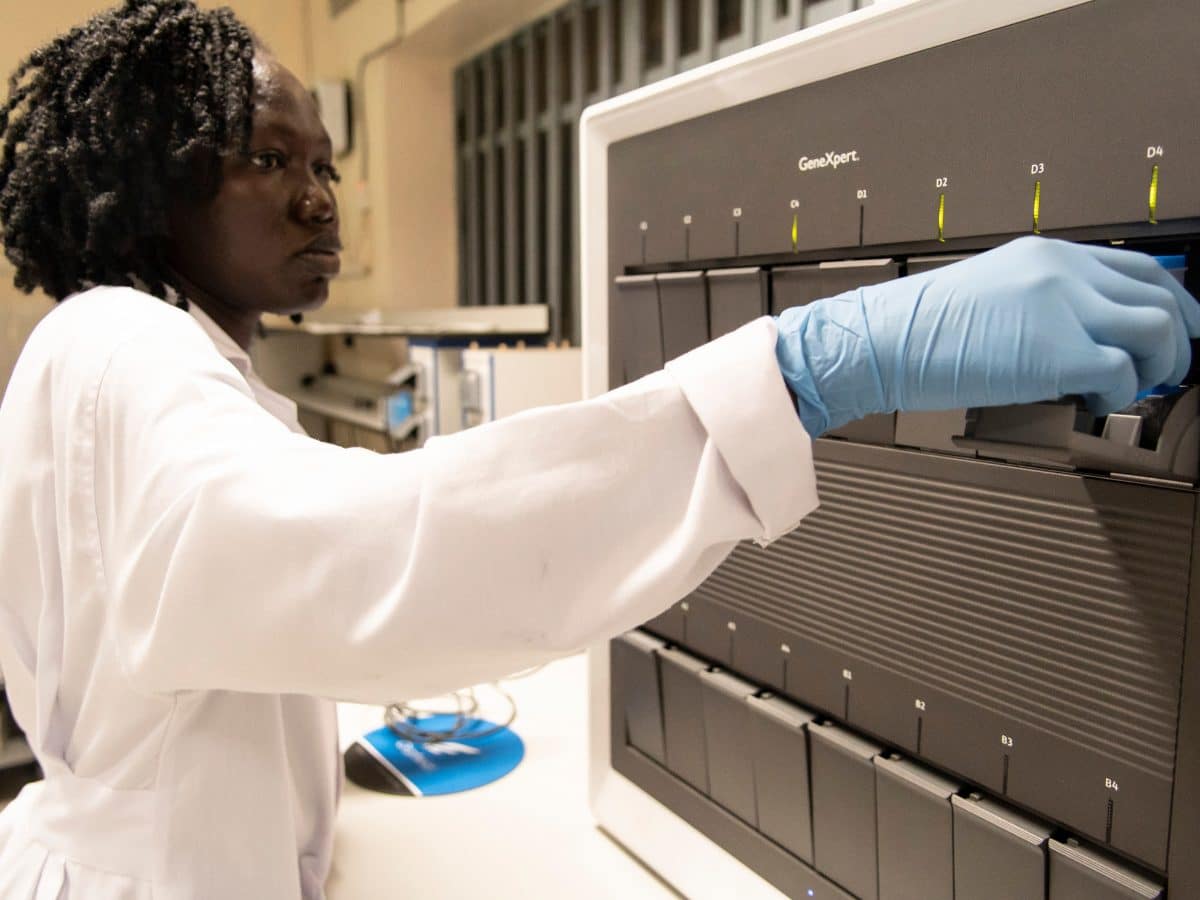
In the heart of Lakes State, South Sudan, at the Cueibet County Hospital, something remarkable is happening. For the first time, mothers are receiving their infants’ HIV test results within hours and people with chronic cough are being diagnosed with tuberculosis at the same doctor’s visit in which they went for testing. These important steps have been made possible by the rollout of GeneXpert machines for multi-disease testing at the health facility level.
GeneXpert machines are automated, polymerase chain reaction (PCR) testing systems designed for point-of-care molecular diagnostics, offering fast, accurate results for various health challenges. With support from the U.S. President’s Emergency Plan for AIDS Relief (PEPFAR) through the Centers for Disease Control and Prevention (CDC), ICAP at Columbia University has installed dozens of GeneXpert machines at the subnational level for Early Infant Diagnosis (EID) of HIV, viral load monitoring, and tuberculosis (TB) testing.
In South Sudan, where geographical and infrastructural challenges impede access to testing for many diseases, the introduction of GeneXpert machines at individual health facilities is a game-changer. Previously, challenging logistics and procedures involved in transportation and laboratory testing, where samples are often batched, contributed to long turnaround times. Due to ICAP’s intervention, clients now need only to travel short distances to take their EID, TB, or viral load tests, and can receive results the same day.
Nyamal Deng, 22-year-old mother of six-week-old daughter Aluel, is one such client. Before the introduction of the GeneXpert machines at the subnational level, it could take two to eight weeks or more to receive test results for infants exposed to HIV. Nyamal brought her daughter into Cueibet County Hospital for routine postnatal care; Aluel was tested for HIV on-site and her results were available the same day.
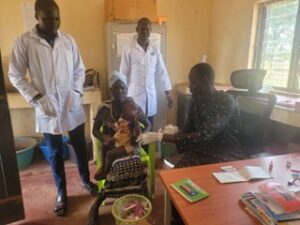
EID sample collection identifies HIV in infants to enable timely treatment and prevent severe illness and death.
“When the nurse told me my baby was HIV-negative that same afternoon, I wept with joy,” said Nyamal. “Before, we waited for results that took a long time. Now we know. Now we can act.”
Altogether, ICAP has trained 54 health staff in the region – including four “super users” who assist with major machine challenges at the regional level – on utilization of the GeneXpert machines. The South Sudan Ministry of Health’s mission to ensure point-of-care HIV and TB testing not only continues to improve health outcomes among communities but also facility-level efficiency, client retention, and community trust in the health system.
In collaboration with ICAP, the South Sudan Ministry of Health plans to scale up the deployment of near-patient molecular testing to reach the most remote and conflict-affected areas of South Sudan.
“As South Sudan rebuilds its health system in the post-conflict era, innovations such as the deployment of a near-patient molecular platform are proving essential,” said Habtamu Worku, MPH, ICAP’s director of Strategic Information in South Sudan. “They are not just about delivering test results faster; they are about providing hope, dignity, and timely care for the people who need it most.”
“We used to send samples for TB testing to Juba and wait a long time for test results,” said Peter Majok, a laboratory technician in Unity State, South Sudan. “Now, we diagnose and treat in one visit. This is saving lives.”
About ICAP
A major global health organization that has been improving public health in countries around the world for two decades, ICAP works to transform the health of populations through innovation, science, and global collaboration. Based at Columbia Mailman School of Public Health, ICAP has projects in more than 40 countries, working side-by-side with ministries of health and local governmental, non-governmental, academic, and community partners to confront some of the world’s greatest health challenges. Through evidence-informed programs, meaningful research, tailored technical assistance, effective training and education programs, and rigorous surveillance to measure and evaluate the impact of public health interventions, ICAP aims to realize a global vision of healthy people, empowered communities, and thriving societies. Online at icap.columbia.edu