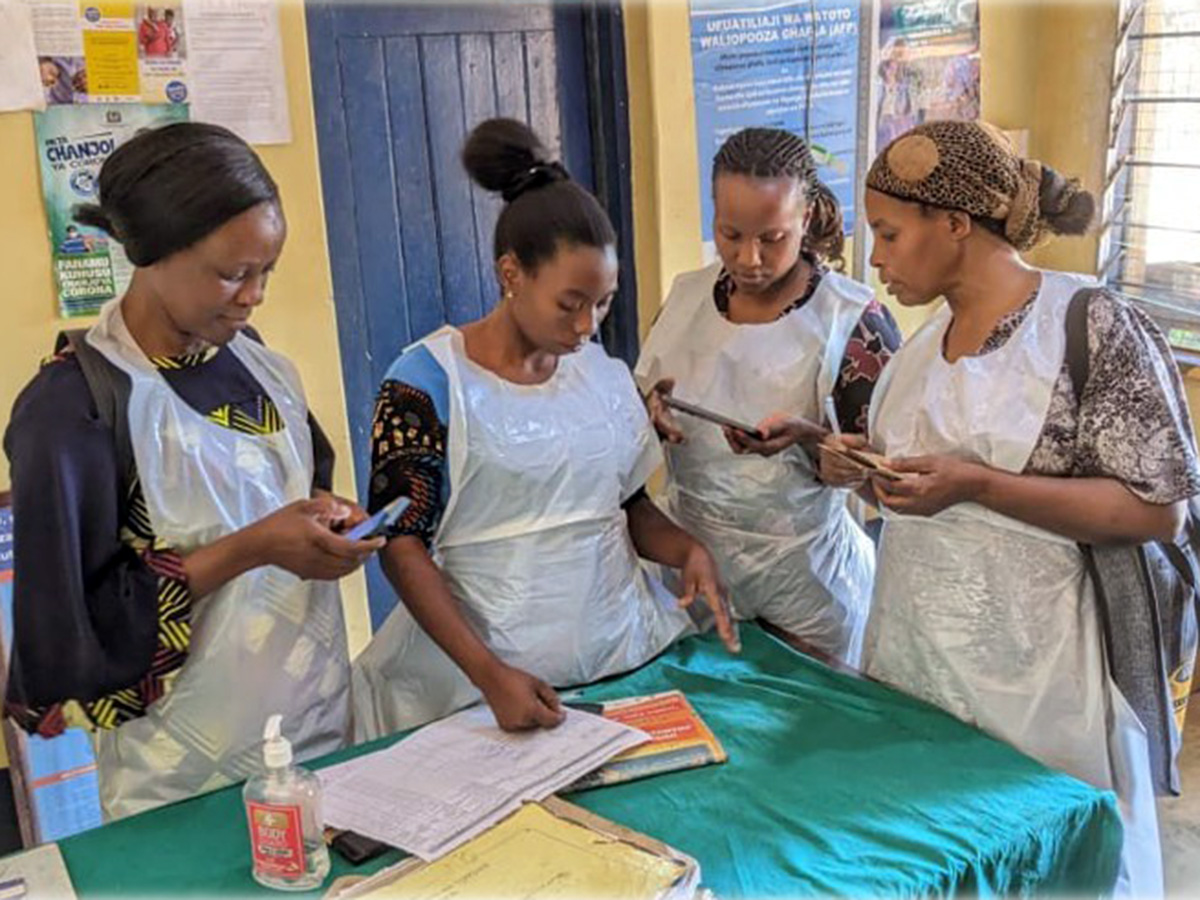
Cervical cancer, the fourth most-common cancer in women, is a devastating disease – especially because it is highly preventable and curable if caught early. Visual inspection with acetic acid is a primary screening method that can be integrated into routine outpatient care, including HIV care settings.
Unfortunately, cervical cancer continues to take a toll on woman across the world. The World Health Organization reports that there were 660,000 new cases of cervical cancer and 350,000 deaths from the disease in 2022. Notably, over 90% of cases and deaths occur in low- and middle-income countries, due to historically low primary prevention of cervical cancer through HPV vaccination, and lack of cervical cancer screening, and treatment.
In Tanzania, as in most sub-Saharan African countries, cervical cancer is the most prevalent type of cancer among women, with 10,000 Tanzanian women diagnosed annually. Every year, more than 6,000 women in the country die from cervical cancer. Women living with HIV are at an even higher risk of developing the disease.
In the face of this significant health threat, digital technology offers a major step forward.
For the past two years, a state-of-the-art tool powered by artificial intelligence (AI) is helping health providers improve the odds for women in Tanzania. Smartphone-enhanced VIA (SEVIA) is an AI-supported mobile app that empowers frontline providers to capture and share cervical images, obtain immediate feedback, and improve diagnostic accuracy.
The SEVIA app utilizes built-in AI and a secondary expert review system to analyze images of the cervix. Unlike traditional VIA, which relies solely on the immediate observation of a health care provider, SEVIA allows for digital image capture and remote verification.
Since mid-2024, ICAP has been implementing SEVIA in Tanzania through the FIKIA+ project, funded by the U.S. President’s Emergency Plan for AIDS Relief (PEPFAR) through the Centers for Disease Control and Prevention (CDC). Under FIKIA+ (“fikia” means “to reach” in Swahili), ICAP has supported integrating SEVIA into comprehensive cervical cancer screening, diagnosis, and treatment at 148 health facilities to date in the Mwanza and Geita regions, with the goal of reducing illness and death associated with cervical cancer.
How SEVIA Improves Cervical Screening
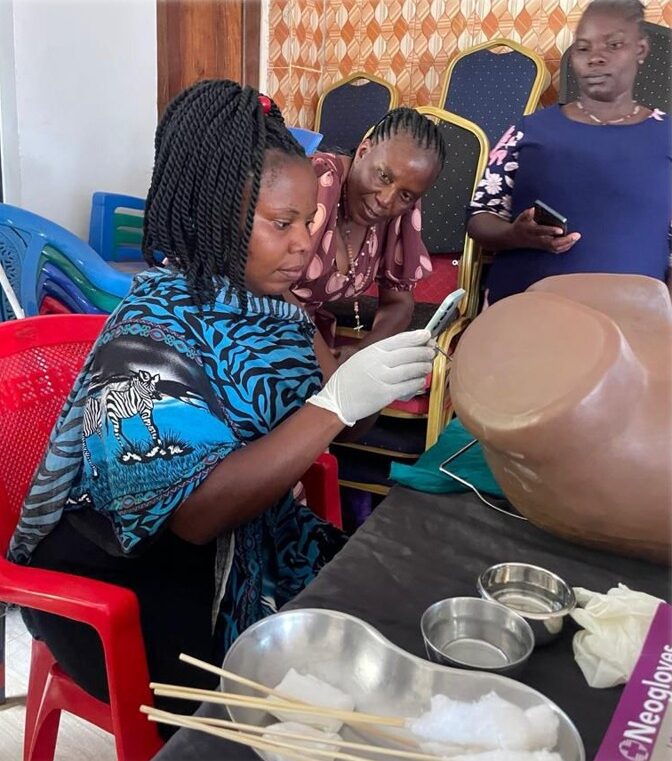
Health care workers practice taking quality images of the cervix during SEVIA training in Geita region.
The SEVIA system is quick and efficient. Following the application of acetic acid to the cervix, health care providers use a smartphone equipped with the SEVIA app to take high-quality images of the cervix. The app allows for the secure transfer of these images and clinical data to a centralized database. Patient privacy is protected at all times.
The AI rapidly scores the images and highlights potential lesions, while a trained clinician (often a gynecology specialist) reviews the same images. Both AI and expert feedback are returned to the provider, often within minutes, to confirm or correct the initial assessment, thereby reducing diagnostic errors and allowing for immediate, on-site, evidence-based treatment decisions such as cryotherapy, or referral to a specialist.
“SEVIA brings together the power of AI and human clinical acumen in a seamless way,” said Julie Franks, PhD, principal investigator of the FIKIA+ project. “The synergy of the two has tremendous promise.”
In addition to improving overall diagnosis accuracy, SEVIA introduces advantages throughout the cervical screening and diagnosis program. The system’s online dashboard allows regional health management teams to monitor screening in real-time, facilitating targeted mentorship, skill enhancement, and tracking of key outcomes.
“SEVIA provides immediate support for ambiguous cases, strengthens on-the-job training through training of trainers and expert reviewers, and reduces incorrect referrals and inaccurate reporting within the MOH system,” noted Wekisha John, the district reproductive and child health coordinator in NMwanza.
Value for Women and for the Health System
SEVIA’s value rests on its improved sensitivity that reduces the number of women who would have been sent home with a false negative result. Since ICAP officially launched SEVIA in Mwanza and Geita regions in 2024, more than 11,000 images have been submitted through the app. Of those, the system identified more than 1,000 “mismatched” cases, which could have been wrongly classified by the health care providers.
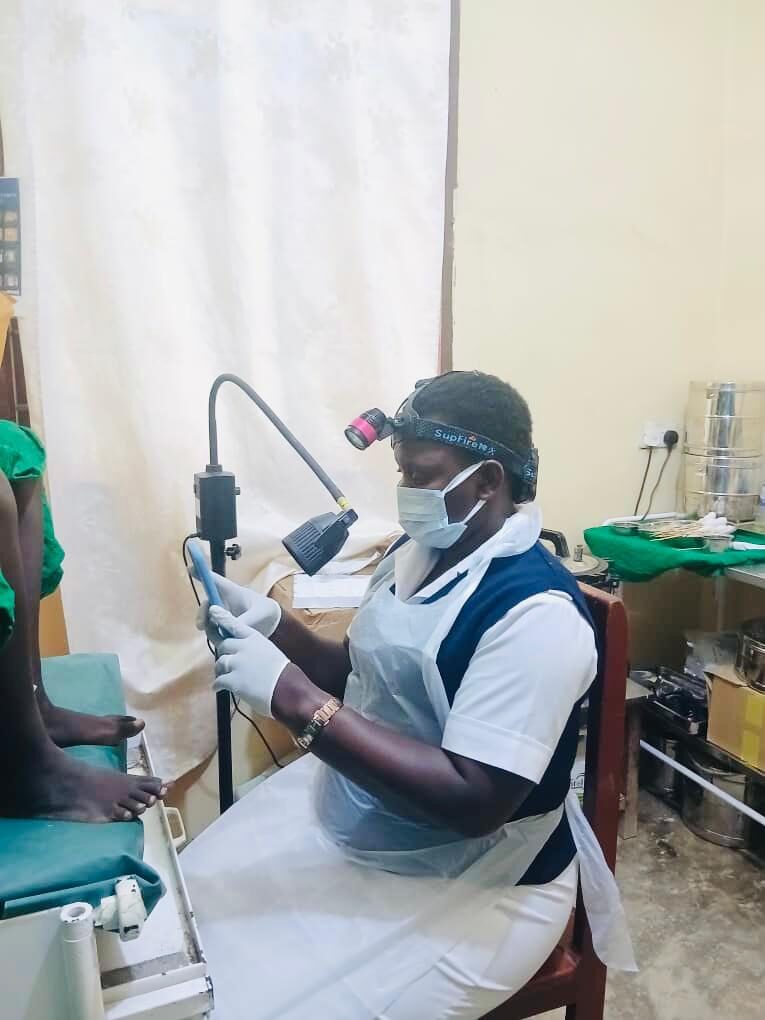
At Mkolani dispensary in Mwanza, a nurse takes a picture of the cervix during cervical cancer screening to be submitted for AI and expert review.
By acting as a “digital expert” in every exam room, ensuring that a woman in a remote district receives the same high-level diagnostic scrutiny – via AI and expert review – that someone in a well-resourced urban center , SEVIA also helps standardize care across the health system.
In resource-challenged contexts like much of Tanzania SEVIA also improves expert diagnostic coverage by empowering nurses and laboratory personnel to perform high-stakes screenings usually reserved for specialists.
“SEVIA has been invaluable,” said Anna Cosmas, a clinician at the Kasota Health Center in Geita, said. “When I encounter an ambiguous image, knowing that it will receive AI and expert review in near-real time is enormously reassuring. On four occasions, this guidance helped me correct mismatches and properly treat the patients.”
There is also an important financial dimension to the SEVIA story. Advanced cervical cancer treatment is a significant financial burden on families and the national health system. By identifying cases immediately, SEVIA not only helps save lives and avert suffering, it also avoids the high cost of chemotherapy, radiotherapy, and lost productivity – true benefits to both patients and the country at large.
This dramatically improved time to diagnosis not only serves patients and health care providers, but it also helps health system planners do their jobs more efficiently.
“SEVIA’s real-time expert review and improved sensitivity is a gamechanger for the screen-and-treat approach we use to identify and treat both pre-cancerous and cancerous lesions,” said Franks. “We also use SEVIA data for program quality improvement. Through the SEVIA online dashboard, regional and district health management teams can see exactly where screening volumes are low or where positivity rates are high, allowing them to deploy resources, mobile teams, or equipment where they are needed most.”
Ultimately, SEVIA is providing benefits throughout the cervical care cascade in the country.
“SEVIA has significantly increased our capacity and improved diagnostic accuracy by revealing lesions that are hard to see with the naked eye,” said Fitina Faida of Bugando Medical Center in Nyamagana, Mwanza. “It has reduced unnecessary referrals, saving clients time and costs, and the system’s record-keeping streamlines our facility registers and logbooks.”
“Innovations like SEVIA are a hallmark of ICAP’s work in Tanzania and around the world,” said John Kahamele, MD, ICAP’stor in Tanzania. “Bringing together the latest technology, creative approaches, and compassionate, human expertise, is proving to be a potent formula for improving health and saving lives.”
About ICAP
A major global health organization that has been improving public health in countries around the world for two decades, ICAP works to transform the health of populations through innovation, science, and global collaboration. Based at Columbia Mailman School of Public Health, ICAP has projects in more than 40 countries, working side-by-side with ministries of health and local governmental, non-governmental, academic, and community partners to confront some of the world’s greatest health challenges. Through evidence-informed programs, meaningful research, tailored technical assistance, effective training and education programs, and rigorous surveillance to measure and evaluate the impact of public health interventions, ICAP aims to realize a global vision of healthy people, empowered communities, and thriving societies. Online at icap.columbia.edu