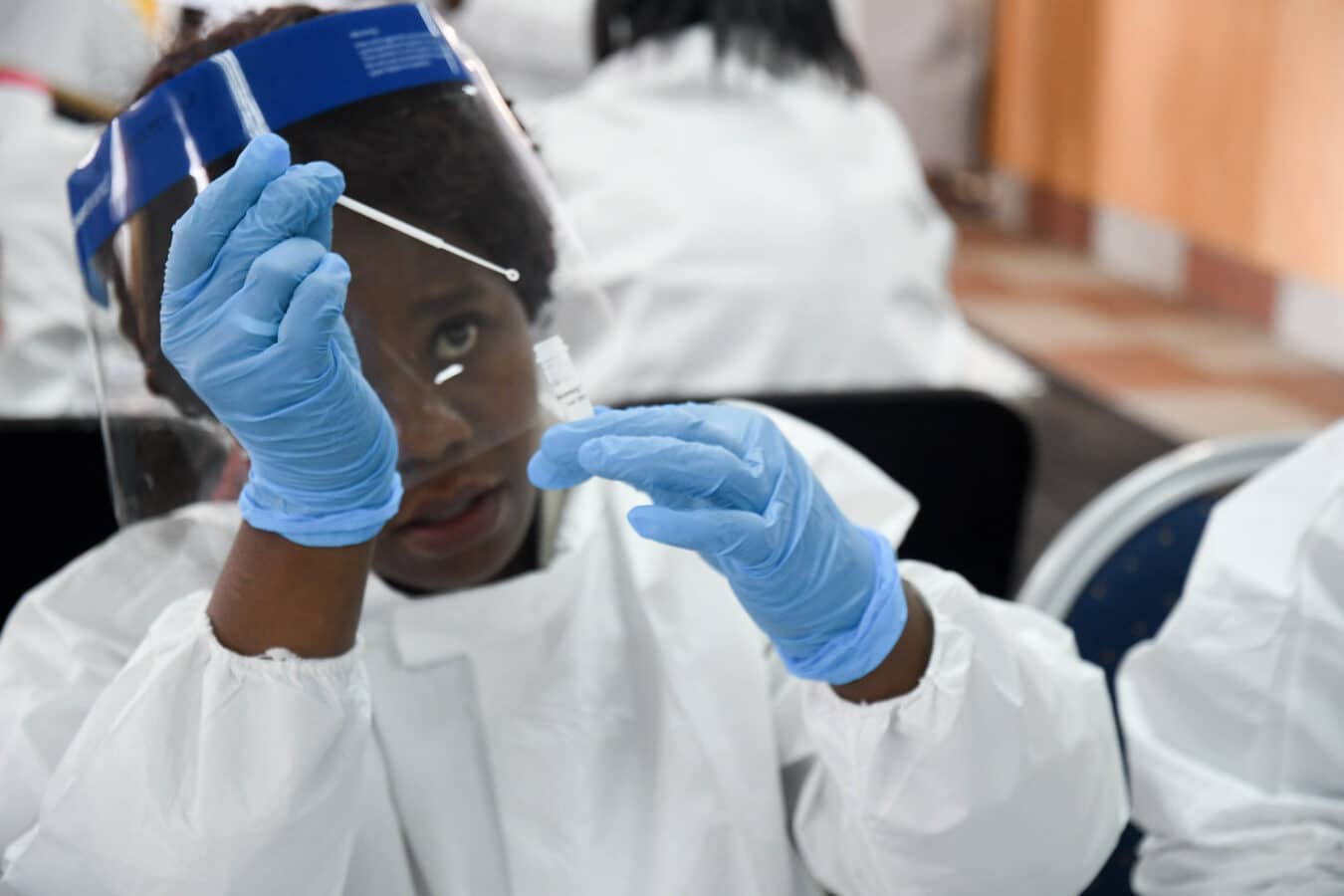
People who have recently acquired HIV are often unaware of their positive status or are not on antiretroviral therapy, putting them and their partners at increased risk. HIV recent infection surveillance offers public health systems a critical tool for identifying individuals early in their infection as the first step towards offering timely interventions to improve health outcomes for infected individuals and to prevent HIV transmission to others. Recent infection testing can also identify populations and geographical areas with high numbers of recent infections, enabling HIV programs to launch a rapid response tailored to a specific population and context.
Beginning in July 2019, Lesotho – a country that has been heavily impacted by HIV/AIDS – engaged in a campaign to introduce and scale up HIV recent infection surveillance with the goal of generating timely epidemiologic data on new HIV infections to guide targeted prevention and treatment strategies to accelerate progress toward epidemic control. The initiative represented a collaborative effort among the Lesotho Ministry of Health (MOH), ICAP at Columbia University, the Elizabeth Glaser Pediatric AIDS Foundation (EGPAF), and the U.S. Centers for Disease Control and Prevention (CDC).
On September 26, 2025, at a dissemination event in the capital city, Maseru, the country officially released its final report on the six-year project, outlining notable successes and charting a way forward.
As the final report details, an initial pilot in Leribe district led to national scale-up across all 10 districts, 220 health facilities and 10 community sites. To support this expansion, 201 master trainers and 1,242 trainees and community testers were certified, and three national data use workshops were held, ensuring standardized implementation and capacity to sustain recency testing and reporting at scale.
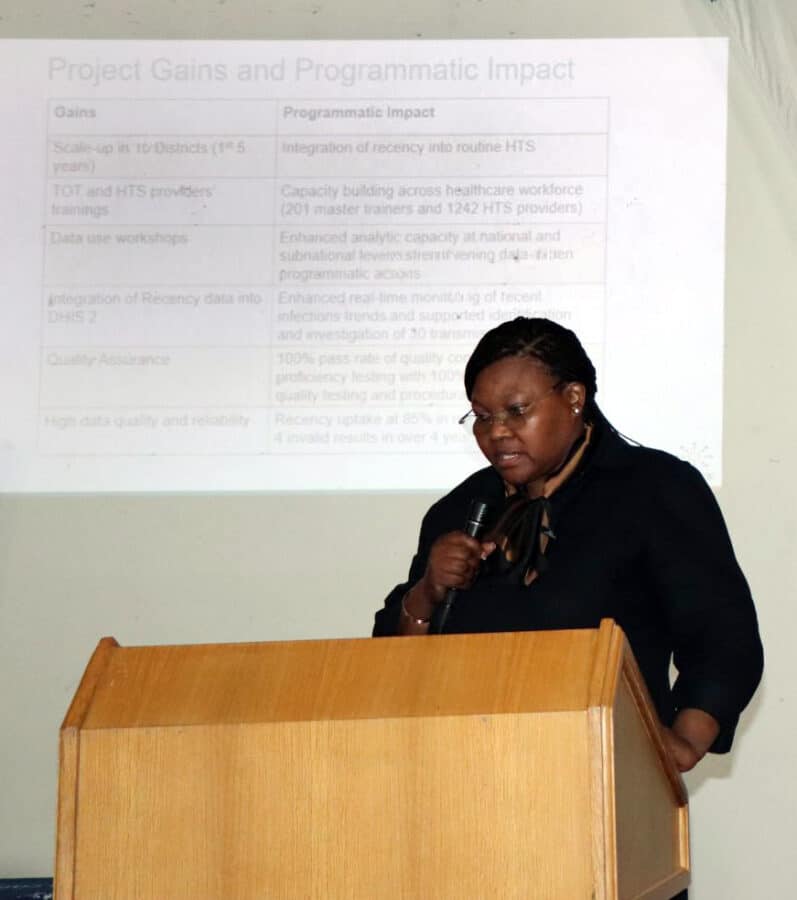
Mphotleng Tlhomola, coordinator for HIV Testing Services (HTS) in the Lesotho Ministry of Health, reviews the impact of the HIV recent infection surveillance project.
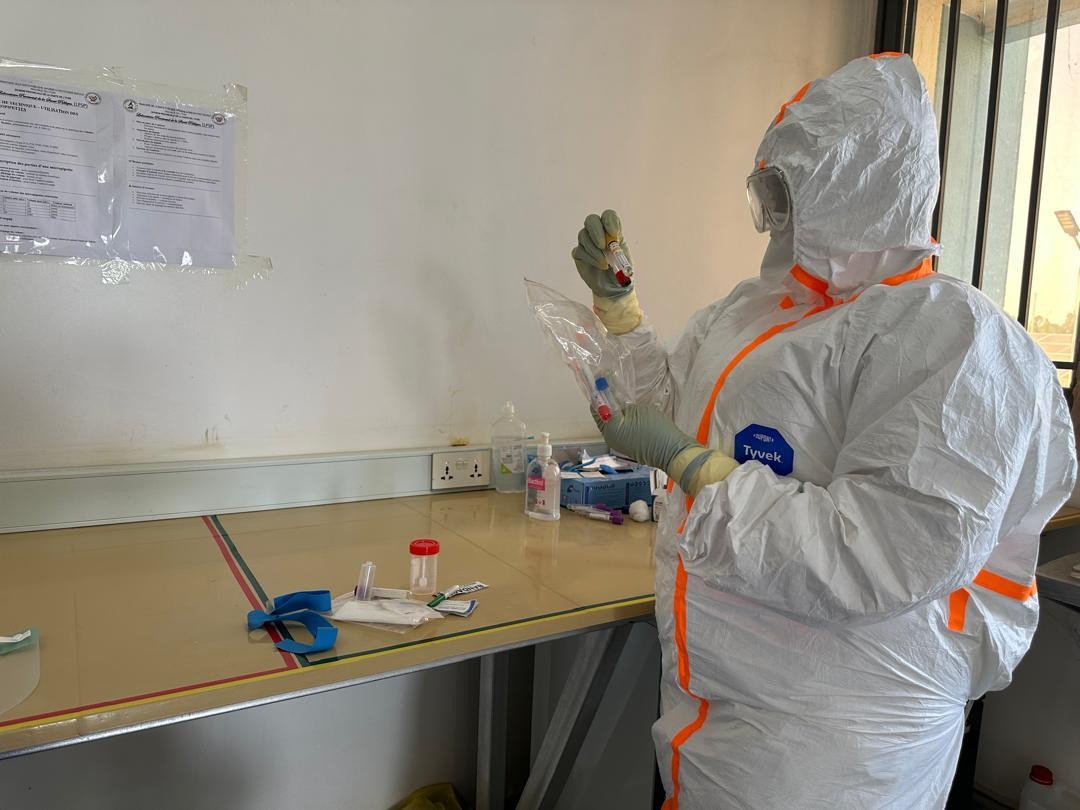
Under this program, recent infection testing has been integrated within routine HIV testing services through a point-of-care model: newly diagnosed individuals who screen HIV-positive undergo parallel HIV confirmatory testing and rapid recent infection testing through a single finger prick. Beginning in April 2022, baseline viral load (VL) testing for all recent cases was incorporated as part of a Recent Infection Testing Algorithm (RITA) to improve the accuracy of recent infection classification.
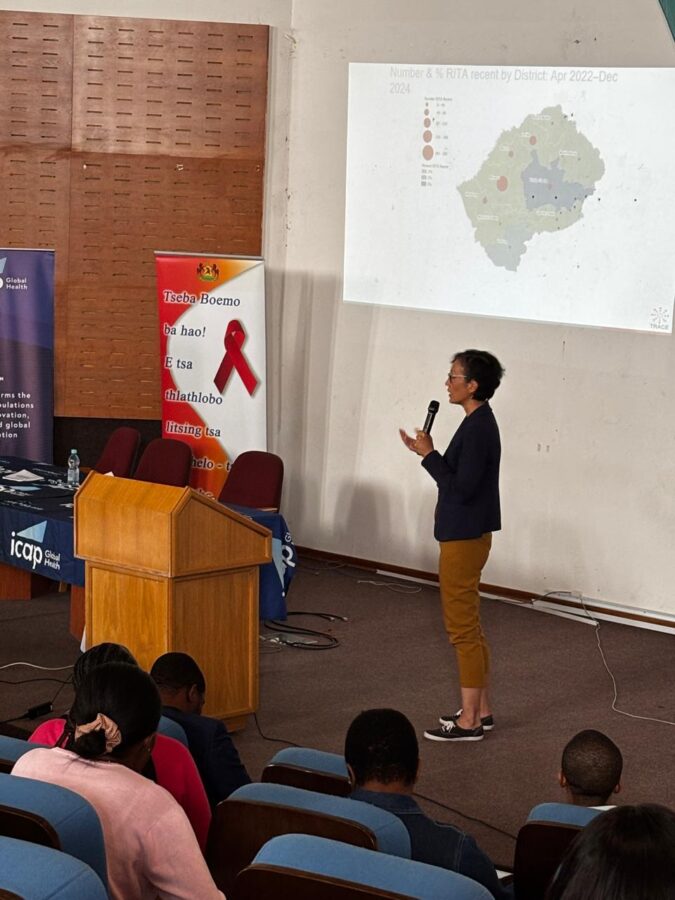
Suzue Saito, ICAP’s director of Strategic Information, discusses the results of the scale-up of recent infection surveillance in Lesotho at the dissemination event for the project’s final report.
By December 2024, there were a total of 28,099 newly diagnosed people living with HIV (PLHIV) from 211 of the 214 sites reporting recency infection surveillance (RIS) data across all 10 districts. Of those, 22,556 (80%) received a rapid recent infection test. From April 2022 to December 2024, following implementation of VL testing as part the new recency infection algorithm, 25,236 people were newly diagnosed with HIV at the 211 sites in 10 districts reporting recent infection data; 20,719 (82%) of these clients received a rapid recency test. During this period (April 2022–December 2024) the program identified 3% (597) of newly diagnosed people with a recent HIV infection. Young women were more than twice as likely to have a recent infection compared to everyone else. The surveillance program additionally found new HIV transmission hotspots in districts that have historically not been a focus for HIV prevention efforts.
Based on the successful results of this innovative surveillance program, the Ministry of Health has expressed a commitment to continuing activity in 56 sentinel sites for the coming fiscal year, with ICAP continuing to provide technical assistance to manage and analyze the data.
“Recent infection surveillance in Lesotho came at the opportune time when HIV testing modalities were reaching saturation, said Mphotleng Tlhomola, coordinator for HIV Testing Services (HTS) in the Lesotho Ministry of Health. “Working on recent infection surveillance with ICAP has been a great success. It has helped us to accurately monitor recent HIV infections hotspots, better understand the current transmission patterns, and direct a public health response with appropriate interventions”.
“Lesotho’s successful national scale-up demonstrates that when effectively integrated into routine HIV programming, recency testing serves as a powerful tool for epidemic control,” said Suzue Saito, PhD, MIA, MA, ICAP’s director of Strategic Information. “Leveraging recency data for real-time public health action has enabled the identification of service delivery gaps and informed targeted prevention and treatment interventions.”
“Despite periods of implementation disruption, the program achieved and maintained high quality, strong uptake, and measurable impact,” said Felix Ndagije, MD, MTroPed, MScGH, ICAP’s country director in Lesotho. “As Lesotho advances toward HIV epidemic control, sustaining this surveillance system will be critical, especially in our current, increasingly resource-constrained environment.”
Read the full report here.
About ICAP
A major global health organization that has been improving public health in countries around the world for two decades, ICAP works to transform the health of populations through innovation, science, and global collaboration. Based at Columbia Mailman School of Public Health, ICAP has projects in more than 40 countries, working side-by-side with ministries of health and local governmental, non-governmental, academic, and community partners to confront some of the world’s greatest health challenges. Through evidence-informed programs, meaningful research, tailored technical assistance, effective training and education programs, and rigorous surveillance to measure and evaluate the impact of public health interventions, ICAP aims to realize a global vision of healthy people, empowered communities, and thriving societies. Online at icap.columbia.edu