New commentary published in the Journal of the International AIDS Society looks at the promise and the challenges of integration of HIV care into primary care services
In a new commentary published in the Journal of the International AIDS Society, Wafaa El-Sadr, MD, MPH, MPA – global director of ICAP at Columbia University – and Joey Platt, MPH, ICAP senior project officer, examine the potential for integrating HIV treatment, prevention, and support into primary care services as a pathway to maintaining the hard-won gains of the global HIV response against the background of a dramatically changing global health landscape.
In their article, entitled “The Promise of Integration of HIV Into Primary Care: Challenges and Opportunities,” El-Sadr and Platt consider the four decades of progress that has been made in confronting HIV as a global health threat, attributing this achievement to rapid scale-up of HIV antiretroviral drugs for treatment and prevention along with a wide range of interventions, including condom use and needle-exchange programs, as well as novel service models – known as differentiated service delivery – that are tailored toward the needs of specific individuals and groups to improve continuity of care.
At the same time, the authors acknowledge that the HIV epidemic persists, “with about nine million of persons with HIV yet to receive treatment and more than a million new HIV cases reported annually,” and that critical gaps, including stigma and discrimination continue to present formidable barriers toward progress toward global HIV epidemic control targets. These barriers are now compounded by the current funding cuts that have disrupted HIV programs around the world.
In their analysis, the authors review how HIV programs have evolved over time to include the integration of non-HIV services into HIV care to address a range of health challenges – from depression and hypertension to tuberculosis and hepatitis C. In contrast, integration of HIV services into primary care – “increasingly favored as the path to gaining efficiencies and sustaining HIV response, particularly in the context of the current funding constraints”— has so far shown some promising but limited results.
“Nonetheless, the current moment compels a serious effort to shift from largely vertical HIV care programs to a more streamlined and sustainable approach,” the authors argue. “The challenge ahead rests on how to retain the critical elements of quality HIV care as we pursue such integration.”
“With tremendous gains in hand, but a volatile landscape creating daunting challenges, new thinking is required to continue progress toward ending HIV as a global health threat,” said El-Sadr. “In applying the principles of quality HIV services to serve the needs of individuals with other chronic conditions, we see an opportunity to sustainably improve health outcomes in the current resource-constrained context.”
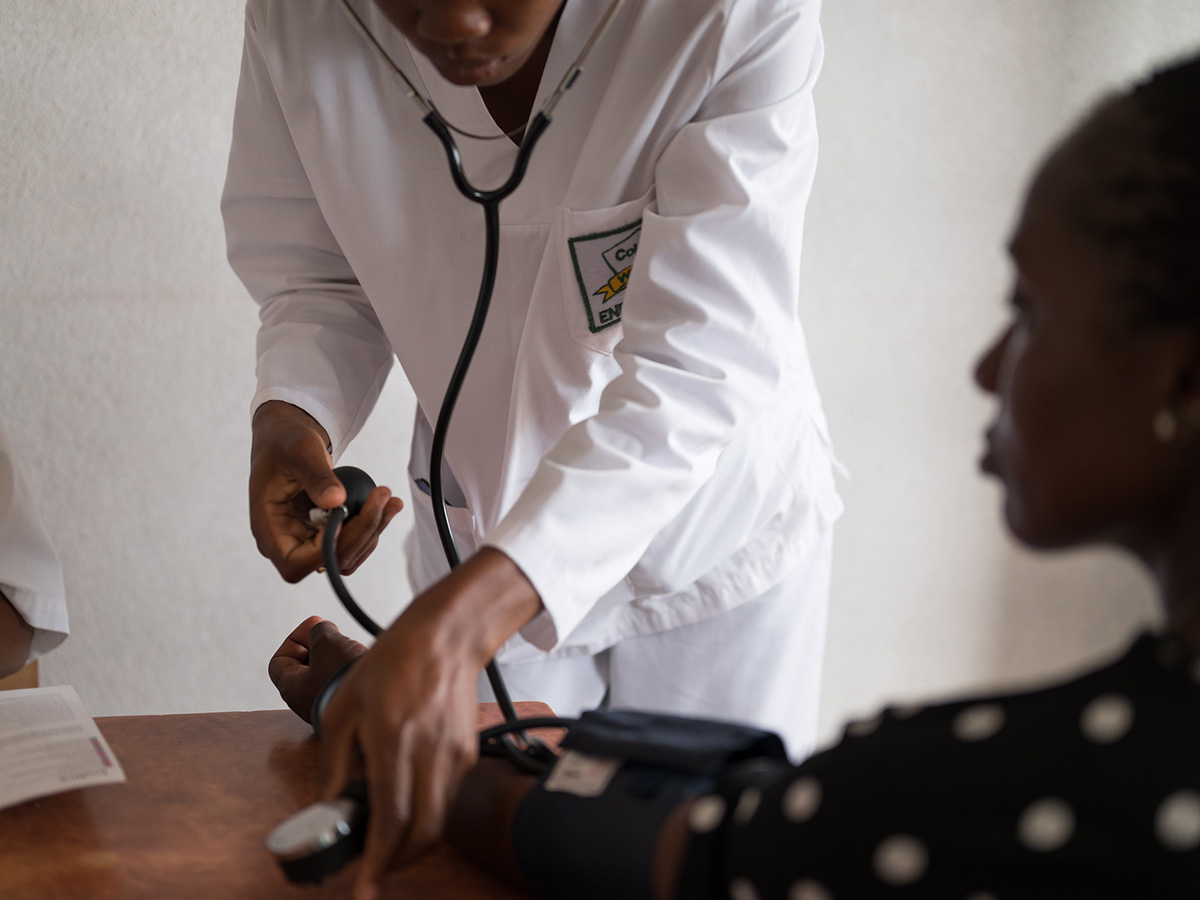
(Photo by Artur Francisco for ICAP)
About ICAP
A major global health organization that has been improving public health in countries around the world for two decades, ICAP works to transform the health of populations through innovation, science, and global collaboration. Based at Columbia Mailman School of Public Health, ICAP has projects in more than 40 countries, working side-by-side with ministries of health and local governmental, non-governmental, academic, and community partners to confront some of the world’s greatest health challenges. Through evidence-informed programs, meaningful research, tailored technical assistance, effective training and education programs, and rigorous surveillance to measure and evaluate the impact of public health interventions, ICAP aims to realize a global vision of healthy people, empowered communities, and thriving societies. Online at icap.columbia.edu