One of the most severe outbreaks of Ebola Virus Disease has been spreading rapidly in Africa, primarily in the Democratic Republic of Congo, where it was first identified in May of this year. While intensive international efforts have been underway to contain the epidemic, containment has been especially challenging because the outbreak involves the relatively rare Bundibugyo strain of the virus. Standard vaccines and treatments are not approved for Bundibugyo, meaning key tolls for addressing the emergency are unavailable.
Despite ongoing interventions in the region, the disease continues to spread. And, as of October 22, nine people in Kenya have been diagnosed with cases.
In early October, ICAP in Kenya was already anticipating the possibility that Ebola could cross borders and make its way into the country. In preparation, with funding and technical support from the U.S. Centers for Disease Control and Prevention (CDC), ICAP has taken initial steps to support strengthened Ebola response preparedness as well as critical infection prevention and control (IPC) across Kenya.
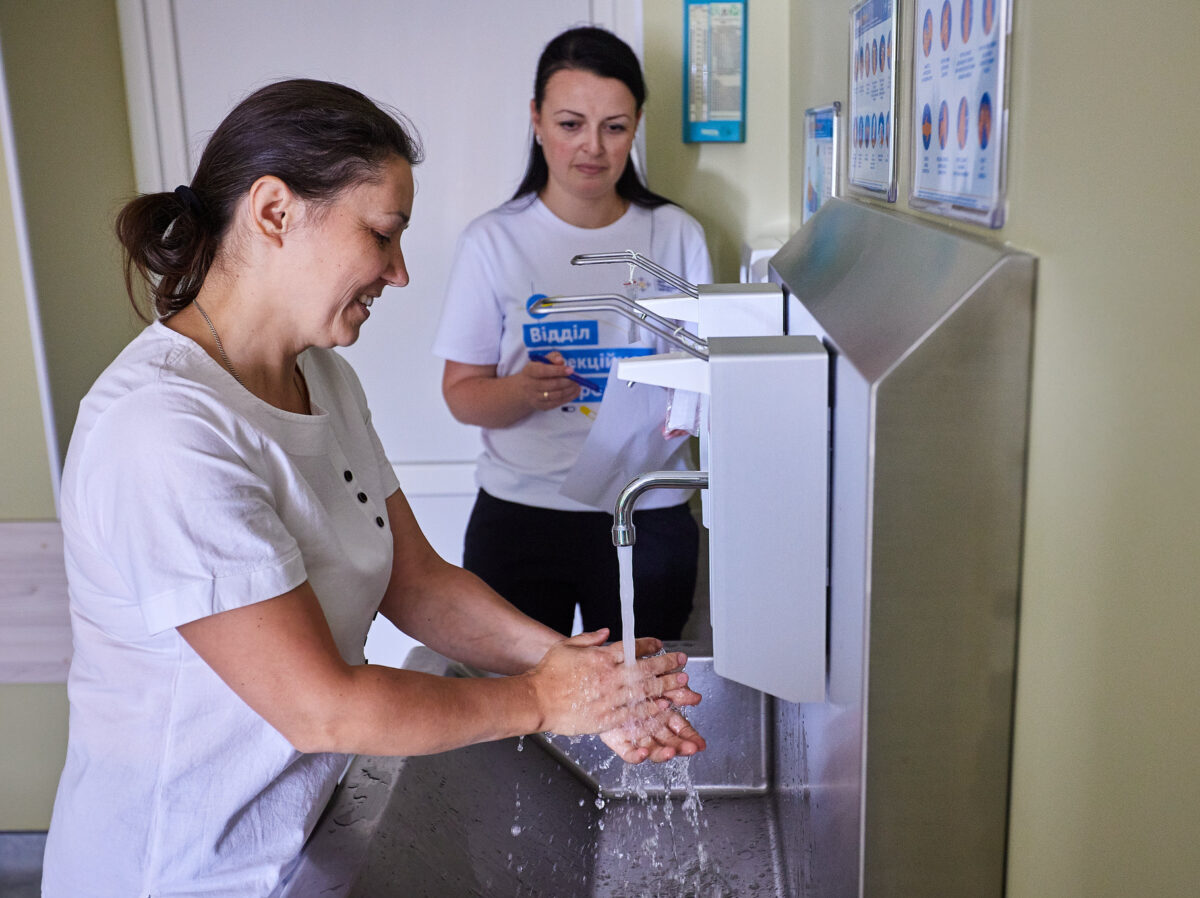
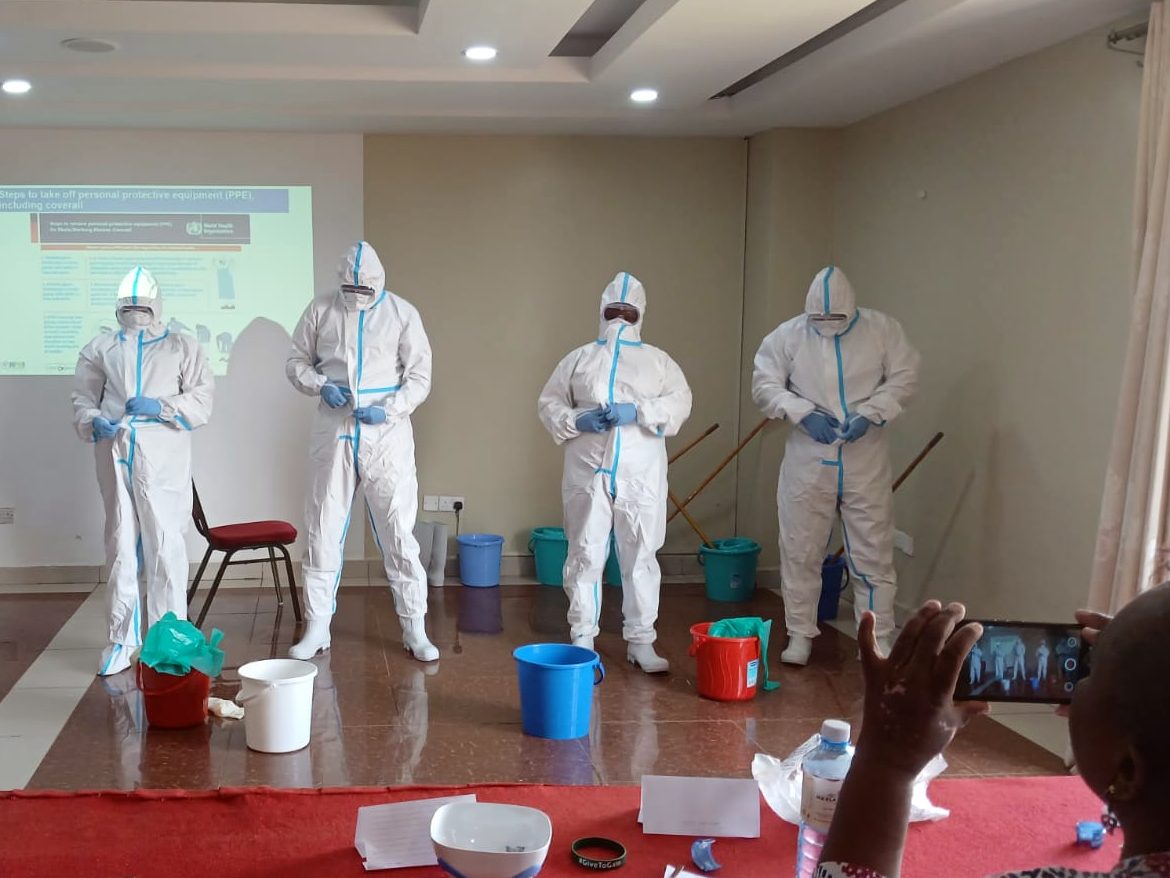
As a key first step to enhance the health workforce that will be on the front lines of any emerging national epidemic, the Kenya Ministry of Health, CDC, and ICAP collaborated to conduct a one-week training of trainers (TOT) for county health teams from Laikipia, Bungoma, Nakuru, Mombasa, and Makueni Counties. The training focused on IPC, which is a foundational pillar for interrupting transmission of infectious disease. At the same time, the trainings strengthened the capacity of county teams to cascade preparedness and IPC knowledge to health care workers.

At The Nairobi Hospital, ICAP’s country representative, Doris Naitore Mwenda (fourth from left), holds a box of supplies for addressing Ebola, presented by a team from the US. CDC — Dr. Linus Ndegwa (third from right), Mercy Njeru (second from right), and Dr. Abubakar Hussein (far right). Receiving the supplies for the Nairobi Hospital: Margaret Muiyuro, chief nursing officer (third from the left), and the hospital’s IPC team.
ICAP also supported Nairobi Hospital, a private health institution, to strengthen Ebola preparedness and IPC, including the provision of 18 thermometers to support screening and monitoring of all patients and the community. The hospital is also implementing measures to protect and monitor health care workers who have had contact with cases or suspected cases of Ebola.
In addition, ICAP in Kenya led a continuing medical education course for all Nairobi Hospital staff, strengthening health care workers’ knowledge and practical skills to prevent disease transmission and to protect patients, colleagues, families, communities, and themselves.
As part of the preparations, a CDC team, led by Dr. Linus Ndegwa, together with Mercy Njeru and Dr. Abubakar Hussein, and ICAP Kenya country representative, Doris Naitore Mwenda, presented personal protective equipment (PPE) and IPC supplies to the Nairobi Hospital team. The supplies were received by the Nairobi Hospital team, led by Margaret Muiyuro, chief nursing officer (Third from the right, and the hospital IPC Team as part of the ongoing collaboration to strengthen health care facility preparedness and the capacity of health care workers to prevent and respond effectively to infectious disease threats.
“Hope for the best, prepare for the worst,” said ICAP’s Naitore Mwenda. “This is exactly our mindset as a first few cases of Bundibugyo Ebola shows up in Kenya. ICAP has a more than a decade of on-the-ground experience confronting Ebola and other deadly infectious diseases, and we are mobilizing to bring all that knowledge and expertise to Kenya to meet this challenge from day one.”
“The country is facing a potentially fearsome health threat. But this is what our teams are trained for. I am confident that we can help Kenya meet this epidemic head on and we will not rest until it is under control,” she added.
About ICAP
A major global health organization that has been improving public health in countries around the world for two decades, ICAP works to transform the health of populations through innovation, science, and global collaboration. Based at Columbia Mailman School of Public Health, ICAP has projects in more than 40 countries, working side-by-side with ministries of health and local governmental, non-governmental, academic, and community partners to confront some of the world’s greatest health challenges. Through evidence-informed programs, meaningful research, tailored technical assistance, effective training and education programs, and rigorous surveillance to measure and evaluate the impact of public health interventions, ICAP aims to realize a global vision of healthy people, empowered communities, and thriving societies. Online at icap.columbia.edu