
-
Date: August 19, 2025
-
Start Time: 9:00 am
End Time: 10:00 am
-
Location: Online
On August 19, ICAP presented the next installment in its Grand Rounds feature series — Marburg and Beyond: The Viral Hemorrhagic Fever Threat.
Viral hemorrhagic fevers (VHFs) are a group of diseases that are caused by several distinct families of viruses. VHFs — such as Ebola, Marburg, Lassa fever, and yellow fever — can be fatal, with some types having high rates of morbidity and mortality. These viruses pose a serious public health challenge in sub-Saharan Africa, where outbreaks can overwhelm health systems and devastate communities.
In this webinar, experts from the Uganda Ministry of Health and the Institute for Global Health & Infectious Diseases at UNC Chapel Hill explored the VHF threat in sub-Saharan Africa, discussing experiences from the field, and prevention, treatment, and outbreak response, including reflections on best practices and key lessons learned around ring vaccination for the Ebola outbreak in Uganda.
Presenters
Misaki Wayengera, PhD, Senior Lecturer & Chief Scientist, Uganda Ministry of Health
 Misaki Wayengera is a medical doctor with training in an array of scientific fields, including immunology, clinical microbiology, vaccinology, and human genetics and genomics. His research interests focus on human pathogens — including identifying, researching, and advancing targets as new molecular entities for drugs, vaccines, and diagnostics against infectious diseases. Professor Wayengera is a senior lecturer and chief scientist at the Uganda Ministry of Health and is chair of the Uganda Ministry of Health Scientific Advisory Committee on Epidemics and Dangerous Pathogens.
William Fischer II, MD, Director, Emerging Pathogens, The Institute of Global Health and Infectious Diseases, The University of North Carolina at Chapel Hill
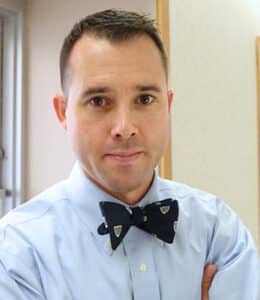 William Fischer is a pulmonary and critical care physician and director of Emerging Pathogens at the University of North Carolina School of Medicine with an expertise in severe emerging viral infections. Dr. Fischer has extensive field experience providing care during outbreaks of high consequence pathogens in resource-limited settings with multiple deployments as a WHO critical care physician. Dr. Fischer has active research programs exploring the clinical complications of Ebola virus disease and the prevalence, pathogenesis, and persistence of Lassa Fever (PREPARE study), and served as one of the principal investigators for an NIH study (PREVAIL IV) evaluating the efficacy of Remdesivir in reducing or eliminating Ebola virus shedding in male survivors of EVD.