Ethiopia
Ethiopia
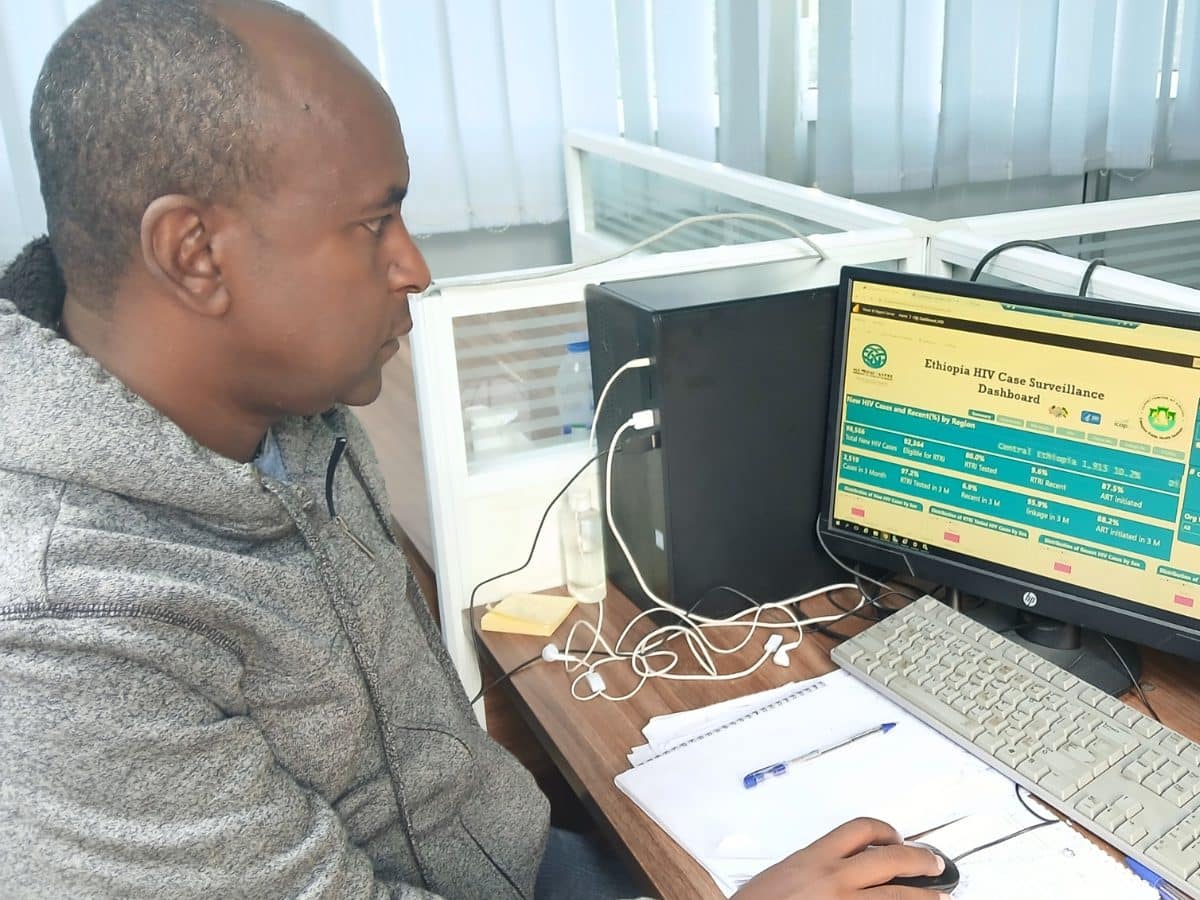
Exciting developments in Ethiopia hold great promise for sustainable national ownership of high-quality HIV programs and increased capacity to address the country’s significant malaria burden. ICAP is also supporting the Ministry of Health (MOH) in Ethiopia to enhance strategic information systems and develop innovative approaches to increase health service efficiency. In addition, ICAP is working with MOH and regional health bureaus (RHBs) in the prevention of COVID-19 transmission as well as in maintaining infection prevention and control strategies in the country.

Projects

Building Capacity of the Diverse Frontline Health Workers in Ethiopia Within the Context of COVID19
- current
Malaria Laboratory Diagnosis and Treatment Activity (MDTA)
- current
Strengthening National Epidemiologic and Research Capacity to Improve Health Outcomes in Eswatini (Eswatini Epi II)
- current
Technical Assistance to Ethiopia’s Ministry of Health and Regional Health Bureaus in Comprehensive HIV/AIDS Programming and Direct Site Level Support in Gambella Region
- current
Technical Assistance to the National Health Information Systems and Health Workforce Development
- current
The CQUIN Project for Differentiated Service Delivery
- Multi-Country,
- current
Violence Against Children Survey (VACS) in Ethiopia
- current
Volunteer Medical Male Circumcision (VMMC)
- current
ICAP in Ethiopia
 Active Years
- 2005 – Present
Key Technical Areas
- HIV
- Malaria
- Maternal and Child Health
- COVID-19
- Tuberculosis
- Cervical Cancer
- Mental Health
- Gender-Based Violence
- Global Health Security
- Human Resources for Health
- Laboratory Strengthening
- Strengthening Health Systems
- Technical Assistance
- Surveillance
Current Funders
- PEPFAR / Centers for Disease Control and Prevention (CDC)
- President’s Malaria Initiative (PMI)
- CDC Foundation
- COVID Supplemental and CARES Act Support
- Gates Foundation
- United States Agency for International Development (USAID)
Country Director

Zenebe Melaku, MD
Dr. Zenebe Melaku is ICAP’s country director in Ethiopia. He has over 20 years of clinical, academic, programmatic, and managerial experience in medicine and public health in Ethiopia. In his current role, Dr. Zenebe oversees the planning and implementation of comprehensive and high-quality HIV/AIDS care and treatment services at ICAP-supported sites in eight regions of Ethiopia. He provides technical and managerial oversight of program activities at the national, regional, and site levels and liaises with the Ministry of Health and other project partners and collaborators. Before joining ICAP, Dr. Zenebe was an associate professor of internal medicine at Addis Ababa University and served as the technical advisor for HIV/AIDS Care and Treatment at the U.S. Centers for Disease Control and Prevention (CDC) in Ethiopia.
His areas of expertise include HIV/AIDS, tuberculosis, health systems strengthening, program management, organizational development, and strategic planning. Dr. Zenebe holds a medical degree with a specialty in internal medicine from Addis Ababa University, a certificate of fellowship in neurology from the University of Limoges (France), as well as certificates in rheumatology, advanced epidemiology, and research methodology and clinical field trials from the University of Bergen (Norway).
Resources and Reports
Jobs in Ethiopia
For ICAP positions in this country, visit ICAP's international jobs page.
To search all job listings, see the ICAP careers page