Since the inception of Ethiopia’s national prevention of mother-to-child transmission of HIV (PMTCT) program in 2001, Ethiopia has expanded its HIV services coverage to over 2,865 health facilities, offering lifesaving interventions to mothers and infants. However, there have been gaps in the quality and consistency of data due to the manual recording of PMTCT information. While antiretroviral treatment (ART) data is digitized, the paper-based PMTCT records lead to delays, errors, and incomplete records.
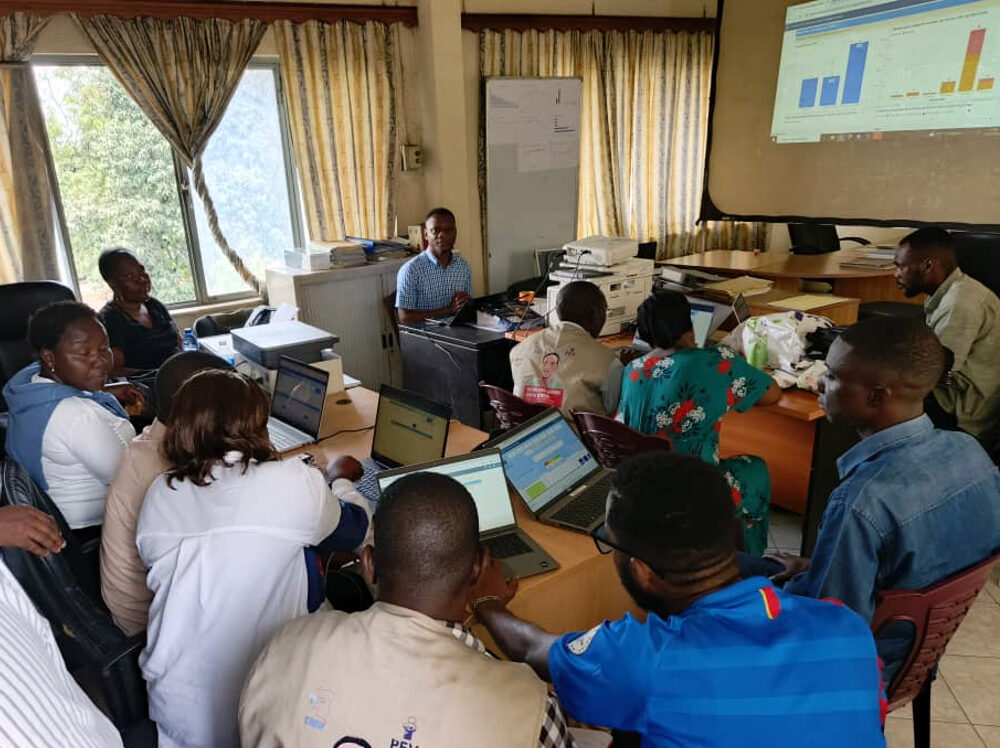
Recognizing this setback, with funding from the U.S. President’s Emergency Plan for AIDS Relief (PEPFAR) through the Centers for Disease Control and Prevention (CDC), ICAP supported the Ethiopian Ministry of Health (MoH) and Regional Health Bureaus (RHBs) in launching a groundbreaking digital solution. The prevention of mother-to-child-transmission electronic medical records (PMTCT-EMR) system has transformed how HIV prevention services for mothers and their children are monitored and delivered. Now operational in 100 high-load health facilities across Ethiopia, PMTCT-EMR allows health workers to track HIV-exposed infants and their mothers in real time, ensuring more accurate and actionable data.
“This system has revolutionized the way we collect and manage data for vertical elimination and prevention services,” said Zebideru Zewdie, PMTCT advisor at Ethiopia’s MoH. “Not only has the system enhanced the quality of care for mothers and infants but also improved our ability to monitor and evaluate the impact of our efforts to eliminate mother-to-child transmission of HIV.”

Early data results revealed that some sites reached 100% ePNP coverage for HIV-exposed infants.
Early data results from 43 reporting sites in January 2025 revealed that 81% of HIV-exposed infants received enhanced postnatal prophylaxis (ePNP), with regions such as Amhara, Afar, and Gambella achieving full (100%) coverage. These encouraging figures mark a significant leap toward national vertical transmission elimination goals. Meanwhile, lower rates in Sidama (19%) and Tigray (40%) identified key areas for focused support and intervention, illustrating how real-time data can guide strategic decisions and resource allocation.
Most importantly, the rollout of the PMTCT-EMR aligned with Ethiopia’s 2021–25 vertical transmission elimination strategy, which targets the elimination of HIV, syphilis, and hepatitis B transmission from mother to child.
“The system’s implementation has demonstrated that digital innovation when embedded in a clear strategic framework and supported by capacity-building, can catalyze systemic health improvements,” said Zenebe Melaku, MD, ICAP’s country director in Ethiopia. “The EMR system also represents a shift in how health care workers can deliver and monitor maternal and child health services in Ethiopia.”
Moving forward, ICAP and its stakeholders are planning a national scale up of the PMTCT-EMR system. With improved data quality, empowered providers, and real-time monitoring, Ethiopia is making meaningful progress towards a future where no child is born with HIV.
About ICAP
A major global health organization that has been improving public health in countries around the world for two decades, ICAP works to transform the health of populations through innovation, science, and global collaboration. Based at Columbia Mailman School of Public Health, ICAP has projects in more than 40 countries, working side-by-side with ministries of health and local governmental, non-governmental, academic, and community partners to confront some of the world’s greatest health challenges. Through evidence-informed programs, meaningful research, tailored technical assistance, effective training and education programs, and rigorous surveillance to measure and evaluate the impact of public health interventions, ICAP aims to realize a global vision of healthy people, empowered communities, and thriving societies. Online at icap.columbia.edu