
When a series of devastating cyclones struck Mozambique between December 2024 and March 2025, Nampula Province was among the most severely affected parts of the country. Tropical Cyclones Chido, Dikeledi, and Jude brought intense flooding and widespread damage to infrastructure in the region. According to the National Institute for Disaster Management (INGD) and UNICEF, more than 150,000 homes, 471 schools, and 100 health facilities were damaged or destroyed, as a result of all three storms.
“The storms heavily impacted roads, water systems, and power networks,” said Thais Ferreira, program director for ICAP in Mozambique. “The resulting floods also contributed to a major cholera outbreak across five districts in Nampula Province,” she said.
In response, with funding from the U.S. President’s Emergency Plan for AIDS Relief (PEPFAR) through the Centers for Disease Control and Prevention (CDC), ICAP, in coordination with the Provincial Outbreak and Emergency Cluster (including the World Health Organization, UNICEF, and the International Organization for Migration), launched an immediate, multi-pronged intervention aimed at mitigating the cholera outbreak and ensuring the continuity of HIV services amid the collapsing health infrastructure.
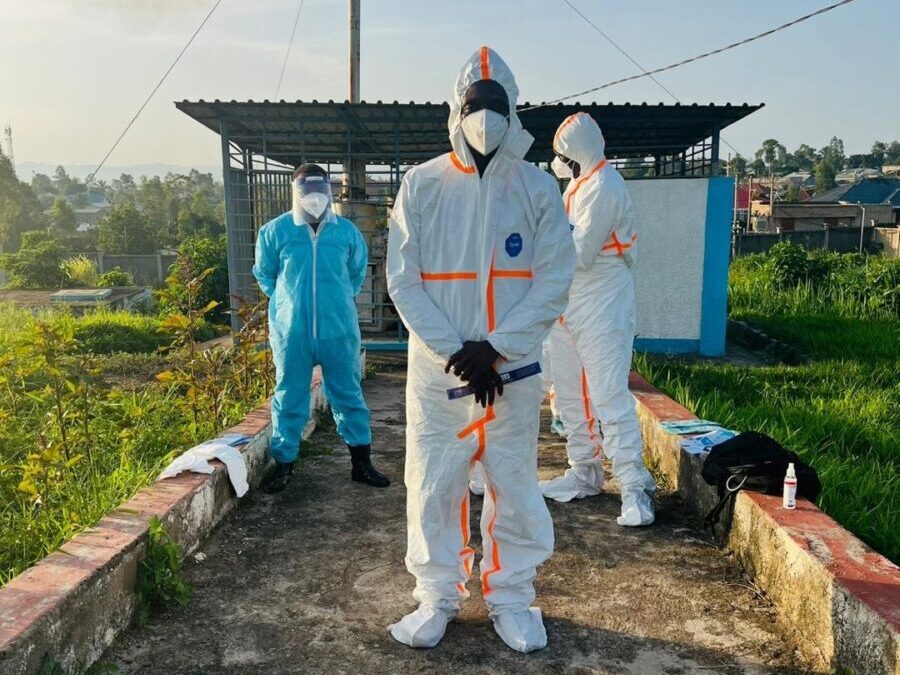
From supporting rapid needs assessment in affected districts and identifying critical delivery gaps to training providers on cholera prevention during emergencies, disseminating prevention messages, and providing infection prevention supplies, ICAP assisted in the provision of a wide range of support to cyclone-affected communities, with an emphasis on sensitizing the public to cholera prevention and combatting misinformation and mistrust.
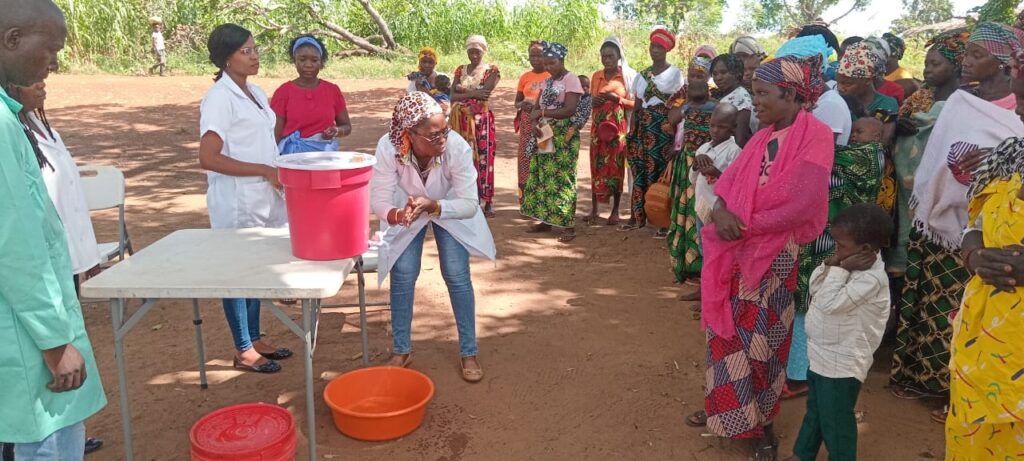
Community health workers demonstrate methods to prevent cholera infection in Namialo in Nampula Province, Mozambique
“In some areas, people believed health care workers were the ones spreading cholera, for instance,” said Leonaldo de Oliveira, Head of the Public Health Statistics Department at the Nampula Provincial Health Services (SPS). “Combined with logistical constraints, the misinformation hampered the timely implementation of risk communication, surveillance, WASH interventions, and case management activities.”
ICAP rose to this challenge by using 560 trained volunteers, including mentor mothers, youth leaders, and male champions. ICAP also mobilized 118 religious leaders and 70 community leaders to promote accurate messaging in communities and supported the development of local-language radio program scripts on cholera prevention and HIV service continuity. ICAP also targeted schools and universities, reaching over 1,400 students with education on hygiene and prevention. In volatile areas like Mogovolas, where violence and misinformation were rampant, ICAP adapted by identifying and working through trusted community figures, avoiding explicit association with health care facilities to prevent hostility.
“The support from ICAP through multiple actions played a crucial role in reducing cholera cases,” said de Oliveira
According to the SPS’s June 16, 2025 cholera bulletin, Nampula reported zero new cholera cases—a drop from 3,188 cases at the outbreak’s peak. Weekly cases fell from more than 140 to just 22 following the initial phase of interventions. By mid-June, all five districts had zero active cases.
“ICAP’s rapid, adaptable, and community-centered response played a pivotal role in halting a deadly cholera outbreak while preserving access to critical HIV services,” said Eduarda Pimentel de Gusmão, ICAP’s country director in Mozambique.
About ICAP
A major global health organization that has been improving public health in countries around the world for two decades, ICAP works to transform the health of populations through innovation, science, and global collaboration. Based at Columbia Mailman School of Public Health, ICAP has projects in more than 40 countries, working side-by-side with ministries of health and local governmental, non-governmental, academic, and community partners to confront some of the world’s greatest health challenges. Through evidence-informed programs, meaningful research, tailored technical assistance, effective training and education programs, and rigorous surveillance to measure and evaluate the impact of public health interventions, ICAP aims to realize a global vision of healthy people, empowered communities, and thriving societies. Online at icap.columbia.edu