With funding from the U.S. President’s Emergency Plan for AIDS Relief (PEPFAR) through the U.S. Centers for Disease Control and Prevention (CDC), ICAP has been supporting the Intermediate Field Epidemiology Training Program (FETP-I) for mid-level public and animal health professionals across Armenia, Azerbaijan, Georgia, Moldova, and Ukraine since 2022.
This ten-month program equips participants with the skills needed to effectively investigate and respond to major disease outbreaks, evaluate surveillance systems, and strengthen public health responses.

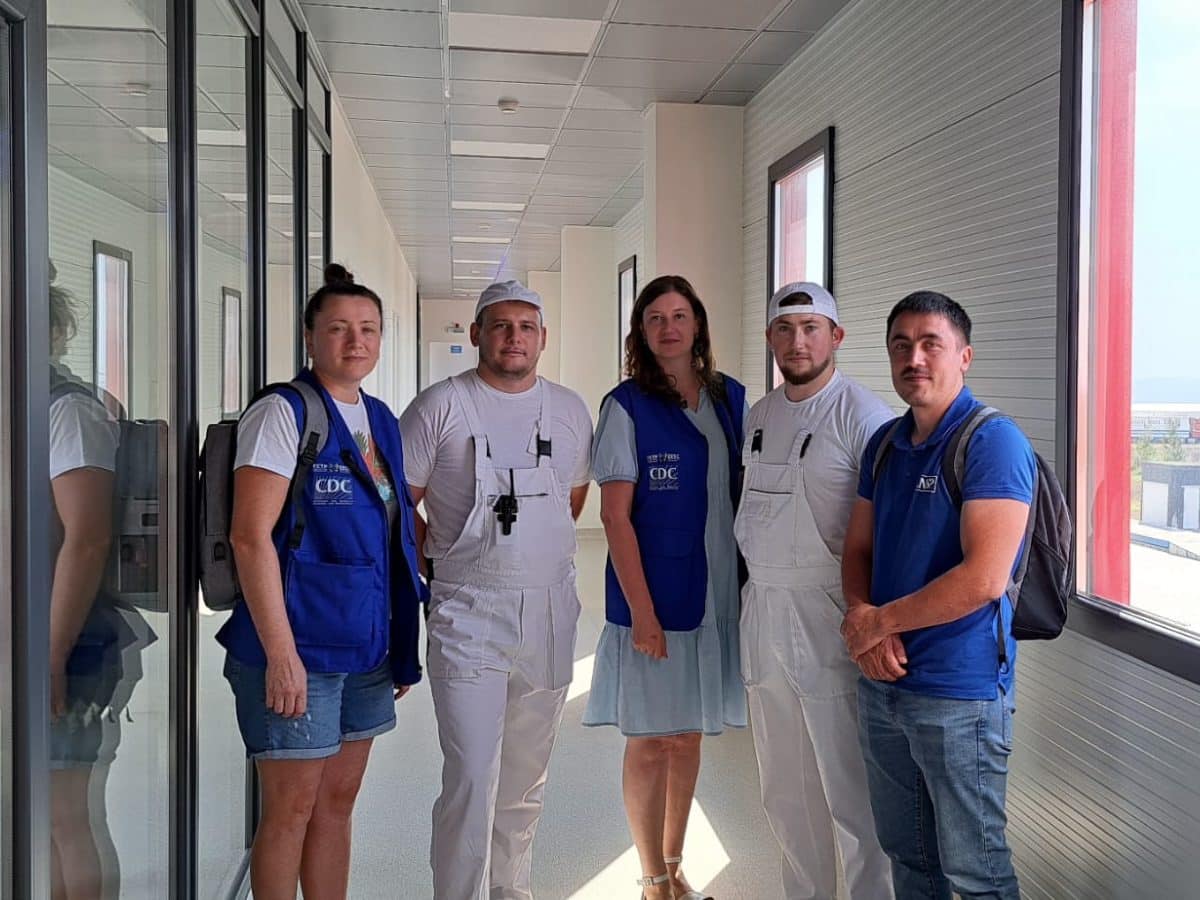
FETP residents conduct a Crimean-Congo Hemorrhagic Fever (CCHF) seroprevalence survey in Georgia.
To date, 56 specialists have graduated. ICAP has also trained 30 mentors – many of whom are now helping shape the next generation of public health leaders. Mentees of FETP-I, referred to as residents, are mid-level public health and animal health specialists. Each FETP-I resident is assigned a mentor with robust experience in the public health field. Mentors provide expert guidance to residents, ensuring they apply best public health practices in real-world situations.
“Participating in FETP-Intermediate as a mentor has had a positive impact on my professional development,” said Nona Ephadze, an FETP-I mentor from Georgia. “Seminars for mentors are very important because they improve our knowledge and skills needed for mentoring…I feel more confident after the mentoring workshops, and as we learn and do different tasks, it helps us imagine ourselves in the shoes of our residents.”
Mentors receive support through ICAP’s in-person workshops, which enhance coaching and teaching skills using a “train the trainer” model. These workshops also serve as platforms for peer exchange and reflection, allowing mentors to identify program challenges, prioritize diseases, and shape future projects.
To ensure the effective implementation of the FETP-Intermediate mentorship model, ICAP developed a structured guide to support recruitment, training, and evaluation of mentors. Ongoing performance monitoring and monthly reporting ensure mentors stay engaged and residents receive the guidance they need to succeed.
Mentors have played a key role in supervising high-impact investigations across the region, including on anthrax, brucellosis, rabies, antimicrobial resistance (AMR), the health of Ukrainian refugees, and beyond. In 2024, under mentorship supervision, residents from Georgia, Armenia, Moldova, and Ukraine submitted 21 abstracts to various conferences based on their work on topics like mental health, AMR, and urinary tract infections.

An FETP resident conducts a Salmonellosis investigation at a pediatric clinic in Moldova.
“Participating in the FETP-I program as a mentor is an opportunity for me to contribute to the development of future public health leaders,” said Diana Spataru, a mentor from Moldova. “The workshops for mentors have significantly increased my confidence and improved my communication and mentoring skills, and even my teaching skills. I feel a difference in my potential as a mentor.
“The FETP resident-mentor relationship is a win-win,” said Anna Deryabina, MD, DrPH, MScIH, regional director of ICAP in Eurasia. “Not only do residents gain real-life experience addressing disease outbreaks in the field, but mentors also get the opportunity to guide them toward their successes based on their own lived experiences, learning lifelong leadership skills along the way.”
About ICAP
A major global health organization that has been improving public health in countries around the world for two decades, ICAP works to transform the health of populations through innovation, science, and global collaboration. Based at Columbia Mailman School of Public Health, ICAP has projects in more than 40 countries, working side-by-side with ministries of health and local governmental, non-governmental, academic, and community partners to confront some of the world’s greatest health challenges. Through evidence-informed programs, meaningful research, tailored technical assistance, effective training and education programs, and rigorous surveillance to measure and evaluate the impact of public health interventions, ICAP aims to realize a global vision of healthy people, empowered communities, and thriving societies. Online at icap.columbia.edu