Raised by her grandmother and aunts in the Pioneiro Zeca neighborhood of Ondjiva in the Cunene province of Angola, 22-year-old Ângela* grew up taking medication without understanding why.
“They [my family] told me it was for stomach aches,” Ângela said. “Sometimes they say, ‘Today is the last day.’ But the next day I had to continue.”
At age 15, confused and with no clear answers, Ângela stopped taking her medication. Her health rapidly deteriorated. She was forced to leave school and remained in denial about the possibility of being HIV-positive due to the stigma associated with the disease. Years later, at age 21, she developed severe skin lesions – a doctor confirmed that not only was she HIV-positive, but abandoning HIV treatment had contributed to her developing tuberculosis.
For Ângela, even after beginning to manage her health after her diagnoses, stigma continued to affect her motivation.
“Every time I went to the health center,” she said, “I felt alone, as if I were the only young person in that situation, because I only saw adults.”
Ângela’s reality changed in 2024, when Joana, a doctor at the Hospital Geral de Ondjiva, referred Ângela to a support group called Grupo de Adesão Mutua (GAM) facilitated by Elizandra, a trained peer educator. Supported by the U.S. President’s Emergency Plan for AIDS Relief (PEPFAR) through the Centers for Disease Control and Prevention (CDC), ICAP at Columbia University trains peer educators – young people who are also living with HIV – to counsel youth who are either newly diagnosed with HIV or need daily reminders and encouragement to stay on treatment or to be motivated to return to treatment. A GAM serves as an essential meeting opportunity for peer educators to gather young people affected by HIV to share their personal health stories.
Social support is an essential factor for treatment adherence and improved quality of life among people living with HIV, especially youth. Access to community can encourage disclosure, reduce stigma, enhance coping skills, and improve confidence.
For Ângela, this seemingly simple referral bridged a critical gap, transforming her feelings of isolation into connection.
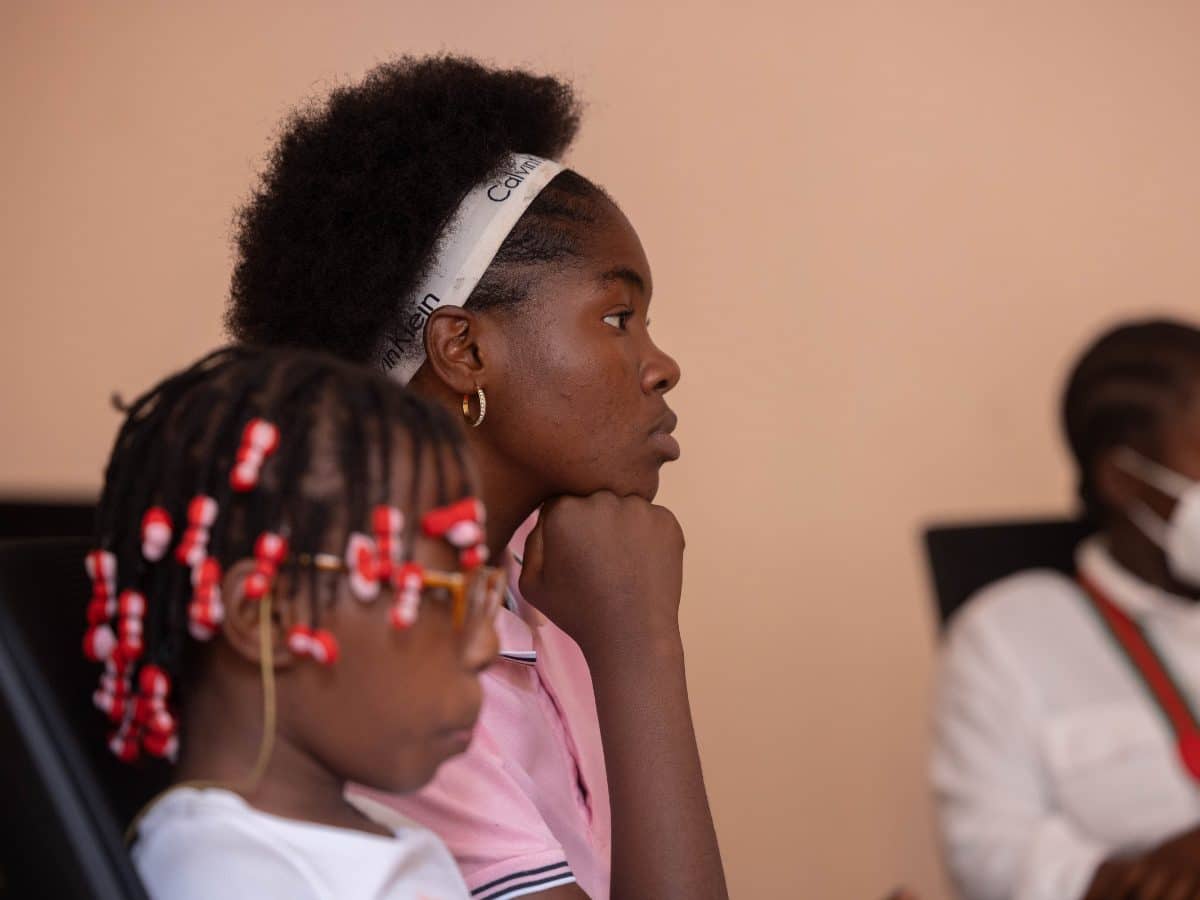
“When I joined the group, I met many young people — even children aged 12, 13, and 14 — years old, who knew about their HIV status and had never stopped their treatment,” Ângela said. “They spoke openly and lived normally. That really encouraged me. It was something very significant in my life. I felt welcomed.”
With consistent support from both clinical staff and the GAM community, Ângela re-engaged in care, resuming antiretroviral treatment (ART) and returning to school. As of June 2025, she achieved viral suppression, concluded treatment for tuberculosis, and recovered well from her skin lesions.
ICAP in Angola currently facilitates two support groups, one for adolescents and young people living with HIV and one for caregivers of children living with HIV. In the last year, the support groups have contributed to 12 children and youth returning to treatment.
“At first, I felt ashamed, but not today,” Ângela said, reflecting on her health journey. “Today, I’m dedicated to the group, we have contact with each other, I’ve resumed my studies, and I’m adhering to the treatment correctly. I’m doing well and leading a positive life.”
*Ângela is a pseudonym.
About ICAP
A major global health organization that has been improving public health in countries around the world for two decades, ICAP works to transform the health of populations through innovation, science, and global collaboration. Based at Columbia Mailman School of Public Health, ICAP has projects in more than 40 countries, working side-by-side with ministries of health and local governmental, non-governmental, academic, and community partners to confront some of the world’s greatest health challenges. Through evidence-informed programs, meaningful research, tailored technical assistance, effective training and education programs, and rigorous surveillance to measure and evaluate the impact of public health interventions, ICAP aims to realize a global vision of healthy people, empowered communities, and thriving societies. Online at icap.columbia.edu