Effective HIV epidemic control depends on efficiently tackling issues that may interfere with optimal testing and treatment of people living with HIV. From low testing volume to treatment interruption and unsuppressed viral load, unaddressed gaps can become serious impediments to progress in reducing the burden of HIV among the population.
In the Republic of Congo, ICAP has been partnering with the United Nations Development Programme (UNDP) under a grant from the Global Fund to provide technical assistance to the Programme National de Lutte contre le VIH/SIDA (PNLS), the National HIV Control Program, with the goal of introducing high-frequency reporting to improve the functionality and quality of HIV services in Brazzaville, Pointe Noire, and Likouala.
Due to late diagnoses, loss to follow-up, and low viral coverage, awareness of HIV status (the first of the three 95-95-95 targets established by UNAIDS) in the country stood at a very low 33 percent in 2024. In order to understand the factors behind this sub-optimal situation, ICAP conducted a situational analysis at 37 high-volume HIV service sites. The analysis revealed several missed opportunities to offer HIV testing services in various consultation services, shortcomings in quality of care and follow-up for PLHIV, and major gaps in documentation such as absence of registers and incomplete and late reporting.
Based on this new understanding, ICAP deployed a comprehensive plan to enable health officials to better monitor testing and care. This plan included developing essential data collection tools for HIV testing of people living with HIV, their contacts, and biological children, as well as tools for monitoring and managing viral load and tools for appointment management. To improve reporting, ICAP adapted a high-frequency report (HFR) – including a powerful digital reporting dashboard – that it had developed and successfully implemented in other countries in the region.
With this new reporting capability in place, PNLS, department and district health departments, and health facilities now have increased visibility into the overall cascade of HIV care and treatment with the ability to visualize and counter shortfalls, including:
Low HIV testing volume at high-throughput entry points – By providing a visualization of the volume of testing offered and the number of HIV-positive individuals identified per entry point, the HFR guides and encourages providers to increase the volume of testing at high-throughput entry points, marking the first time that Congo has had data to visualize the index testing cascade at the facility level.
Patient attrition – Visualizing the link to antiretroviral therapy (ART) for HIV-positive patients allows for the rapid identification of gaps in the patient pathway between testing and ART units so that they can be addressed to reduce or prevent patient attrition between testing and ARV initiation.
Treatment interruption – By tracking patients expected for ARV refills and those who have actually received their medications, HFR makes it possible to identify missed appointments and take action to prevent these patients from being lost to follow-up (dropping off treatment). This tracking capability also gives health officials weekly insight into the effectiveness of tactics to re-engage patients in care.
Patient monitoring and management – HFR enables regular monitoring of viral load testing and results, facilitating adjustments to treatment, and reinforcement of ARV adherence measures.
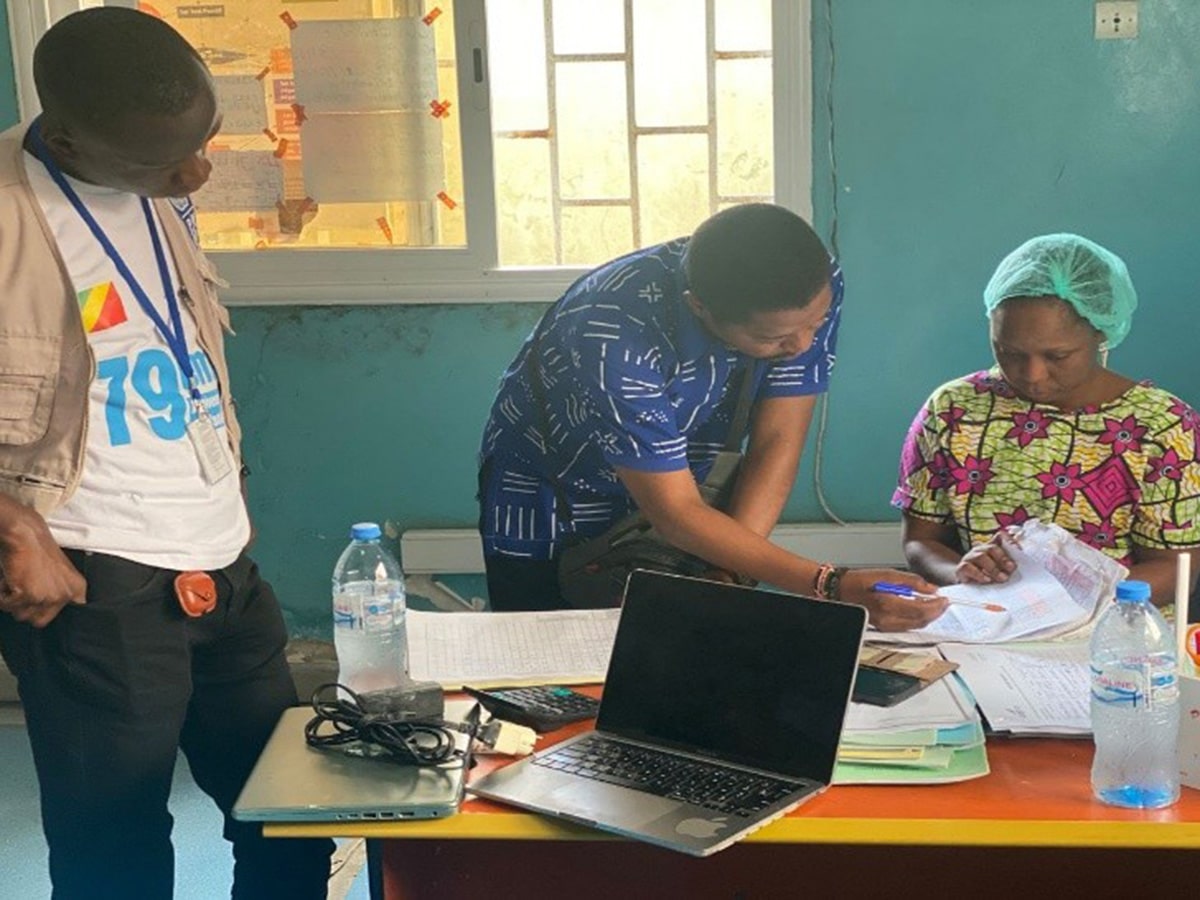
To support these innovations, ICAP has identified and trained focal points on best practices for collecting and reporting key data and established multidisciplinary teams to analyze the high-frequency reporting data and provide situational updates during weekly review meetings with PNLS, putting an emphasis on shortages of supplies and medicines that might present obstacles to efficient care.
“High-frequency reporting promises to be a game changer for the HIV response in the country,” said Patrice Adingra Ahoua, ICAP’s technical director in Congo-Brazzaville. “With the ability to visualize service gaps in precise detail, health mangers have increased power to improve outcomes for people living with HIV while fine tuning the overall response to the epidemic.”
“Continuous efforts are still needed to ensure accuracy and timeliness of data collection and reporting to ensure real-time availability of data for decision-making,” Adingra Ahoua added.
“With every improvement in high-frequency reporting and data visualization, we are getting clearer insights than ever before, opening opportunities for smarter, data-driven decisions,” said Dr. Jacques Achille Opango, director of Health Care and Services of the Brazzaville Department of Health. “Yet the real journey lies in strengthening implementation so that insights consistently turn into impact.
About ICAP
A major global health organization that has been improving public health in countries around the world for two decades, ICAP works to transform the health of populations through innovation, science, and global collaboration. Based at Columbia Mailman School of Public Health, ICAP has projects in more than 40 countries, working side-by-side with ministries of health and local governmental, non-governmental, academic, and community partners to confront some of the world’s greatest health challenges. Through evidence-informed programs, meaningful research, tailored technical assistance, effective training and education programs, and rigorous surveillance to measure and evaluate the impact of public health interventions, ICAP aims to realize a global vision of healthy people, empowered communities, and thriving societies. Online at icap.columbia.edu