
With support from the U.S. Centers for Disease Control and Prevention (CDC), ICAP at Columbia University leads the Eastern Europe and Central Asia (EECA) Public Health Emergency Management (PHEM) training program, an initiative aimed at building the capacity of the EECA public health workforce to address public health emergencies more efficiently and effectively.
In July 2025, ICAP concluded the program’s first series of PHEM trainings in Tbilisi, Georgia – marking the successful graduation of its first cohort and bringing together public health professionals from across the EECA region.

Ikram Matchanov (left), a health professional from Uzbekistan, receives a certificate of completion for his PHEM training from Ekaterine Pestvenidze (right).
Designed for public health specialists actively engaged in emergency management, the program supports health professionals in developing national strategies to better prepare for, respond to, and recover from health crises, from pandemics to natural disasters. Fellows in the program come from various EECA countries, including Armenia, Kazakhstan, Kyrgyzstan, Moldova, Tajikistan, Uzbekistan, and Ukraine, reflecting a wide array of national contexts, health system structures, and public health challenges.
Launched in September 2024, the inaugural cohort engaged in an intensive, blended learning experience over the course of nearly a year. The curriculum included three week-long in-person workshops, three mandatory online modules, ongoing mentorship by CDC and ICAP, and structured opportunities for networking.
“The EECA PHEM program is more than a training – it is an investment in our region’s resilience,” said Ekaterine Pestvenidze, MD, PhD, MS, national program coordinator for ICAP in Georgia. “By equipping public health professionals with the skills to anticipate, respond to, and recover from emergencies, and by fostering a strong regional network of public health leaders, we are laying the foundation for safer, healthier, and better-prepared communities across EECA.”
“We were honored to support this regional initiative alongside CDC and are confident that this exceptional cohort will continue to shape the future of public health across EECA – as leaders, mentors, and agents of change,” Pestvenidze added.
One of the most impactful elements of the program was the team emergency management project, a hands-on, team-based initiative where fellows addressed the PHEM priorities and needs of their respective countries, applying newly gained knowledge and skills to strengthen national public health emergency systems. Projects ranged from an after-action review of the West Nile Fever outbreak in Armenia to a public health risk awareness strategy for emergencies in the Kyrgyz Republic to development of a national Mpox preparedness and response plan in Moldova.
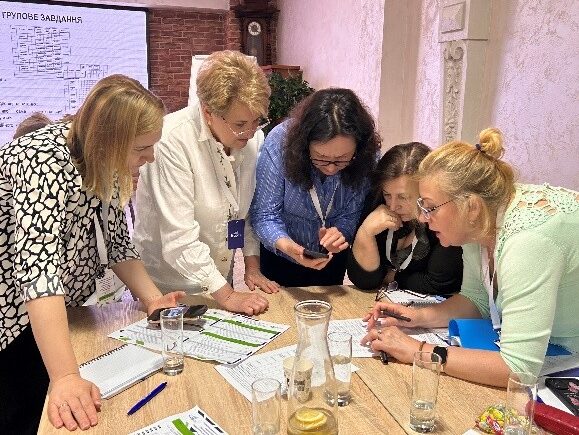
The July concluding simulation exercise in Tbilisi served as both a culmination and celebration of the PHEM fellows’ journey. Designed to simulate real-life emergency scenarios, the exercise challenged participants to apply their training in a dynamic, time-sensitive environment. Working in cross-country teams, they navigated complex emergency response operations for such disasters as flooding, testing their ability to manage coordination, communication, and decision-making under pressure.

PHEM fellows from Ukraine with their mentors.
For the fellows, it was an opportunity to reflect on how far they had come and how valuable their efforts will continue to be in environments increasingly shaped by complex public health threats.
“The EECA PHEM fellowship has equipped us with critical thinking skills, practical tools, and hands-on experience in managing public health emergencies,” said Ainura Satylganova, a PHEM fellow from Kazakhstan. “More than just a training, it was an inspiring journey of learning and collaboration. We are deeply grateful for the knowledge shared with us and are committed to applying it in our work to strengthen public health systems across the region.”
About ICAP
A major global health organization that has been improving public health in countries around the world for two decades, ICAP works to transform the health of populations through innovation, science, and global collaboration. Based at Columbia Mailman School of Public Health, ICAP has projects in more than 40 countries, working side-by-side with ministries of health and local governmental, non-governmental, academic, and community partners to confront some of the world’s greatest health challenges. Through evidence-informed programs, meaningful research, tailored technical assistance, effective training and education programs, and rigorous surveillance to measure and evaluate the impact of public health interventions, ICAP aims to realize a global vision of healthy people, empowered communities, and thriving societies. Online at icap.columbia.edu