ICAP in Ukraine implemented an environmental cleaning training initiative across Ukrainian hospitals to strengthen infection prevention and control (IPC) practices – an essential step toward reducing the spread of health care-associated infections.
The multi-stage program integrated at four Ukrainian health care facilities combined online learning, on-site practical sessions, and specialized external training to build sustainable local capacity for high-quality cleaning services. All stages of the training, which were delivered in collaboration with trainers from the Service of the Organization of Infection Control (SOIC), were based on Centers for Disease Control and Prevention (CDC) guidelines for environmental cleaning in resource-limited settings.
The first training stage, beginning in December 2024, consisted of two virtual sessions dedicated to risk assessment for environmental cleaning, with a focus on determining appropriate cleaning methods and developing cleaning schedules for clinical units. Hospital teams were given three weeks to complete a practical exercise, including conducting a risk assessment in two departments of their own hospital. After the exercise period, SOIC reviewed the results and discussed common mistakes and lessons learned with participants.
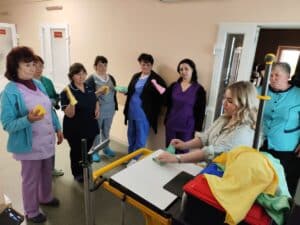
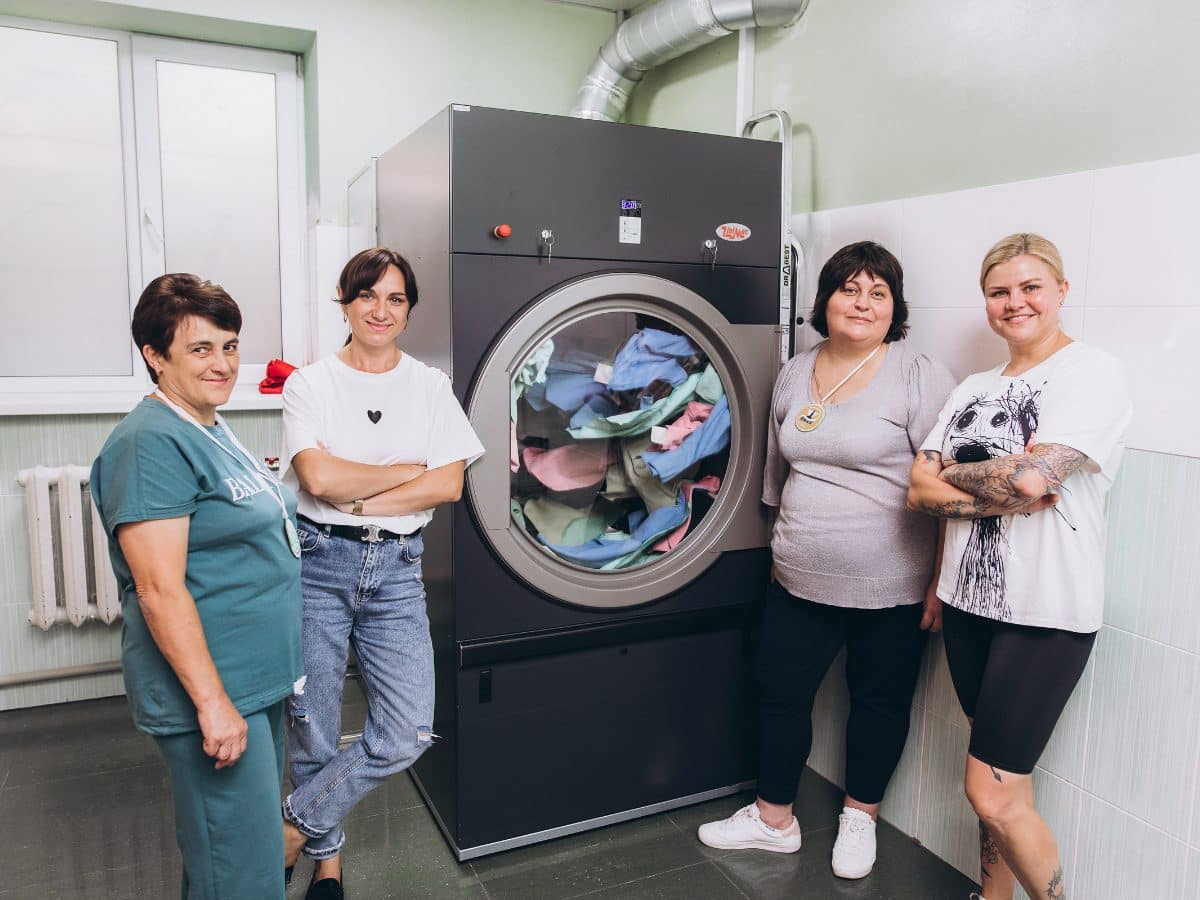
Training participants learn textile cleaning techniques.
The second stage of the training consisted of in-person sessions in May 2025 for hospital staff directly responsible for environmental cleaning, with the heads of IPC departments and hospital cleaning coordinators. SOIC conducted hands-on sessions with each health facility team, with a focus on cleaning equipment and cleaning techniques. Together with the trainers, participants reviewed the correct way to clean trolleys, twister mops, and textiles. Cleaning staff demonstrated their routine ward cleaning procedures under supervision and received practical feedback and corrections. Since only one of the four hospitals had a dedicated cleaning service department, on-site training of staff within their own departments proved to be of significant practical importance.
“It’s one thing to watch cleaning procedures on video, and completely different when you do everything yourself,” said Nataliia Shekhovtsova, head of the IPC department for one of the participating hospitals. “The difference is enormous! Now we are developing a plan to implement these great ideas and establish an excellent cleaning department in our hospital.”
The third stage involved training for hospital representatives at a specialized Ukrainian cleaning school in September 2025. Two representatives from each facility, including cleaning coordinators and heads of IPC departments, participated in the program. The basic training course lasts two months and focuses on both theoretical and practical components.
Theoretical learning is delivered through the school’s online platform and consists of 65 lessons grouped into 15 modules covering key areas essential for cleaning professionals, from basic chemistry to cleaning service planning and quality control systems.

Trainees practiced real cleaning processes with trainers, including laundry and disinfectant handling.
After successfully passing the theoretical examination, participants proceed to the practical component. This experience is extremely valuable, as participants not only practice cleaning techniques and equipment use in simulated environments but also take part in real cleaning processes, such as floor-cleaning, laundry, and disinfectant dosing, assisting professional hospital cleaners. They also practiced occupational safety procedures for handling active chemical cleaning solutions.
“The training was extremely valuable in terms of practicing real skills — learning about cleaning chemicals, their dosing, consumables, equipment, and the practical organization of cleaning processes in a hospital,” said Daria Kharlamova, head of the IPC department of one of the participating hospitals. “The greatest experience was performing each and every step of the cleaning algorithm personally, from washing corridors and sanitary rooms to cleaning heads of departments’ offices.”
“Especially in resource-limited settings, rates of health care-associated infections can be extremely high,” said Oksana Dereviankina, MD, MBA, national program coordinator for ICAP in Ukraine. “Given the variety and wide range of IPC responsibilities at health care facilities, implementation of robust IPC programs requires a dedicated, trained IPC team. ICAP is committed to improving environmental cleaning in these pilot hospitals in Ukraine, which is key to ensuring the safety of all patients and health care personnel and preventing future disease outbreaks.”
About ICAP
A major global health organization that has been improving public health in countries around the world for two decades, ICAP works to transform the health of populations through innovation, science, and global collaboration. Based at Columbia Mailman School of Public Health, ICAP has projects in more than 40 countries, working side-by-side with ministries of health and local governmental, non-governmental, academic, and community partners to confront some of the world’s greatest health challenges. Through evidence-informed programs, meaningful research, tailored technical assistance, effective training and education programs, and rigorous surveillance to measure and evaluate the impact of public health interventions, ICAP aims to realize a global vision of healthy people, empowered communities, and thriving societies. Online at icap.columbia.edu