-
Date: December 1, 2021
-
Location: Virtual - Zoom
7 AM PST / 10 AM EST / 4 PM CET
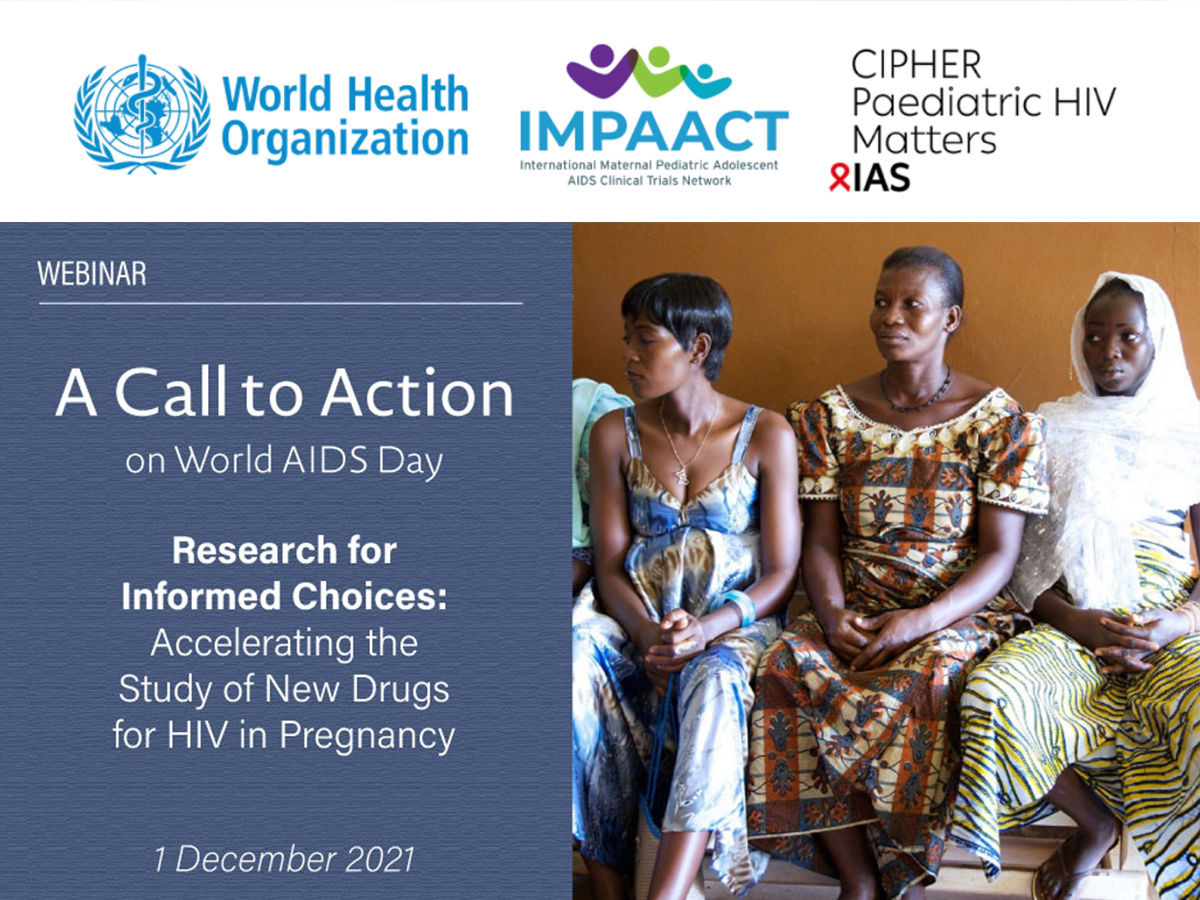
More than 18 million women are living with HIV worldwide and the majority are of childbearing potential. There is a public health imperative to ensure that these women can make informed choices about the drugs they take for HIV treatment or prevention. Information to support optimal antiretroviral drug choices in pregnancy has rarely been available for women or their health providers, largely due to historically protectionist and conservative approaches to clinical studies conducted in pregnant and breastfeeding women. Led by the World Health Organization (WHO) and the International Maternal Pediatric Adolescent AIDS Clinical Trials (IMPAACT) Network, a year-long workshop was held to discuss approaches to accelerate investigation and evidence generation to inform safe use of new HIV agents in pregnant women and formulate a strategic action plan for promoting the inclusion of pregnant women in research of new HIV agents.
Please join us for the launch of the resulting Call to Action to learn how stakeholders involved in studying antiretroviral agents for treatment and prevention of HIV can support greater inclusion of pregnant women and contribute to a more equitable investigation of new HIV agents.
To access the webinar, please register by clicking below. The link to join will be provided upon successful registration.